A common kitchen belief is that an air fryer is a different kind of cooking, a new technology that fries without oil. The reality is plainer and more useful. An air fryer is a convection oven that has been shrunk, with the heating element and the fan moved close to the food. Once you see it that way, every difference between the two appliances becomes a question of size, distance and airflow rather than of magic.
This guide compares the two on the factors that decide a purchase: how the cooking works, the size of the chamber, how long you wait to preheat, how much a single batch holds, how they handle cleaning, and how much counter space they claim. It also covers coating care, which is the least discussed way an air fryer can disappoint after a year of use.
The same mechanism in two sizes
Both appliances use a heating element and a fan. The element heats the air, and the fan pushes it across the food. Moving air strips away the thin layer of cooler, moister air that surrounds a piece of food in a still oven, so the surface heats faster and dries faster. That drying is what produces browning and a crisp texture, and it is why both appliances brown better than a conventional oven with no fan.
A conventional radiant oven relies on still hot air and heat radiating from the walls. A convection oven adds a fan at the back, which typically lets you lower the recipe temperature by around 25 degrees Fahrenheit or shorten the time, according to common manufacturer guidance. An air fryer takes the same idea and compresses it, which is where the name misleads: no real frying takes place unless you add oil, and the small amount you do add only improves surface texture.
So the choice is not between two different methods. It is between two scales of the same method, with the trade offs that scale brings. A smaller chamber means a shorter distance between the fan and the food, a faster airflow across it, and a smaller batch. A larger chamber means room for more food on several racks, gentler airflow, and a slower, more even cook.
Chamber size, fan speed and what they do to the food
A typical basket air fryer holds between about 2 and 6 quarts, and dual basket models go larger. A countertop convection oven or a toaster oven with a convection setting has a cavity that fits a quarter sheet pan or a 9 by 13 inch dish, and bigger ones take a half sheet pan. The difference in cooking volume is several times over, not a small step.
Air speed in the smaller chamber is higher, because the same fan power acts on less volume and the air has less room to slow down. That is why chicken wings, frozen fries and breaded foods crisp quickly in an air fryer. The same food in a convection oven can reach a similar result, but usually takes a little longer and benefits from a wire rack or a perforated tray so air reaches the underside.
The chamber shape also affects evenness. A basket forces you to shake or turn the food halfway because the air hits it from above and food in a dense pile steams. A convection oven with multiple racks cooks more evenly across a single layer, but the top rack can brown faster than the bottom one, so rotating trays halfway is standard practice. Neither is set and forget unless you accept some variation.
| Factor | Air fryer | Convection oven (countertop or full size) |
|---|---|---|
| Typical chamber | About 2 to 6 quarts, one or two baskets | Quarter to full size sheet pan, several racks |
| Airflow | Strong and close to the food | Gentler, over a larger space |
| Preheat | Short, often a few minutes or none | Longer, a larger cavity must heat up |
| Best for | One to two portions, crisp snacks, reheating | Family batches, roasting, baking |
| Cleaning | Removable basket, small parts | Racks, trays and interior walls |
| Footprint | Compact but tall, often left on the counter | Larger, or built in |
Preheat, cook time and energy
Preheating is where the small chamber shows its advantage. An air fryer reaches working temperature within a few minutes, and many recipes skip preheating altogether. A full size oven can take around ten minutes or more, and a countertop convection oven falls between the two. For a quick weeknight portion, the time saved is real and is the main reason people reach for the air fryer even when a larger oven is available.
On energy, the honest position is that no source documents a single figure that applies to every kitchen. What is clear is the mechanism: heating a small volume of air for a short time uses less energy than heating a large cavity, so for one or two portions the air fryer generally uses less. For a full tray of food, the oven's per portion efficiency improves, and the air fryer would need several batches.
Summer matters too. A full size oven running for an hour dumps a lot of heat into a kitchen, while an air fryer's heat is concentrated and short lived. If your kitchen warms easily, a countertop appliance cooking part of the meal keeps the room cooler. That is not a measurement, but it is a practical reason to own a small unit even if you have a good oven.
Capacity per batch and household size
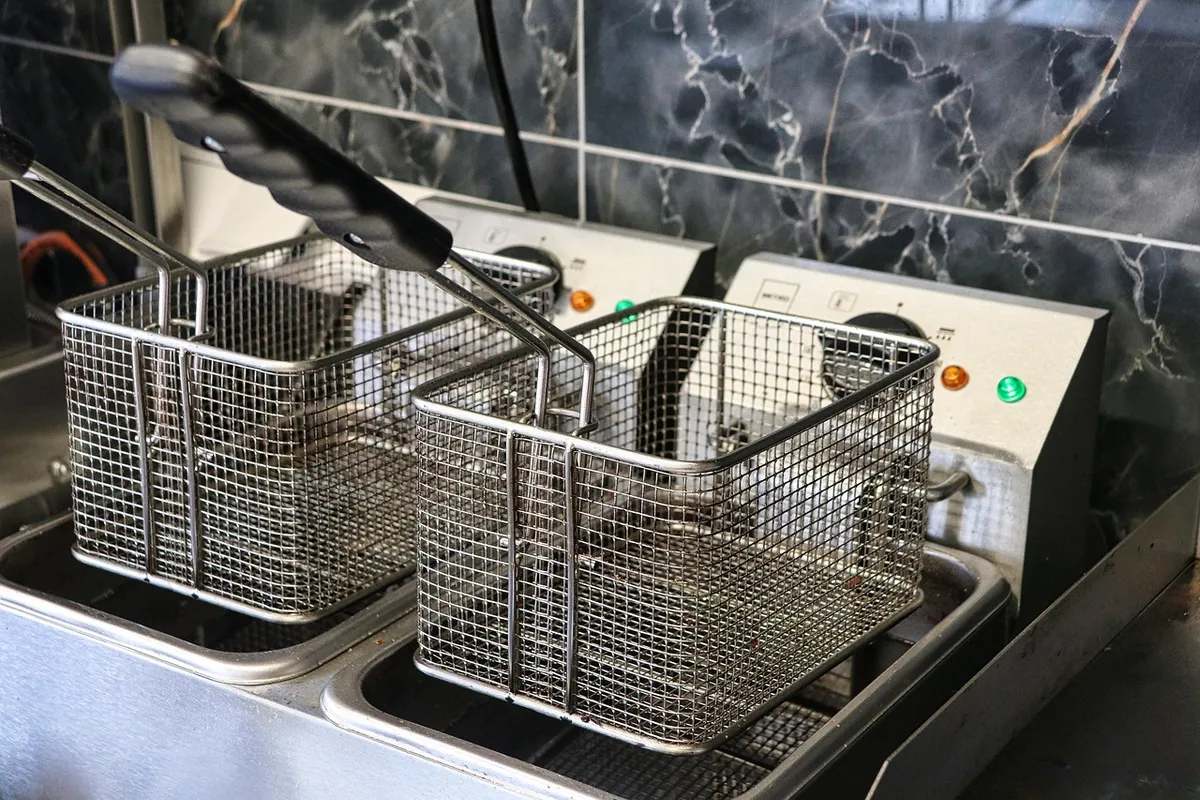
Capacity is the deciding factor for most households. A 4 quart air fryer comfortably cooks about two portions of chicken pieces or fries in a single layer. Crowded food does not crisp, because air cannot reach every surface, so you cannot treat the stated volume as usable volume. A realistic working capacity is roughly two thirds of the number on the box for anything you want crisp.
A couple or a single person who mainly reheats leftovers, cooks frozen items, or makes small portions of vegetables and proteins will rarely outgrow a 3 to 5 quart unit. A family of four cooking one main dish at a time will find themselves running several batches, which erases the speed advantage and leaves food going cold while the next batch cooks.
For larger households, a countertop convection oven or the full size oven's convection mode is the better workhorse. It will take a whole tray of roasted vegetables, a full chicken or two sheet pans of cookies. A dual basket air fryer can narrow the gap, because it cooks two foods at different settings or one food in two baskets, but it still holds less than a sheet pan.
- One or two people: an air fryer of about 3 to 5 quarts is usually enough.
- Three to four people: a large or dual basket model, or a countertop convection oven.
- Five or more, or batch cooking and baking: a convection oven, with an air fryer as a side tool.
There is one more way to think about capacity: surface area, not volume. Crisping depends on how much of each piece of food is exposed to moving air, so a wide shallow basket beats a deep narrow one of the same stated quart size. Before buying, look at the floor area of the basket or tray in inches, and imagine spreading a single layer of your usual food across it. If it does not fit without overlapping, the nominal capacity will not translate into crisp results for that meal.
Cast iron and metal baking dishes can also go in a convection oven, which is a real advantage if you already own them. A heavy skillet that has been seasoned, as described in the guide to seasoning cast iron, finishes dishes in the oven that most air fryer baskets are too small or too lightly built to take. Check the manual for the maximum weight and for any rule against metal touching the element.
Foods each appliance does well and badly
Air fryers excel at anything that benefits from fast surface drying: wings, chips, breaded cutlets, roasted potatoes, reheated pizza and the leftovers that go soggy in a microwave. They handle small vegetables well. They are poor at wet batters, which drip through the basket and set unevenly, and at anything that needs a deep, even bake such as a cake.
Convection ovens are the more versatile tool. They bake, roast whole joints, broil and dehydrate, and they handle trays of cookies with more even browning than a conventional oven. Their weakness is crisp small pieces in a large cavity, where the airflow is slower. Using a rack and a lower rim tray, and not overloading it, brings the results closer to an air fryer.
Light foods are the second thing to watch. Leafy greens, loose herbs and thin slices of food can be blown around by a strong fan and may fly into the element or scorch. Cover them, weigh them down, or choose a lower fan setting where available. Fat dripping from fatty meats onto a hot element can smoke, so a lower shelf with a drip tray helps.
Cleaning, coatings and the care that determines lifespan
Most air fryer baskets and trays are coated with a non-stick finish, and that coating is the part that wears. Metal utensils, abrasive scourers and the dishwasher can scratch or dull it, and once flaking begins the basket is effectively consumable. Use silicone or wooden tools, wash by hand with a soft sponge, and avoid aerosol cooking sprays, which leave a sticky residue that builds up on the surface.
The deeper cleaning issue is the underside of the heating element and the fan housing, where grease aerosolises and bakes on. Wipe the removable parts after every use and, every few weeks, inspect the element above the basket with the unit unplugged and cooled. Built up grease is the usual source of smoke and odour, and it is also a fire risk that people forget.
Convection ovens have their own problem: a large interior to wipe and racks that do not fit in a sink. A self cleaning cycle on a full size oven is convenient but gets hot enough to damage some accessories. For countertop models, removable crumb trays and slide out racks are the practical features to look for. The broader topic of coatings is covered in the guide to stainless, nonstick and cast iron pans.
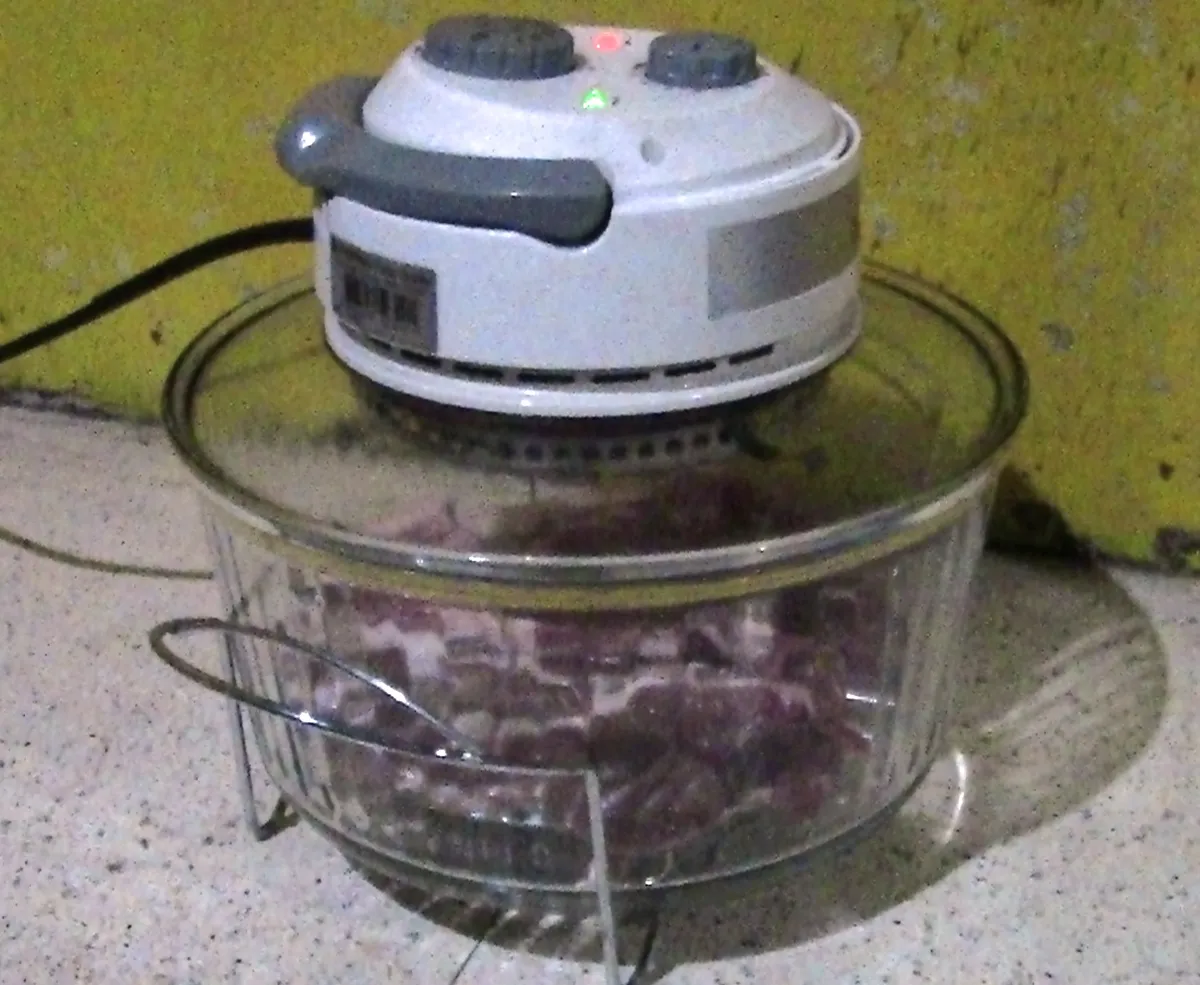
Where a toaster oven with a convection setting sits in all this deserves a mention. It is effectively the middle option: a larger cavity than a basket air fryer, a fan that is usually weaker, and a multi rack layout that handles a small family tray. Many models also include an air fry preset that simply raises the fan speed and temperature, which tells you how close the two categories really are.
Counter space, noise and the daily reality
An air fryer's footprint looks small, but its height and the clearance it needs behind and above matter. Most manufacturers ask for several inches of free space around the vents, because hot air is exhausted from the back. Parking one under a low cabinet can trap steam and heat, and discolour the cabinet underside over time.
Both appliances are audible. The fan in an air fryer is typically higher pitched and louder than a convection oven fan because it is smaller and faster. In an open plan kitchen next to a living room, that is worth considering. The sound stops when the cycle ends, which is usually short, while an oven runs quieter for longer.
Power draw is the final practical limit. Many air fryers and countertop ovens use a large share of a standard household circuit, around the 1,500 watt level in many markets. Running one on a shared extension lead, or alongside a kettle on the same circuit, can trip a breaker. Plug directly into a wall socket and avoid sharing the circuit.
If you are rethinking the whole cooking setup, the way the hob heats is a separate decision, explained in the guide to induction, gas and electric cooktops. For more appliance comparisons, browse the home and kitchen category.
Frequently asked questions
Can an air fryer replace my oven?
For a one or two person household that mainly cooks small portions, it can handle most daily cooking. It will not replace an oven for baking large items, roasting a whole bird for a crowd, or cooking several dishes at once. Most households keep both and use the air fryer for the quick jobs.
Does an air fryer really use less oil?
It needs very little oil because the moving air does the crisping, so a tablespoon or less is usually enough for a tray of vegetables or potatoes. Compared with deep frying, the reduction is large. The texture is different: crisp rather than greasy, and not identical to deep fried food.
Is a bigger air fryer always better?
No. A larger basket takes longer to preheat, uses more counter space and may cook small portions unevenly. Pick the size that matches your usual batch. If you cook for several people, a dual basket model can be more flexible than one large basket.
Can I use foil or parchment in either one?
Yes in most cases, but keep it weighed down so the fan does not lift it into the heating element, and never cover the whole basket in a way that blocks airflow. Perforated parchment made for air fryers is a safer choice than plain sheets, and follow the maker's manual.
Why does my air fryer smoke?
Fat dripping onto a hot base or a greasy element is the usual cause. Clean the basket and drawer after each use, add a little water under the tray for very fatty foods, and avoid cooking sprays that burn on. Persistent smoke after cleaning suggests residue inside the unit.
What if I only have a small kitchen?
An air fryer or a combination toaster oven with a convection setting is the most space efficient way to add convection cooking. Store it where it can be used without lifting, because a heavy appliance in a cupboard tends to stop being used.
The bottom line
If you cook for one or two and want fast, crisp results with little waiting, buy an air fryer of about 3 to 5 quarts and treat its coating with care. It is the same technology as a convection oven in a smaller package, and for small portions that package is a real convenience.
If you cook for three or more, bake regularly, or want one appliance that does everything, a convection oven is the better tool, whether it is the full size oven you already have or a countertop model. Keep an air fryer only if you will use it for quick reheating and small batches.
Whichever you choose, do not overfill it, clean the element and the coating regularly, and use the convection or air fryer function with realistic expectations. The difference is scale, not a secret method, and choosing by batch size is what avoids regret.