
Amazon affiliate links - we earn a commission.Affiliate disclosure

Buying guide · 12 min read · Updated 2026-11-26

Best Balance Pads for Rehab and Training (2026)

Seven foam balance pads compared on foam type, thickness, size, texture and rebound for stability and balance training at home, with a clear pick for each user.

Brianna Cole, Lead Product EditorBy Brianna ColeLead Product Editor7 picks comparedSpec-sheet verified
Best Balance Pads for Rehab and Training

At a glance

Our top picks

Side by side

Spec comparison

PieceSurfaceUseCost tierSize
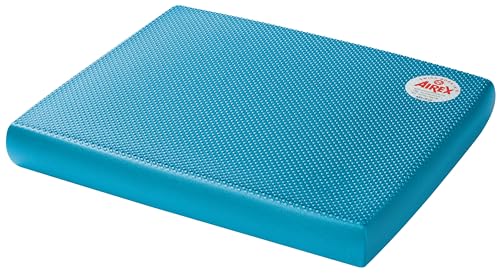
Airex Balance Pad closed cell foam, non slip textured surfaceBest OverallAirex Balance Pad closed cell foam, non slip textured surfaceNon slip textureStanding, planks, kneelingHighest in this lineupn/a
ProsourceFit exercise balance pad, 15.5 x 12.75 inch, TPE foamBest ValueProsourceFit exercise balance pad, 15.5 x 12.75 inch, TPE foamNon slip texturen/an/a15.5 x 12.75 inches
ProsourceFit non slip foam balance pad, 15 x 19 inchBest Larger SizeProsourceFit non slip foam balance pad, 15 x 19 inchNon slip textureTwo foot stands, kneeling, planksUpper15 x 19 inches
StrongTek high density TPE balance pad, 15.8 x 13 x 2 inchBest Mid Size OptionStrongTek high density TPE balance pad, 15.8 x 13 x 2 inchTextured, non slipn/an/a15.8 x 13 inches
HAPBEAR 15 x 12 inch balance pad, 2.25 inch thick, dual colorBest Thicker Soft PadHAPBEAR 15 x 12 inch balance pad, 2.25 inch thick, dual colorNon slip texture, dual color sidesn/aLow15 x 12 inches
MBKHFLL balance foam pad for stability and strength trainingBest Budget PadMBKHFLL balance foam pad for stability and strength trainingNon slipBalance and core trainingLown/a
Hshbxd professional foam balance pad for stability trainingBest for Clinic Style LooksHshbxd professional foam balance pad for stability trainingNon slipAnkle, foot and core exercisesLow to middlen/a

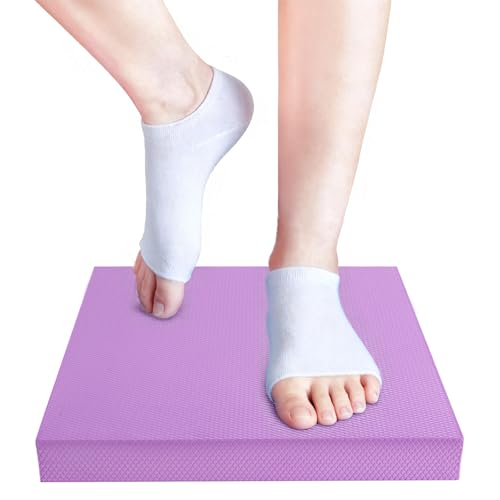
A balance pad is a thick slab of soft foam that you stand, kneel or place a hand on. Its give makes the surface unstable, so small stabilizing muscles in the feet and legs work harder than on a hard floor.

Pads differ in foam type, thickness and size, and listings often describe them as tools for rehabilitation. We describe the mechanics and who each pad suits, without health claims. This guide compares seven pads for home balance and stability work.

Before you buy

6 Criteria to Look For Before Buying a Balance Pad for Rehab and Training

  1. 01

    Foam type and density

    Closed cell foam is dense, rebounds well and resists sweat, while open cell or soft TPE foam is lighter and wobblier. Dense foam lasts longer and feels more stable. Beginners often prefer softer foam for the stronger wobble, and experienced users prefer dense foam for consistency. The Airex is the dense benchmark, and the HAPBEAR is a soft example.

  2. 02

    Thickness in inches

    A thicker pad usually moves more underfoot, though density changes the feel too. Two to 2.5 inches is the common range. A very thin pad gives little instability, and a very thick soft pad can feel like standing on a mattress. The HAPBEAR is 2.25 inches, the StrongTek 2 inches and the Airex about 2.5 inches.

  3. 03

    Pad size and footprint

    The pad must fit both feet with margin, and bigger pads allow lunges, kneeling and planks. Common sizes run from 15 by 12 to 19 by 16 inches or more. Buying too small is the usual mistake. The ProsourceFit 15 by 19 inch pad is the large option, and the regular ProsourceFit is the compact option.

  4. 04

    Surface texture and grip

    A textured top keeps bare feet and shoes from sliding, while a smooth top is easier to clean but slippery with sweat. Grip matters more than most buyers realize when the surface already wobbles. Check that the pad has a textured surface and a non slip bottom if you plan to use it on hardwood. Most pads here use a textured TPE top.

  5. 05

    Rebound and compression life

    Foam that does not spring back after you step off has gone soft and gives less challenge. Cheap foam can lose rebound in a few months, while dense foam lasts for years. Look for owner reports at the six and twelve month mark. The Airex is known for holding its shape longer.

  6. 06

    Rehabilitation claims to ignore

    Listings often say a pad treats injuries, helps recovery or is trusted by therapists. A balance pad is a foam surface, and we make no claim that it treats anything. If you need exercises for a condition, ask a clinician or physical therapist about how to use one. We removed those claims from the descriptions.

Detailed reviews

The 7 best balance pads for rehab and training, explained

01
Airex Balance Pad closed cell foam, non slip textured surface
Closed cell foamAbout 2.5 in thickTextured topNon slip
Check price on Amazon
Best for: Users who want a dense, long lasting foam pad with a trusted reputation.

The Airex pad is the benchmark in the category, and clinics and gyms use it widely. It is made from closed cell foam that resists soaking up sweat, with a textured top for grip and a thickness in the range of 2.5 inches that gives a very noticeable wobble.

Compared with the ProsourceFit pads, the Airex feels denser and rebounds more slowly after you stand on it, so it holds its shape over more years. Compared with the thinner foam options from Hshbxd and ZaxuVexo, it is a firmer, more stable platform that still gives enough instability to challenge a confident user. It sits at the highest cost tier here, and the extra cost goes to foam density and brand consistency.

Ownership is simple. Wipe the surface with a damp cloth, keep it out of direct sun and avoid storing heavy objects on top of it. Closed cell foam recovers well, but permanent dents can form if it sits under load for months.

What works

  • Dense closed cell foam rebounds slowly and evenly
  • Textured surface holds bare feet and shoes
  • Wipes clean and resists soaking up sweat
  • Lasts years under regular use

Watch out for

  • Highest cost tier in this lineup
  • Thick pad is a larger challenge for beginners

Specs

Foam
Closed cell, rebounds
Thickness
About 2.5 inches
Surface
Non slip texture
Use
Standing, planks, kneeling
Cost tier
Highest in this lineup
02
ProsourceFit exercise balance pad, 15.5 x 12.75 inch, TPE foam
15.5 x 12.75 inTPE foamTexturedSweat proof
Check price on Amazon
Best for: Home users who want a reliable, compact pad at a fair cost.

The ProsourceFit pad is a compact 15.5 by 12.75 inch slab of TPE foam with a textured surface. TPE is a thermoplastic elastomer, softer and lighter than dense closed cell foam, and it resists sweat.

The size gives enough room for two feet or a single foot with a little margin, which is the minimum most people want. Compared with the larger 15 by 19 inch Prosource, this is easier to store and cheaper but leaves less space to shift your feet. Compared with the Airex, it is softer and gives more wobble per inch of thickness, which makes it feel more unstable than a denser pad of the same size.

Ownership is trouble free. Wipe the pad after use, keep it away from heat and avoid leaving it in a hot car. The foam can compress at the foot contact points over a year of daily use, which is the signal to replace it. Note that it comes in several color versions with the same specs.

What works

  • Compact size stores easily in a closet or drawer
  • TPE foam resists sweat and wipes clean
  • Textured top gives a secure foothold
  • Lower cost tier than the dense Airex

Watch out for

  • Small footprint leaves little room to shift feet
  • Soft foam compresses with heavy daily use

Specs

Size
15.5 x 12.75 inches
Material
TPE foam
Surface
Non slip texture
Care
Sweat proof, easy to clean
Colors
Black, blue, purple versions
03
ProsourceFit non slip foam balance pad, 15 x 19 inch
15 x 19 inTPE foamNon slipWide platform
Check price on Amazon
Best for: Taller users and those who want room for lunges, kneeling or planks.

This ProsourceFit pad uses the same TPE foam as the smaller version but is 15 by 19 inches, giving a much wider platform. The extra length makes room for a staggered stance, a lunge position or a kneeling exercise.

It costs more than the smaller pad, and the extra space is the entire reason to buy it. A taller user or someone who likes to move through a series of exercises on one pad will appreciate it, while a person who only stands on two feet may not need the extra size. Compared with the Airex, it has more surface area but less foam density.

Ownership matches the smaller pad. Wipe it down, store it flat or leaning against a wall, and check the corners for compression. A bigger pad takes more storage room, so measure your closet or under bed space before buying.

What works

  • Large 15 by 19 inch platform fits a staggered stance
  • Same sweat resistant TPE foam as the smaller pad
  • Room for kneeling and plank variations
  • Non slip texture holds feet and hands

Watch out for

  • Costs more than the regular size
  • Takes more storage space

Specs

Size
15 x 19 inches
Material
TPE foam
Surface
Non slip texture
Use
Two foot stands, kneeling, planks
Cost tier
Upper
04
StrongTek high density TPE balance pad, 15.8 x 13 x 2 inch
15.8 x 13 x 2 inHigh density TPENon slipWater resistant
Check price on Amazon
Best for: Users who want a mid size pad with a stated 2 inch thickness.

The StrongTek pad is 15.8 by 13 inches and 2 inches thick, made from high density TPE foam. The listed dimensions give a slightly larger footprint than the regular ProsourceFit with a defined thickness.

The maker describes the foam as high density, but there is no common standard for this phrase, so we judge it by feel and owner reports of how quickly it compresses. Compared with the ProsourceFit regular, it has a larger surface and a stated thickness. Compared with the HAPBEAR, it is thinner and a little firmer, which suits people who want less wobble.

Ownership is simple. Wipe it with a damp cloth, keep it away from sharp objects and store it flat. The textured surface can show scuffs from shoes after a few months, though that does not affect use.

What works

  • Stated 2 inch thickness helps with comparing pads
  • Larger 15.8 by 13 inch footprint than basic pads
  • Water resistant TPE wipes clean
  • Textured top keeps feet from sliding

Watch out for

  • High density wording has no standard meaning
  • Shoe scuffs show on the textured surface over time

Specs

Size
15.8 x 13 inches
Thickness
2 inches
Material
High density TPE
Surface
Textured, non slip
Care
Water resistant
05
HAPBEAR 15 x 12 inch balance pad, 2.25 inch thick, dual color
15 x 12 in2.25 in thickDual colorNon slip
Check price on Amazon
Best for: Beginners who want a thick, soft, low cost pad.

The HAPBEAR pad is 15 by 12 inches and 2.25 inches thick, with two color sides that make it easy to see which face is up. The listed thickness is among the highest in this lineup after the Airex.

The foam is soft, which gives a wobblier surface than the firmer StrongTek or Airex. That suits a beginner who wants a gentle introduction, but a confident user may find it too squishy and unstable. It sits at one of the lowest cost tiers, which makes it appealing for a first pad.

Ownership requires attention to compression. Soft foam compresses faster at the contact points, so rotate the pad and replace it when the center no longer rebounds. The listing mentions rehabilitation, a term we avoid since the pad is only a surface.

What works

  • Thick 2.25 inch foam gives a pronounced wobble
  • Two color sides help you orient the pad
  • Low cost tier suits a first purchase
  • Textured surface holds bare feet

Watch out for

  • Soft foam compresses sooner than denser pads
  • Smaller 15 by 12 inch footprint limits movement

Specs

Size
15 x 12 inches
Thickness
2.25 inches
Surface
Non slip texture, dual color sides
Foam
Soft cushioned foam
Cost tier
Low
06
MBKHFLL balance foam pad for stability and strength training
Foam matNon toxic claimNon slipAll levels
Check price on Amazon
Best for: Buyers who want the lowest cost way to try a balance pad.

The MBKHFLL is a basic foam balance pad that sits at a low cost tier. The maker emphasizes non toxic materials and a non slip surface, claims that apply to many foam pads and that you should treat as marketing.

It has less brand history than the ProsourceFit and Airex, so owner feedback is thinner and you should watch for odor out of the box. Compared with the HAPBEAR, it offers fewer details about thickness, which makes it harder to compare. It is fine for a first pad if you cannot spend more.

Ownership is about airing out the pad. Let it sit open for a day if there is a chemical smell, wipe it down after use and keep it in a cool, dry place. Replace it when the foam stays dented.

What works

  • Low cost tier makes it easy to try
  • Non slip surface keeps feet in place
  • Simple foam pad suits beginner exercises
  • Lightweight and easy to move around

Watch out for

  • Less detailed listing on thickness and density
  • Newer brand with less feedback history

Specs

Format
Foam balance pad
Surface
Non slip
Claim
Non toxic materials, maker claim
Use
Balance and core training
Cost tier
Low
07
Hshbxd professional foam balance pad for stability training
Foam cushionNon slipCore and ankle useEveryday use
Check price on Amazon
Best for: Users who want a basic non slip pad for everyday foot and core work.

The Hshbxd pad is a foam balance cushion that the listing positions for physical therapy and stability training. The wording claims therapist trust, which is a statement we cannot verify and so disregard.

What matters is the basic function: it is a non slip foam pad that gives a wobbly surface for foot, ankle and core exercises. It sits at a low to middle cost tier, a little above the cheapest pads, without a clear advantage in density or thickness. Compared with the Airex, it has less established foam and a thinner reputation. Compared with the HAPBEAR, it gives less detail about thickness.

Ownership is the same as other foam pads. Wipe it down, keep it out of heat and replace it when the foam stays flattened. If you need exercises for a specific condition, ask a clinician rather than relying on a listing.

What works

  • Non slip surface suits foot and ankle exercises
  • Light and easy to move between rooms
  • Simple foam cushion needs no setup
  • Low to middle cost tier for a basic pad

Watch out for

  • Therapist trust claim is unverified marketing
  • Little detail on thickness or foam density

Specs

Format
Foam balance cushion
Surface
Non slip
Use
Ankle, foot and core exercises
Positioning
Marketed to therapy settings
Cost tier
Low to middle

Spec decoder

What the listing measurements really mean

The numbers brands lead with, translated into what they tell you about fit, comfort and wear at home.

Closed cell foam

Foam whose tiny cells are sealed, so it resists soaking up sweat and rebounds more evenly.

Watch forThe Airex uses it, and listings that skip the term often use cheaper open cell foam.

TPE

Thermoplastic elastomer, a soft rubber like plastic that is light and wipes clean. It is softer than dense closed cell foam.

Watch forProsourceFit and StrongTek pads use TPE, so compare thickness and feel.

High density

A marketing phrase for firmer foam. There is no standard measure on the listing.

Watch forThe StrongTek uses it, so check owner reports of compression.

Thickness

The height of the pad in inches. Thicker usually means more wobble, though density matters too.

Watch forThe HAPBEAR lists 2.25 inches and the StrongTek lists 2 inches.

Non toxic

A maker claim about materials with no standard test cited on the listing.

Watch forThe MBKHFLL uses the phrase, so air out the pad if you notice an odor.

Methodology

How We Evaluated These Balance Pads for Rehab and Training

Spec sheet review

We evaluated foam type, thickness, dimensions and surface texture from each listing. We compared those details against the dense closed cell benchmark. The Airex and ProsourceFit pads anchored the comparison.

Owner feedback patterns

We looked for repeating themes about foam compression, odor, slipperiness and size. Pads that kept their shape after months scored better. Odor and flattening came up most often on low cost pads.

Fit for different users

Beginners, taller users and people using kneeling exercises need different pads. We graded each product on who it suits, from the soft HAPBEAR to the large ProsourceFit.

Cost relative to the lineup

We used relative cost tiers and quote no listing prices. The HAPBEAR and MBKHFLL sit at the low end, while the Airex sits at the high end.

Claims we discounted

Rehabilitation and therapist trust claims are common. We treat them as marketing because a pad is only a surface. Placement depends on foam, size and build.

Decision guide

How to Choose the Right Balance Pads for Rehab and Training

By Firmness

SituationPickWhy
Dense, long lasting padAirexClosed cell foam rebounds evenly
Soft, gentle introductionHAPBEAR 2.25 inchThick soft foam wobbles easily
Balanced and compactProsourceFit regularTPE foam with moderate give
Firmer mid sizeStrongTekHigh density TPE at 2 inches
Lowest cost trialMBKHFLLBasic non slip foam

By Budget

TierPickWhy
LowestHAPBEARThick soft pad at a low tier
LowMBKHFLLBasic foam for a trial
Low to middleHshbxdNon slip cushion for everyday work
MiddleProsourceFit regularReliable TPE pad
HighestAirexDense foam with a long track record

Dense Foam vs Soft Foam

Dense foam

The Airex and StrongTek feel stable underfoot and hold their shape. They suit users who want a consistent challenge over years.

Soft foam

The HAPBEAR and MBKHFLL give more wobble per inch and cost less. They compress faster and may need replacement sooner.

Choose dense foam if you plan to use the pad regularly, and soft foam if you are trying balance work for the first time.

By Size

SituationPickWhy
Small closet storageProsourceFit regularCompact 15.5 by 12.75 inches
Taller userProsourceFit 15 x 19Extra length for staggered stances
Mid size with stated thicknessStrongTek15.8 by 13 by 2 inches
Smallest footprintHAPBEAR15 by 12 inches

For Home Balance Training Specifically

Look for

A pad large enough for both feet, a textured non slip top and foam that rebounds. Place it on a flat, non slip floor and keep a wall or sturdy chair within reach.

In this comparison

The Airex is the first choice, with the ProsourceFit regular as the value alternative.

When to Spend More

Spend more if

You will use the pad most days and want it to hold its shape. The Airex lasts longer than soft foam.

Save if

You are trying balance work casually. The HAPBEAR or ProsourceFit regular is enough.

Ownership

Maintenance schedule

The upkeep that decides whether a piece still looks good in year five.

TaskIntervalWhy it matters
Wipe the surfaceAfter each sessionSweat and skin oils wear down the texture and cause odor. A damp cloth keeps the pad clean.
Air out new padsOn first useSome foam has a chemical smell out of the box. A day in a ventilated room usually clears it.
Rotate the padMonthlyUsing the same spot compresses the foam unevenly. Turning the pad spreads wear.
Avoid heat and sunAlwaysHeat softens and warps foam. A cool closet or shelf is ideal.
Do not stack heavy objectsAlwaysWeight leaves permanent dents in the foam. Store the pad flat with nothing on top.

FAQ

Frequently Asked Questions

Do I need a thicker pad for more challenge?

Not always. Softer foam wobbles more at the same thickness, so a 2 inch soft pad can feel harder than a 2.5 inch dense one. Choose by feel as well as inches.

What size balance pad should I buy?

The pad should fit both feet with a margin. Compact pads around 15 by 12 inches work for standing, and 15 by 19 inches allows lunges and kneeling.

Can I use a balance pad barefoot?

Yes, and many people do, since the texture grips bare feet. Shoes work too, though they can scuff the surface over time.

Are balance pads a rehab tool?

We make no medical claims. A pad is a foam surface, and anyone using one for a condition should follow guidance from a clinician or physical therapist.

How long does a balance pad last?

Dense foam can last for years, while soft foam may flatten within a year of daily use. Replace the pad when it stays dented.

Why does my new pad smell?

Some foam off gasses a chemical odor for a few days. Airing it out in a ventilated room usually clears it, and a smell that lingers is a reason to return it.

Bottom line

The short version

Browse more balance pads for rehab and trainingon Amazon →
Brianna Cole, Lead Product Editor

About the author

Brianna Cole

Lead Product Editor, SenseiReview

Brianna Cole leads SenseiReview's buying guides, turning published specifications, documentation and owner feedback patterns into clear verdicts across home, tech, fitness, outdoor and DIY products.

More from Brianna →

Keep reading

Related guides