
Amazon affiliate links - we earn a commission.Affiliate disclosure

Buying guide · 13 min read · Updated 2026-11-26

Best Bench Vises (2026)

Seven bench vises compared on jaw width, opening, throat depth, ductile iron build, swivel locks and spindle design, with picks for a garage and a metal shop.

Brianna Cole, Lead Product EditorBy Brianna ColeLead Product Editor7 picks comparedSpec-sheet verified
Best Bench Vises

At a glance

Our top picks

Side by side

Spec comparison

PieceJaw widthJaw openingThroat depthBase
Wilton 746A 6 inch mechanics bench vise, enclosed spindle, pipe jawsBest OverallWilton 746A 6 inch mechanics bench vise, enclosed spindle, pipe jaws6 inches5 3/4 inches4 1/8 inches360 degree swivel, double lockdowns
Wilton 8 inch reversible bench vise, opens to 14.5 inches, pipe jawsBest for Large WorkWilton 8 inch reversible bench vise, opens to 14.5 inches, pipe jaws8 inches9 1/4 inches normal, 14 1/2 inches reversedn/a360 degree swivel, dual lockdowns
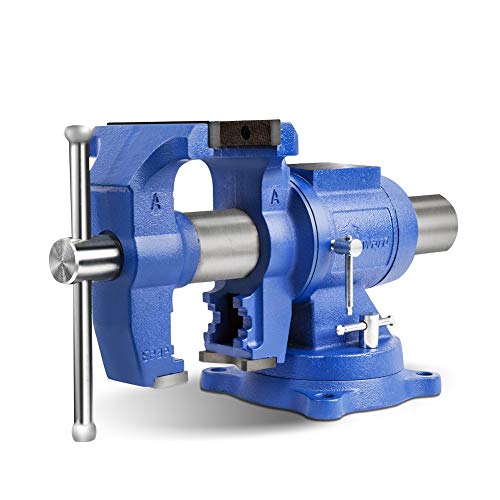
Yost Vises 760-DI 6 inch multi jaw rotating bench and pipe viseBest Multi Jaw 6 InchYost Vises 760-DI 6 inch multi jaw rotating bench and pipe vise6 inches5.90 inches4.31 inchesn/a
Forward CR80A 8 inch heavy duty bench vise with anvil, 210 degree swivelBest Heavy ImportForward CR80A 8 inch heavy duty bench vise with anvil, 210 degree swivel8 inches (200 mm)9 inches (229 mm)4.1 inches (104 mm)n/a
Forward DT08125A 5 inch heavy duty bench vise, 360 degree swivel base and headBest Compact MetalworkingForward DT08125A 5 inch heavy duty bench vise, 360 degree swivel base and head5 inches (125 mm)5 inches (125 mm)2.6 inches (67 mm)n/a
VEVOR 6 inch bench vise, 5.9 inch opening, 360 swivel, anvil and tool kitBest ValueVEVOR 6 inch bench vise, 5.9 inch opening, 360 swivel, anvil and tool kit6 inches5.9 inchesn/a360 degree swivel with locking
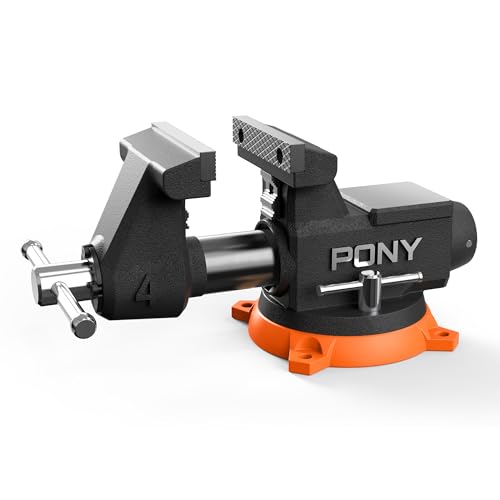
PONY 4 inch heavy duty bench vise, 360 rotation, dustproof screwBest Light DutyPONY 4 inch heavy duty bench vise, 360 rotation, dustproof screw4 inchesn/an/a360 degree rotation

A bench vise is the second pair of hands in a workshop. It clamps stock firmly so you can saw, file, drill or bend without the work moving, and it stands up to far more force than a clamp.

Jaw width, opening and body material set what a vise can hold and how long it lasts. Listings tout clamping force in tens of thousands of pounds, which we treat with caution. This guide compares seven vises and explains how to match one to your bench.

Before you buy

6 Criteria to Look For Before Buying a Bench Vise

  1. 01

    Jaw width and opening

    Jaw width labels the vise size, and opening and throat depth decide what fits. Four to five inches suit hobby work, 6 inches suits most garages and 8 inches suits large parts. Buyers often match the jaw width but forget the opening. The Wilton 746A has a 5 3/4 inch opening and the Wilton 8 inch opens to 14 1/2 inches reversed.

  2. 02

    Body material

    Gray cast iron is brittle and can crack when hammered, while ductile iron tolerates more abuse, and steel is the strongest. Tensile figures like 60,000 psi are maker claims. Ductile iron is the sweet spot for a home shop. The Yost, VEVOR and Forward vises use ductile iron.

  3. 03

    Swivel base and lockdowns

    A swivel base lets you reposition work, but a weak lock can let the vise rotate under force. Two lockdown bolts hold better than one. A 360 degree swivel is more flexible than a 210 degree one. The Wilton vises list double lockdowns.

  4. 04

    Spindle design

    An enclosed, greased spindle keeps chips and dust out of the screw and nut, which reduces wear and cleaning. Open screws work fine with regular oiling. The Wilton 746A has an enclosed spindle.

  5. 05

    Jaw faces and pipe jaws

    Replaceable hardened jaw faces extend a vise's life, and built in pipe jaws hold round stock. Soft jaw covers protect finished work. Check that the jaws line up and close flat. Most vises here include pipe jaws.

  6. 06

    Clamping force claims

    Listings quote clamping force in thousands of pounds without a shared test. The numbers vary from 4400 to 12,000 and tell you little. Judge a vise by body mass, screw size and build quality. We treat these figures as maker claims.

Detailed reviews

The 7 best bench vises, explained

01
Wilton 746A 6 inch mechanics bench vise, enclosed spindle, pipe jaws
6 in jaws5 3/4 in openingEnclosed spindle360 degree swivel
Check price on Amazon
Best for: Home mechanics and metal workers who want a durable all round 6 inch vise.

The Wilton 746A is a 6 inch mechanics vise with a fully enclosed spindle, sealed in grease so that chips and dust stay out of the screw and nut. Replaceable hardened steel jaw faces grip flat stock, and built in pipe jaws hold round work.

The jaw opening is 5 3/4 inches and the throat depth is 4 1/8 inches, giving the capacity most garage jobs need. The 360 degree swivel base has double lockdowns, which keep the vise from rotating under load. Compared with import ductile iron vises, the 746A has a more serious spindle and tighter tolerances. Compared with the Forward CR80A, it is smaller and cheaper but not as massive.

Ownership is simple. Mount it through the bench with bolts and a backing plate, keep the sliding surfaces lightly oiled and replace jaw faces when the serrations flatten. A sealed spindle needs little attention, which is a real advantage in a dusty shop.

What works

  • Enclosed greased spindle keeps dirt out of the screw
  • Replaceable hardened jaw faces extend its life
  • Double lockdowns hold the swivel base firmly
  • Six inch jaws suit most garage work

Watch out for

  • Costs more than import ductile iron vises
  • Heavy to mount and move once installed

Specs

Jaw width
6 inches
Jaw opening
5 3/4 inches
Throat depth
4 1/8 inches
Spindle
Fully enclosed, sealed in grease
Base
360 degree swivel, double lockdowns
02
Wilton 8 inch reversible bench vise, opens to 14.5 inches, pipe jaws
8 in jaws9.25 in opening14.5 in reversedPipe jaws
Check price on Amazon
Best for: Shops handling large parts and long stock that need a wide opening.

The Wilton 8 inch reversible vise has a head that can be flipped to open to 14 1/2 inches, compared with 9 1/4 inches in the normal position. That range lets you hold large pieces like engine parts, long stock or awkward fabrications.

The 8 inch jaws and built in pipe jaws make this a serious shop vise, and the 360 degree swivel with dual lockdowns lets you reposition the work. It sits at the top of the cost range here, which reflects both size and weight. Compared with the 746A, it is bigger and more capable but demands a stronger bench. Compared with the Forward CR80A, it offers a reversible head and a stronger reputation.

Ownership is about the bench. Mount through the top with grade 8 bolts and a steel backing plate, keep the screw oiled and store the head in whichever position you use most. Avoid hammering on the jaws.

What works

  • Reversible head opens to 14 1/2 inches
  • Eight inch jaws grip large work firmly
  • Built in pipe jaws hold round stock
  • Dual lockdowns on a 360 degree base

Watch out for

  • Highest cost tier among the vises here
  • Very heavy and needs a sturdy bench

Specs

Jaw width
8 inches
Jaw opening
9 1/4 inches normal, 14 1/2 inches reversed
Pipe jaws
Built in
Base
360 degree swivel, dual lockdowns
Cost tier
Highest in this lineup
03
Yost Vises 760-DI 6 inch multi jaw rotating bench and pipe vise
6 in jaws5.9 in opening4.31 in throatDuctile iron
Check price on Amazon
Best for: General workshop use that needs both bench and pipe clamping.

The Yost 760-DI is a 6 inch vise with a multi jaw design that doubles as a pipe vise, a 5.90 inch opening and a 4.31 inch throat depth. The body and head rotate 360 degrees, which allows you to turn the work without releasing it.

The maker cites 60,000 psi ductile iron, a tensile figure that is common among import vises and that we treat as a claim. Compared with the Wilton 746A, it has a deeper throat but a less proven spindle design. Compared with the VEVOR 6 inch, it is similar in capacity and the choice comes down to the brand reputation and finish.

Ownership is simple. Oil the screw regularly, keep the jaws clean of chips and replace worn inserts. Mount it with through bolts and avoid hammering on the jaw faces.

What works

  • Deep 4.31 inch throat handles larger stock
  • Multi jaw design holds pipe and flat stock
  • Rotating head and body repositions the work
  • Ductile iron body resists cracking

Watch out for

  • Open screw needs regular cleaning and oiling
  • Tensile figure is a maker claim

Specs

Jaw width
6 inches
Jaw opening
5.90 inches
Throat depth
4.31 inches
Material
60,000 psi ductile iron, per the maker
Features
Multi jaw, rotating head and body
04
Forward CR80A 8 inch heavy duty bench vise with anvil, 210 degree swivel
8 in jaws9 in opening4.1 in throat210 degree swivel
Check price on Amazon
Best for: Metal workers who want a large ductile iron vise with an anvil.

The Forward CR80A is an 8 inch ductile iron vise with a 9 inch opening, a 4.1 inch throat and an integrated anvil. The maker claims 12,000 pounds of clamping force, a figure without a shared test method, so we rate it by size and body mass.

The swivel base rotates 210 degrees rather than a full circle, which is enough for most positions and keeps the base simpler. Compared with the Wilton 8 inch, it is cheaper, lacks the reversible head and has a shorter record. Compared with the Forward DT08125A, it is a much larger vise that needs more bench strength.

Ownership is about mounting. Use bolts through the bench and a backing plate, keep the screw oiled and use the anvil for light shaping only. Do not hammer the jaws or use a cheater pipe on the handle.

What works

  • Eight inch jaws and a 9 inch opening
  • Integrated anvil for light shaping
  • Ductile iron body is stronger than gray iron
  • Lower cost than a Wilton of the same size

Watch out for

  • Swivel is 210 degrees, not a full circle
  • Clamping force is a maker claim

Specs

Jaw width
8 inches (200 mm)
Jaw opening
9 inches (229 mm)
Throat depth
4.1 inches (104 mm)
Clamping force
12,000 lb claimed
Swivel
210 degrees
05
Forward DT08125A 5 inch heavy duty bench vise, 360 degree swivel base and head
5 in jaws5 in opening2.6 in throat5,500 lb claim
Check price on Amazon
Best for: Small shops and light benches that need a compact metalworking vise.

The Forward DT08125A is a 5 inch vise with a 5 inch opening, a 2.6 inch throat and a swivel that turns the base and the head a full 360 degrees. It is aimed at metalworking in a small shop and costs less than a Wilton.

The shallow throat is the main limit, since it can only hold work that reaches about 2.6 inches into the jaws. The maker cites 5,500 pounds of clamping force and a stronger material than previous versions, both claims we leave unverified. Compared with the Yost 760-DI, it is smaller with a shallower throat, but more compact for a small bench. Compared with the PONY 4 inch, it has more capacity.

Ownership is simple. Oil the screw, keep chips out of the slides and tighten the base bolts after the first month. The compact size is easier to mount on a lightweight bench.

What works

  • Base and head both swivel through 360 degrees
  • Compact size suits lighter benches
  • Five inch jaws handle most small projects
  • Lower cost than premium vises

Watch out for

  • Shallow 2.6 inch throat limits work size
  • Force figure is a maker claim

Specs

Jaw width
5 inches (125 mm)
Jaw opening
5 inches (125 mm)
Throat depth
2.6 inches (67 mm)
Clamping force
5,500 lb claimed
Swivel
360 degrees, base and head
06
VEVOR 6 inch bench vise, 5.9 inch opening, 360 swivel, anvil and tool kit
6 in jaws5.9 in openingAnvilDuctile iron
Check price on Amazon
Best for: Garage workshops that want a capable 6 inch vise at a low cost.

The VEVOR 6 inch vise combines a 5.9 inch opening, a ductile iron body, a 2.9 by 3 inch anvil and a 360 degree swivel base with a locking system, plus a kit of accessories. It sits at a low cost tier, which makes it the value pick.

The anvil is a small flat area behind the jaws that is made for light hammering, though you should not strike the jaws or the screw. Compared with the Wilton 746A, the VEVOR has a similar capacity but less refined tolerances and an open screw. Compared with the Yost, the specs are very close and the choice depends on price.

Ownership requires basic care. Oil the screw, brush chips out of the guides and tighten the base bolts. If the slides feel rough out of the box, deburr them with a file and lubricate before use.

What works

  • Six inch jaws and 5.9 inch opening at a low cost
  • Built in anvil for light hammering
  • Full 360 degree swivel base
  • Ductile iron body resists cracking

Watch out for

  • Open screw needs more cleaning than a sealed spindle
  • Tolerances are looser than premium brands

Specs

Jaw width
6 inches
Jaw opening
5.9 inches
Material
60,000 psi ductile iron, per the maker
Anvil
About 2.9 x 3 inches
Base
360 degree swivel with locking
07
PONY 4 inch heavy duty bench vise, 360 rotation, dustproof screw
4 in jaws4400 lb claim360 degree baseDustproof screw
Check price on Amazon
Best for: Hobbyists and small benches that need a compact vise.

The PONY 4 inch vise is a compact bench vise with a 360 degree rotating base and a dustproof screw design. The maker states a clamping force of 4400 pounds, which we treat as a claim and not a certified rating.

Four inch jaws are enough for light fabrication, model making, small engine parts and hobby work, but they will not hold large pieces. The dustproof screw helps keep chips out, an unusual feature at this cost. Compared with the Forward DT08125A, it is smaller and cheaper, and compared with the VEVOR 6 inch, it has much less capacity.

Ownership is simple. Oil the screw, tighten the base bolts and keep the vise out of damp areas. It is a good second vise for a small bench or a hobby corner.

What works

  • Compact four inch jaws fit a small bench
  • Dustproof screw design keeps chips out
  • Full 360 degree rotating base
  • Low cost tier for a swivel vise

Watch out for

  • Four inch jaws cannot hold large work
  • Clamping figure is a maker claim

Specs

Jaw width
4 inches
Clamping force
4400 lb claimed
Base
360 degree rotation
Screw
Dustproof design
Cost tier
Low

Spec decoder

What the listing measurements really mean

The numbers brands lead with, translated into what they tell you about fit, comfort and wear at home.

Jaw opening

The maximum gap between open jaws. It decides the thickness of work that fits.

Watch forThe Wilton 8 inch lists 9 1/4 inches normal and 14 1/2 inches reversed.

Throat depth

The distance from the jaw top to the slide below, limiting how far work can drop in.

Watch forThe Forward DT08125A lists 2.6 inches, while the Yost lists 4.31 inches.

Ductile iron

Cast iron treated to be tougher and less brittle than gray iron. It resists cracking from shock.

Watch forYost, VEVOR and Forward list ductile iron, though psi values are maker claims.

Enclosed spindle

A screw and nut sealed in a housing with grease. It keeps debris out and reduces maintenance.

Watch forThe Wilton 746A lists it.

Clamping force

The force the maker claims the jaws can apply. There is no common test method.

Watch forThe PONY lists 4400 pounds and the Forward CR80A lists 12,000 pounds.

Methodology

How We Evaluated These Bench Vises

Spec sheet review

We evaluated jaw width, opening, throat depth, material and swivel design from each listing. We compared them with what a home shop clamps. The Wilton and Forward vises anchored the comparison.

Owner feedback patterns

We looked for repeating comments on cracked bodies, weak swivel locks, gritty screws and loose jaws. These issues decide whether a vise lasts. Swivel base slipping came up often.

Fit for the bench

A vise must suit the bench it is bolted to. We graded each product on size and weight, from the compact PONY to the heavy Wilton 8 inch.

Cost relative to the lineup

We used relative cost tiers and quote no listing prices. The VEVOR and PONY sit at the low end, while the Wilton 8 inch sits at the top.

Claims we discounted

Clamping force and tensile figures appear on most listings. We treat them as maker claims and rank on build and capacity.

Decision guide

How to Choose the Right Bench Vises

By Work Type

SituationPickWhy
General garage workWilton 746AEnclosed spindle and 6 inch jaws
Large parts and long stockWilton 8 inch reversibleOpens to 14 1/2 inches
Metalworking with an anvilForward CR80AEight inch ductile iron with anvil
Small shop metalworkForward DT08125ACompact five inch vise
Hobby benchPONY 4 inchCompact and low cost

By Budget

TierPickWhy
LowestPONY 4 inchCompact swivel vise
LowVEVOR 6 inchSix inch ductile iron with anvil
Low to middleForward DT08125AFive inch metalworking vise
MiddleYost 760-DI and Forward CR80AMulti jaw or 8 inch import
HighestWilton 746A and 8 inchEnclosed spindle or reversible head

Premium Brand vs Import Value

Premium brand

Wilton offers enclosed spindles, replaceable jaws and a long record. The cost is higher.

Import value

VEVOR, Yost and Forward give similar jaw sizes in ductile iron for less, with looser tolerances and open screws.

Choose Wilton if you use a vise daily, and an import if the vise sees weekend work.

By Bench Strength

BenchPickWhy
Light or thin benchPONY 4 inchLower weight and force
Standard workbenchVEVOR or Wilton 746ASix inch capacity
Heavy steel or timber benchWilton 8 inchMassive and stable
Mixed use benchYost 760-DIMulti jaw versatility

For Metalworking Specifically

Look for

A ductile iron or steel body, hardened replaceable jaws, an anvil and a swivel base that locks firmly. Mount the vise near a bench leg.

In this comparison

The Forward CR80A is the first choice for large work, with the Wilton 746A as the premium alternative.

When to Spend More

Spend more if

You use the vise daily or work on large parts. Wilton builds last decades and keep their alignment.

Save if

Your vise sees light weekend use. The VEVOR or PONY is enough.

Ownership

Maintenance schedule

The upkeep that decides whether a piece still looks good in year five.

TaskIntervalWhy it matters
Oil the screw and slidesEvery month of useChips and rust grind the screw and cause stiffness. A little machine oil keeps it smooth.
Tighten base boltsAfter the first month, then yearlyBolts loosen with vibration and clamping force. A loose base lets the vise shift under load.
Replace worn jaw facesWhen serrations flattenSmooth jaws let work slip. New faces restore grip.
Keep chips out of the guidesAfter each jobChips scratch the sliding parts. A brush and a blast of air clean them out.
Do not hammer the jaws or handleAlwaysHammering cracks cast iron and bends screws. Use the anvil face only.

FAQ

Frequently Asked Questions

What size bench vise should I buy?

A 6 inch vise suits most garages, 4 to 5 inches suits hobby work and 8 inches suits large parts. Check the opening and throat depth as well.

Is ductile iron better than cast iron?

Yes. Ductile iron tolerates shock better and is less likely to crack. Gray cast iron is brittle.

Can I hammer on a vise?

Only on the anvil face. Hammering the jaws, screw or handle can crack the body or bend the screw.

How should I mount a vise?

Bolt it through the bench top with grade 8 bolts and a steel backing plate, near a leg. Do not use wood screws.

Are clamping force numbers real?

They are maker claims with no shared test. Judge a vise by body mass, screw size and build quality.

Do I need pipe jaws?

They are useful for round stock and pipe. Most vises here include them, so check before you buy.

Bottom line

The short version

Browse more bench viseson Amazon →
Brianna Cole, Lead Product Editor

About the author

Brianna Cole

Lead Product Editor, SenseiReview

Brianna Cole leads SenseiReview's buying guides, turning published specifications, documentation and owner feedback patterns into clear verdicts across home, tech, fitness, outdoor and DIY products.

More from Brianna →

Keep reading

Related guides