
Amazon affiliate links - we earn a commission.Affiliate disclosure

Buying guide · 12 min read · Updated 2026-11-27

Best Carbon Steel Pans (2026)

Carbon steel frying pans compared by weight, seasoning, handle design and cooking surface, with honest advice on upkeep, rust and which pan suits which cook.

Brianna Cole, Lead Product EditorBy Brianna ColeLead Product Editor5 picks comparedSpec-sheet verified
Best Carbon Steel Pans

At a glance

Our top picks

Side by side

Spec comparison

Carbon steel sits between cast iron and stainless. It heats faster than cast iron, weighs less and develops a natural nonstick patina as oil bakes into the surface. It is the pan many restaurant kitchens use for searing and eggs.

This guide compares carbon steel frying pans for home cooks. We evaluated each on published specifications, weight, construction, handle design, seasoning approach and owner feedback patterns, and we ranked them on how forgiving they are for a beginner and how well they hold up over years of seasoning.

Before you buy

6 Criteria to Look For Before Buying a Carbon Steel Pan

  1. 01

    Pre-seasoned or raw

    Pre-seasoned pans such as the OXO Obsidian, Merten and Storck and Yonida let you cook right away, but the factory layer is thin. Raw pans like the de Buyer need a wax wash and your own seasoning. Pre-seasoned is easier to start, and raw gives you control. Either way, real nonstick comes from repeated cooking, not from the box. Expect eggs to stick at first even on a pre-seasoned pan, and cook bacon or sausage early on to feed the surface fat.

  2. 02

    Size and cooking surface

    Overall diameter includes the sloped sides, and the flat floor is smaller. The de Buyer 12.5 inch has about a 9 inch cooking surface. A 10 inch pan like the OXO suits one or two people, and a 12 inch pan like the Merten and Storck suits family meals. Check the floor diameter in the listing, not only the headline. If you often cook for three or more, the extra two inches of a 12 inch pan will save you from cooking in batches.

  3. 03

    Weight and construction

    Carbon steel is lighter than cast iron, but pans still vary. The STRATA claims half the weight of traditional carbon steel through a clad design. Single-layer pans like the de Buyer are heavy-gauge and durable. Heavier pans hold heat better, and lighter pans are easier to toss. A pan that is too heavy to lift with one hand tends to stay in the cabinet, which defeats the point of a pan you want to use daily.

  4. 04

    Handle design

    Steel handles stay oven safe but get hot, while silicone grips like the Yonida add comfort but limit oven use. Handle rivets collect grime, and a loose handle is the common failure. Check the handle length and the attachment method before buying. Wrap a heat-safe sleeve or use a mitt anyway, since a steel handle conducts heat from the burner.

  5. 05

    Finish and rust resistance

    Bare carbon steel rusts if left wet, and nitrided finishes like the STRATA resist rust better. Seasoning is a protective layer, and oiling after washing helps. Rust is usually surface-level and fixable with scrubbing and reseasoning. Store the pan dry and never stack other cookware inside it without a protective liner.

  6. 06

    Cooktop compatibility

    Carbon steel works on gas, electric and induction. The OXO Obsidian lists all three, and clad pans behave a little differently on induction. Large pans heat unevenly on small burners, so match the pan to the burner and preheat gradually to avoid warping. On a glass cooktop, lift the pan rather than sliding it, because the heavier steel can scratch the surface.

Detailed reviews

The 5 best carbon steel pans, explained

01
de Buyer MINERAL B Carbon Steel Fry Pan, 12.5 Inch
12.5 in diameter9 in cooking surfaceBeeswax finishCarbon steel
Check price on Amazon
Best for: Cooks who want a classic carbon steel pan and are happy to build the seasoning.

The de Buyer Mineral B is a classic French carbon steel fry pan with a 12.5 inch overall diameter and roughly a 9 inch flat cooking surface. It ships coated in beeswax, which you wash off before seasoning the pan with oil. The sides are sloped, and the pan is sturdy enough to sear, saute and fry.

The lesson here is that the listed diameter is not the cooking surface. A 12.5 inch pan with a 9 inch floor cooks like a 10 inch skillet, which matters when you plan portions. Compared with the OXO Obsidian, it arrives without a factory seasoning, so the first weeks demand more work. Compared with the Merten and Storck, it is a more traditional design with a higher reputation among enthusiasts.

Seasoning is a ritual: wash, dry, heat the pan until it turns blue-gray and rub on thin layers of oil at high heat. Do not soak it, dry it on a hot burner and wipe a thin film of oil before storing. Acidic sauces such as tomato can strip the seasoning, so cook them quickly or in another pan. With care, a carbon steel pan lasts for decades.

What works

  • Proven design with a heavy-gauge steel body
  • Sloped sides suit saute and tossing
  • Builds a natural nonstick patina over time
  • Works on gas, electric, induction and in the oven

Watch out for

  • Ships unseasoned under a beeswax coating
  • 9 inch cooking surface is smaller than the label suggests
  • Acidic foods can strip the seasoning

Specs

Diameter
12.5 in overall
Cooking surface
About 9 in
Finish
Beeswax coating to be washed off
Use
Searing, sauteing, eggs
Class
Upper-mid tier
02
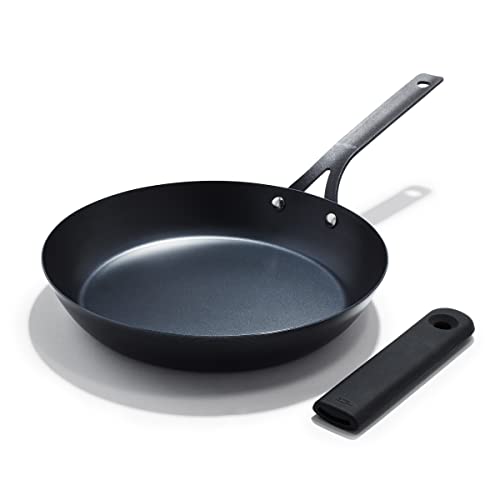
OXO Obsidian 10 Inch Pre-Seasoned Carbon Steel Frying Pan
10 in diameterPre-seasonedInduction readyOven safe
Check price on Amazon
Best for: Beginners who want a pre-seasoned start and a pan that works on any cooktop.

The OXO Obsidian is a 10 inch carbon steel frying pan that arrives pre-seasoned, so you can cook on day one. It works on induction, gas and electric cooktops and can go in the oven or on a grill. The pitch is a lighter pan that sears like cast iron with a gentler learning curve.

It is the most beginner-friendly option here because the factory seasoning gives you a head start. That said, pre-seasoned means a thin factory layer, and real nonstick performance still comes from building patina through cooking. Compared with the de Buyer, it skips the beeswax and first seasoning step. Compared with the STRATA, it is a conventional single-layer carbon steel pan with more weight.

Ownership is similar to any carbon steel pan: wash with hot water and a soft brush, dry immediately and wipe a thin film of oil. Avoid long acidic simmers and dishwashers. A 10 inch size suits one or two people, and for larger meals a 12 inch pan is worth considering. Expect the surface to darken and develop uneven patches, which is normal and not a defect.

What works

  • Pre-seasoned surface lets you cook right away
  • Works on induction, gas, electric, oven and grill
  • 10 inch size suits one or two people
  • Lighter than cast iron of similar size

Watch out for

  • Factory seasoning is thin and still needs building
  • Surface darkens unevenly over time
  • 10 inch size is small for families

Specs

Diameter
10 in
Seasoning
Pre-seasoned at the factory
Cooktops
Gas, electric and induction
Use
Indoor and outdoor, oven safe
Class
Mid tier
03
Merten & Storck Pre-Seasoned Carbon Steel 12 Inch Skillet
12 in diameterPre-seasonedLightweightQuick heating
Check price on Amazon
Best for: Cooks who want a larger pre-seasoned carbon steel pan for family meals.

The Merten and Storck 12 inch skillet is a pre-seasoned carbon steel pan positioned as cast iron performance without the weight. The maker says it develops a nonstick patina with use, and the more you cook the better it gets. A 12 inch size gives more room than the 10 inch pans in this guide.

Compared with the OXO Obsidian, it offers a larger cooking area and a similar pre-seasoned start. Compared with the de Buyer, it is simpler and ready to use, but less proven in the enthusiast community. A large carbon steel pan heats unevenly on small burners, so match it to a burner of similar size.

In daily use, preheat gradually to avoid warping, add oil and cook. Wash by hand and dry on the burner, then oil lightly. Rust shows as orange spots and is fixable by scrubbing and reseasoning. Handles get hot, so use a mitt. A pan this size is a good one-pan dinner tool, but it can be heavy for tossing food.

What works

  • 12 inch size gives room for family portions
  • Pre-seasoned surface starts nonstick-like
  • Lighter than cast iron of similar size
  • Heats quickly compared with cast iron

Watch out for

  • Large pan heats unevenly on small burners
  • Less track record than de Buyer
  • Heavy for tossing food one-handed

Specs

Diameter
12 in
Seasoning
Pre-seasoned
Weight claim
Lighter than cast iron
Heating
Quick
Class
Mid tier
04
STRATA 11 Inch Nitrided Carbon Clad Frying Pan, 3-Ply
11 in diameter3-ply nitridedAluminum coreHalf weight claim
Check price on Amazon
Best for: Cooks who want a lighter, more rust-resistant carbon steel pan and will pay for it.

The STRATA 11 inch pan is a three-ply design that pairs nitrided carbon steel with an aluminum core, a layered construction rather than a single sheet of steel. The maker calls it the lightest carbon steel pan, at roughly half the weight of a traditional one. Nitriding is a surface treatment that hardens the steel and improves rust resistance.

The clad design makes it the most unusual option here, and the most expensive. Compared with the de Buyer, it is far lighter and more even in heat, but it is not a traditional bare-steel pan with decades of owner lore. Compared with the OXO Obsidian, it offers a more refined build at a higher cost. Because aluminum conducts heat well, the pan reacts faster to burner changes than a single-layer steel pan.

Ownership benefits from the nitrided finish, which resists rust better than bare steel, though it still needs oiling and is not nonstick like PTFE. Wash by hand, dry promptly and oil lightly. The aluminum core means a thinner steel face, so avoid aggressive scouring. Check that your cooktop is compatible, since a clad pan behaves differently on induction than on gas.

What works

  • Half the weight claim eases lifting and tossing
  • Aluminum core spreads heat more evenly
  • Nitrided finish resists rust better than bare steel
  • 11 inch size is a flexible everyday pan

Watch out for

  • Highest cost tier in the lineup
  • Clad construction limits aggressive scouring
  • Newer design with a shorter track record

Specs

Diameter
11 in
Construction
3-ply, nitrided carbon steel with aluminum core
Weight claim
Half that of traditional carbon steel
Finish
Nitrided surface
Class
Highest tier here
05
Yonida 12 Inch Pre-Seasoned Carbon Steel Pan with Lid
12 in diameterPre-seasonedIncludes lidSilicone grip
Check price on Amazon
Best for: Budget buyers who want to try carbon steel and like having a lid.

The Yonida 12 inch pan is a pre-seasoned carbon steel skillet sold with a lid and a removable silicone handle grip. It sits at the low end of this guide's cost range. The maker says it arrives with a natural oil seasoning, and the silicone grip adds comfort on the stovetop.

The lid is the notable extra, since most carbon steel pans do not come with one. Compared with the Merten and Storck, it offers a similar size and a lid at a lower tier. Compared with the de Buyer, it has less heritage and fewer owner stories. The silicone grip must come off before oven use, and a pan with a removable grip can loosen.

Ownership steps are the same as for any carbon steel pan: wash by hand, dry immediately, oil lightly and avoid soaking. Treat the pre-seasoning as a starter layer and keep building it. Check the handle attachment and grip periodically, and do not use a silicone grip in a hot oven. For budget buyers testing carbon steel, it is a low-risk way in.

What works

  • Lowest cost tier with a lid included
  • 12 inch size suits family meals
  • Pre-seasoned for a quick start
  • Removable silicone grip is comfortable on the stovetop

Watch out for

  • Less brand history than de Buyer or OXO
  • Silicone grip must come off for oven use
  • Handle attachment needs periodic checking

Specs

Diameter
12 in
Seasoning
Pre-seasoned with natural oil
Lid
Included
Handle
Removable silicone grip
Class
Low tier

Spec decoder

What the listing measurements really mean

The numbers brands lead with, translated into what they tell you about fit, comfort and wear at home.

Cooking surface

The flat floor of the pan, which is smaller than the overall diameter. It sets how much food fits in one layer.

Watch forThe de Buyer lists 12.5 inches overall but about 9 inches of cooking surface. The Yonida lists a 12 inch pan with a lid.

Pre-seasoned

A factory layer of baked-on oil that protects the steel. It is a starting point, not a finished patina.

Watch forThe OXO, Merten and Storck and Yonida arrive pre-seasoned.

Nitrided

A surface treatment that hardens carbon steel and improves rust resistance. It does not make the pan nonstick like PTFE.

Watch forThe STRATA lists a nitrided surface.

Clad construction

Layers of different metals bonded together. An aluminum core spreads heat but changes how the pan feels and cleans.

Watch forThe STRATA is three-ply with an aluminum core.

Gauge or thickness

How thick the steel is. Thick pans resist warping and hold heat, while thin pans react quickly.

Watch forThe de Buyer is a heavy-gauge pan, and the STRATA is a lighter clad design.

Methodology

How We Evaluated These Carbon Steel Pans

Seasoning and start

We compared pre-seasoned and raw pans, such as the de Buyer beeswax finish against the OXO factory seasoning. Beginner-friendliness was weighed. Our scores are editorial assessments.

Size and surface

We read diameters and cooking surface sizes, from the 10 inch OXO to the 12 inch Merten and Storck. Listed size was not treated as usable size.

Weight and build

We compared single-layer steel with the clad STRATA. Weight claims were treated as claims. A lighter pan is easier to use daily, but a heavier one holds heat better when searing.

Handles and compatibility

We considered steel, silicone and riveted handles and cooktop compatibility, including induction. Owner feedback patterns on handle loosening shaped the cautions.

Value and honesty

We judged each pan by relative cost tier and noted the upkeep that no listing mentions. The Yonida was credited as a low-risk entry.

Decision guide

How to Choose the Right Carbon Steel Pans

By Experience

SituationPickWhy
First carbon steel panOXO Obsidian 10 InchPre-seasoned start.
Enthusiast building patinade Buyer Mineral BClassic raw pan.
Testing on a budgetYonida 12 InchLow cost with a lid.
Want less weightSTRATA 11 InchClad lightweight design.

By Budget

SituationPickWhy
Lowest spendYonida 12 InchLowest tier with a lid.
MidMerten and Storck 12 InchPre-seasoned and large.
Mid to upperOXO Obsidian 10 InchBrand-backed beginner pan.
HighestSTRATA 11 InchClad, nitrided, light.

Pre-Seasoned vs Raw

Pre-seasoned

The OXO, Merten and Storck, and Yonida can cook immediately but still need patina building.

Raw

The de Buyer needs a first seasoning, which takes effort but gives you full control.

Choose pre-seasoned for convenience. Choose raw if you want to build the patina yourself.

By Pan Size

SituationPickWhy
One or two peopleOXO Obsidian 10 InchCompact and easy to handle.
Family mealsMerten and Storck 12 InchLarge floor.
Tossing and sauteingSTRATA 11 InchLight enough to flip.
High sides for saucesde Buyer Mineral BSloped sides.

For Carbon Steel Specifically

Look for

A cooking surface that fits your portions, a handle you trust and a seasoning approach you will keep up. Preheat gradually. Season a new pan before the first use even if it arrives pre-seasoned.

In this comparison

The de Buyer leads on tradition, the OXO on ease and the STRATA on weight.

When to Spend More

Spend more if

You cook daily and want a lighter, rust-resistant pan like the STRATA or a long-lived classic like the de Buyer.

Save if

You are trying carbon steel for the first time. A Yonida or OXO is a low-risk way to learn.

Ownership

Maintenance schedule

The upkeep that decides whether a piece still looks good in year five.

TaskIntervalWhy it matters
Wash by hand and dry on the burnerAfter each useWater left on steel causes rust. Dry on a warm burner until no moisture remains.
Wipe a thin oil filmAfter each washA thin layer protects the seasoning and prevents rust. Wipe off excess so it does not turn sticky. Use a paper towel and wipe until the surface looks almost dry, not shiny and wet.
Avoid long acidic simmersEvery useTomato and wine strip seasoning. Cook acidic sauces quickly or in another pan.
Reseason as neededWhen food sticks or patches turn dullHeat the pan and rub on thin oil layers to rebuild the patina. Oven seasoning at a moderate temperature also works if you want an even coat.
Check handle attachmentsEvery few monthsRivets loosen and silicone grips wear. Tighten what you can and stop using a loose handle.

FAQ

Frequently Asked Questions

Is carbon steel better than cast iron?

It is lighter and heats faster, but it is thinner and holds less heat. Many cooks use both. Choose carbon steel for weight and responsiveness.

Is carbon steel nonstick?

Only after you build seasoning. It is not nonstick like PTFE, and it needs oil and technique. Fried foods, bacon and repeated high-heat cooking build the patina faster than occasional use does.

Why is my pan sticking?

Usually the pan was not hot enough, there was too little oil or the seasoning is thin. Preheat, add oil and keep building patina. Pull the pan off the heat if smoke starts, wipe it down and restart at medium heat.

Does carbon steel rust?

Yes, if left wet. Rust is surface-level and fixable by scrubbing and reseasoning. A pan stored in a humid cabinet is more likely to spot, so keep it dry and lightly oiled.

Can I use it on induction?

Yes, carbon steel is magnetic. Check each listing for compatibility. Induction heats the pan quickly, so use medium heat to begin with and adjust.

Can I cook tomato sauce in it?

Briefly, but long acidic simmers strip seasoning. A quick pan sauce is fine.

Bottom line

The short version

Browse more carbon steel panson Amazon →
Brianna Cole, Lead Product Editor

About the author

Brianna Cole

Lead Product Editor, SenseiReview

Brianna Cole leads SenseiReview's buying guides, turning published specifications, documentation and owner feedback patterns into clear verdicts across home, tech, fitness, outdoor and DIY products.

More from Brianna →

Keep reading

Related guides