
Amazon affiliate links - we earn a commission.Affiliate disclosure

Buying guide · 12 min read · Updated 2026-11-21

Best Drywall Sanders for Walls and Ceilings (2026)

Compare six drywall sanders by corded or cordless power, head design, speed range, reach, dust collection and weight, for joint compound on walls and ceilings.

Brianna Cole, Lead Product EditorBy Brianna ColeLead Product Editor6 picks comparedSpec-sheet verified
Best Drywall Sanders for Walls and Ceilings

At a glance

Our top picks

Side by side

Spec comparison

PieceMotorPrice positionSpeedHeadDust
DEWALT 20V MAX Cordless Drywall Sander DCE800B, Tool OnlyBest OverallDEWALT 20V MAX Cordless Drywall Sander DCE800B, Tool OnlyBrushlessMost expensive of elevenn/an/an/a
WEN DW5084 5-Amp 2-in-1 Dual-Head Drywall Sander with 15 ft HoseBest Dual HeadWEN DW5084 5-Amp 2-in-1 Dual-Head Drywall Sander with 15 ft Hose5 Amp head-mountedEighth of eleven600 to 1500 RPM variablen/an/a
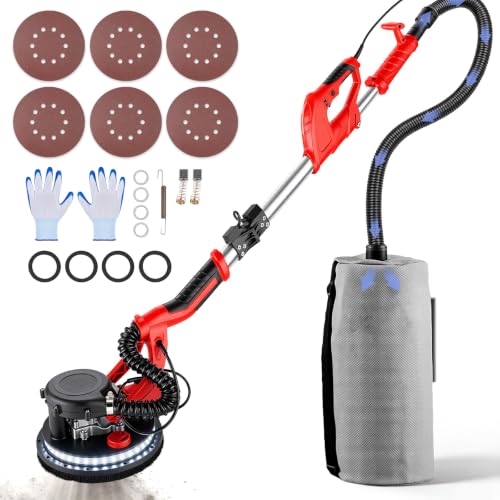
POPULO 9 in Drywall Sander with Dust Collection, 63 in Extended ReachBest Reach DetailPOPULO 9 in Drywall Sander with Dust Collection, 63 in Extended Reachn/aThird of elevenVariable9 inch broad sanding headHose and collection bag included
MAXXT 4 mm Random Orbital Brushless Drywall Sander, 400WBest Random OrbitalMAXXT 4 mm Random Orbital Brushless Drywall Sander, 400WBrushless, 400W, 3.5An/an/aRotates 180 degreesQuick-connect to your vacuum, 90 percent capture claim
VEVOR 850W Variable Speed Foldable Drywall Sander, 800 to 1750 RPMBest Brush-Pad BudgetVEVOR 850W Variable Speed Foldable Drywall Sander, 800 to 1750 RPM850WSecond lowest of eleven800 to 1750 RPM variableBrush pad that absorbs dustn/a
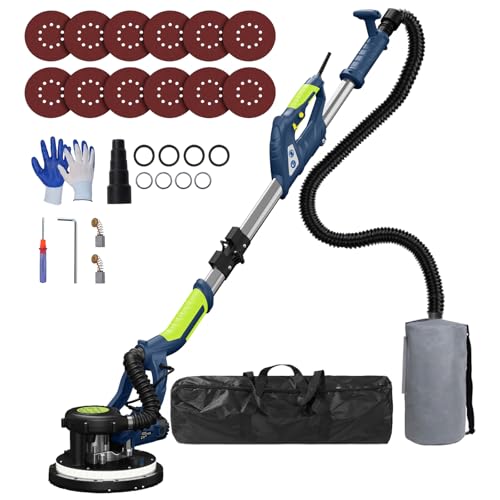
IMQUALI 8-Amp Drywall Sander with Built-In Vacuum and 10-Hole DiscBest Built-In Vacuum ValueIMQUALI 8-Amp Drywall Sander with Built-In Vacuum and 10-Hole Disc8 Amp copper motorSixth of elevenn/an/aBuilt-in vacuum, 10-hole sanding disc

A drywall sander is a long-handled power sander for smoothing dried joint compound on walls and ceilings. It saves hours of hand sanding, reaches high spots without a ladder and, with a vacuum connection or built-in dust system, reduces the fine white dust that spreads through a house.

Models differ in power source, head shape, speed range, reach and how they handle dust. This guide compares those details and is honest about the limits: dust collection helps but is never complete, and you still need a respirator and plastic sheeting.

Before you buy

6 Criteria to Look For Before Buying a Drywall Sander for Walls and Ceilings

  1. 01

    Corded versus cordless

    Cordless sanders, like the DEWALT DCE800B, avoid dragging a cord across ceilings and rooms. Corded sanders, like the WEN and IMQUALI, give steady power with no battery to charge. Ceilings favor cordless, and large, flat walls near an outlet favor corded for lower cost.

  2. 02

    Head design: round, triangular or orbital

    A round disc covers flat areas quickly but cannot reach inside corners. A triangular head, as on the WEN, reaches corners. A random orbital action, as on the MAXXT, gives a finer finish and fewer swirl marks. Most pros use a pole sander for corners and a head for flats.

  3. 03

    Speed range and control

    Speed control helps you avoid gouging joint compound. The WEN lists 600 to 1500 RPM, the IMQUALI 800 to 1800 and the VEVOR 800 to 1750. A slow speed is gentler on fresh compound. Fast speeds on thick compound clog the disc and burn the surface.

  4. 04

    Reach and weight

    A long handle saves ladder time. The POPULO lists 63 inches extended, and the DEWALT has a telescoping shaft. A head-mounted motor adds weight at the top of the pole, which is tiring. Check weight and balance, since you hold the sander overhead for long periods.

  5. 05

    Dust collection and honesty

    Built-in vacuums, as on the IMQUALI, and hose connections, as on the WEN and MAXXT, reduce dust but never remove it all. Maker claims of 90 or 95 percent capture are best cases. Seal doors with plastic, cover vents and wear a respirator rated for fine dust.

  6. 06

    Discs and ongoing cost

    Hook-and-loop discs wear and clog, so you will buy many. Fine grits of 120 to 220 suit finishing, and coarser grits remove more compound. Check that spare discs are easy to find, since an unusual hole pattern or size can limit your options.

Detailed reviews

The 6 best drywall sanders for walls and ceilings, explained

01
DEWALT 20V MAX Cordless Drywall Sander DCE800B, Tool Only
20V MAXBrushlessTelescoping shaftWireless control
Check price on Amazon
Best for: Pros and serious DIYers who want a cordless sander linked to an extractor.

The DEWALT DCE800B is a cordless 20V MAX drywall sander with a brushless motor, a telescoping shaft for hard-to-reach areas and Wireless Tool Control, which can switch the sander on and off when it is paired with a compatible dust extractor. It is sold as a bare tool.

The tradeoff is price and the extra gear. It is the most expensive of the eleven candidates, and you need 20V batteries and a dust extractor to get the full benefit. Compared with the WEN corded sander, it is cord-free and has a stronger dust workflow but costs far more. Compared with the cheaper vacuum sanders, it relies on your own extractor.

In ownership, cordless freedom is a real benefit on ceilings, because there is no cord to drag. Charge spare batteries, wear a respirator and seal off the room. Replace sanding discs often, since a clogged disc burns compound and leaves swirl marks.

What works

  • Brushless motor gives better runtime and durability than a brushed motor
  • Telescoping shaft reaches ceilings and corners without a ladder
  • Wireless Tool Control starts the extractor when you start the sander
  • No cord to snag or drag across the room on ceilings

Watch out for

  • Bare tool and most expensive of the eleven candidates
  • Needs a compatible dust extractor for the best dust control

Specs

Platform
20V MAX, bare tool
Motor
Brushless
Reach
Telescoping shaft
Dust link
Wireless Tool Control with a compatible extractor
Price position
Most expensive of eleven
02
WEN DW5084 5-Amp 2-in-1 Dual-Head Drywall Sander with 15 ft Hose
5 Amp600 to 1500 RPMDual head15 ft hose
Check price on Amazon
Best for: Rooms with many corners where a triangular head and a strong vacuum matter.

The WEN DW5084 is a corded sander with a 5 amp head-mounted motor, variable speed from 600 to 1500 RPM and a 2-in-1 design with both a triangular head for corners and a circular head for flat areas, both with tool-free hook-and-loop installation. The listing includes a 15 foot dust hose.

The tradeoff is that you need a shop vacuum to connect to the hose, and the cord and hose both trail behind you. Compared with the DEWALT cordless, it costs less and covers corners with the triangular head. Compared with the all-in-one vacuum sanders, it relies on your own vacuum, which gives stronger suction.

In ownership, a triangular head is useful in inside corners where a round disc cannot reach. Swap heads as the work demands, check the hook-and-loop pads for wear and clean the hose. Keep your vacuum filter clean, since drywall dust clogs filters quickly.

What works

  • Triangular and circular heads cover corners and flat areas with one tool
  • Variable speed from 600 to 1500 RPM suits different compound thicknesses
  • 15 foot dust hose connects to a shop vacuum for stronger suction
  • Tool-free head swap makes changing between corners and walls quick

Watch out for

  • Needs a separate shop vacuum for dust collection
  • Corded, so cord and hose can both snag on a ceiling job

Specs

Motor
5 Amp head-mounted
Speed
600 to 1500 RPM variable
Heads
Triangular and circular, hook-and-loop
Hose
15 ft dust hose
Price position
Eighth of eleven
03
POPULO 9 in Drywall Sander with Dust Collection, 63 in Extended Reach
9 in head63 in reachFoldableHose and bag
Check price on Amazon
Best for: Large flat walls and ceilings where a broad head and good reach matter.

The POPULO sander has a 9 inch broad sanding head, variable speed and a foldable handle that extends to 63 inches for walls and ceilings. The listing includes a hose and collection bag to help manage dust when the connections are secure.

The tradeoff is brand maturity and the dust claim. A hose and bag collect some dust but not all, and the listing in our data gives no motor rating. Compared with the WEN, it has a larger single head but no corner head. Compared with the DEWALT, it costs far less, third of eleven, and is corded.

In ownership, start at a low speed on a test spot, work in overlapping passes and avoid pressing hard, which gouges the compound. Empty the bag often, check that connections are tight and wear a respirator. It suits budget buyers with a large, mostly flat surface to sand.

What works

  • Nine inch head covers more area per pass than smaller discs
  • Stated 63 inch reach handles walls and ceilings without a ladder
  • Hose and collection bag are included for basic dust control
  • Third of eleven in price, low for a full-size drywall sander

Watch out for

  • Listing in our data gives no motor rating or speed range
  • Bag collection is partial, so a respirator and sheeting are still needed

Specs

Head
9 inch broad sanding head
Reach
63 inches when fully extended
Speed
Variable
Dust
Hose and collection bag included
Price position
Third of eleven
04
MAXXT 4 mm Random Orbital Brushless Drywall Sander, 400W
400W brushless4 mm orbitLED light180 degree head
Check price on Amazon
Best for: Finish work where a fine, swirl-free surface and good lighting matter.

The MAXXT is a brushless 400W, 3.5 amp random orbital drywall sander with a 4 mm orbit stroke, a built-in 360 degree LED light and a head that rotates 180 degrees. A quick-connect adapter and hose hook to your vacuum cleaner, which the listing says captures over 90 percent of debris.

The tradeoff is that you need a vacuum, the listing gives no price position in our data and the 90 percent figure is a maker claim. Compared with the WEN, it uses a random orbital action, which leaves a finer finish and fewer swirl marks than a rotary disc. Compared with the DEWALT, it is corded but cheaper.

In ownership, random orbital action is gentler on compound and easier to control. Connect the vacuum, use a fine grit disc and check the head pivot. The built-in light shows flaws in the joint compound as you sand. It suits finishing work where a smooth surface matters.

What works

  • Random orbital action with a 4 mm stroke leaves a finer finish than rotary discs
  • Brushless motor is efficient and quiet
  • Built-in 360 degree LED light shows flaws as you sand
  • Head rotates 180 degrees to reach awkward angles

Watch out for

  • Needs your own vacuum, which is not included
  • The 90 percent dust capture figure is a maker claim

Specs

Motor
Brushless, 400W, 3.5A
Action
Random orbital, 4 mm stroke
Light
360 degree LED
Head
Rotates 180 degrees
Dust
Quick-connect to your vacuum, 90 percent capture claim
05
VEVOR 850W Variable Speed Foldable Drywall Sander, 800 to 1750 RPM
850W800 to 1750 RPMBrush padTelescopic
Check price on Amazon
Best for: Budget buyers with a small room or a few repairs to sand.

The VEVOR 850W drywall sander has a variable speed of 800 to 1750 RPM, a heavy-duty head with a brush pad that the listing says absorbs dust, and a telescopic, foldable frame for ceilings. It is the second cheapest of the eleven candidates.

The tradeoff is brand and detail. The listing says the brush pad absorbs dust, but it gives no dust capture figure, and the build may be less refined than premium brands. Compared with the Populo, it states a speed range and motor. Compared with the IMQUALI, it costs less and has a brush pad design.

In ownership, a brush skirt keeps dust near the head, but you still need to wear a respirator and seal the room. Check the pivot and telescopic locks, and replace worn discs. It suits budget buyers with a small room to sand.

What works

  • Second lowest price among eleven candidates
  • Variable speed from 800 to 1750 RPM suits different compound thicknesses
  • Brush pad head helps keep dust near the sanding disc
  • Telescopic, foldable frame reaches ceilings and stores compactly

Watch out for

  • No dust capture figure and the brush skirt cannot stop all dust
  • Value brand with variable build quality and less parts support

Specs

Motor
850W
Speed
800 to 1750 RPM variable
Head
Brush pad that absorbs dust
Handle
Telescopic and foldable
Price position
Second lowest of eleven
06
IMQUALI 8-Amp Drywall Sander with Built-In Vacuum and 10-Hole Disc
8 Amp7 speedsBuilt-in vacuumCollapsible
Check price on Amazon
Best for: Homeowners who want a self-contained sander with its own vacuum.

The IMQUALI sander has an 8 amp copper motor, seven variable speeds, a built-in vacuum and a 10-hole sanding disc that the listing says gives high dust removal. It includes an extension rod, a flexible dust hose and a collection bag, and the handle collapses for storage.

The tradeoff is that a built-in vacuum is weaker than a shop vacuum, and the dust bag fills fast. Compared with the WEN, it has its own vacuum and needs no separate one, but collects less. Compared with the VEVOR, it costs more, sixth of eleven, with a stronger motor.

In ownership, empty the bag often, since a full bag loses suction. Replace discs when the holes clog and check the extension rod for wobble. Wear a respirator regardless of the collection system. It suits homeowners who want a self-contained sander.

What works

  • Built-in vacuum and 10-hole disc mean no separate vacuum is needed
  • 8 amp copper motor with seven speeds gives strong, controllable power
  • Includes an extension rod, hose and collection bag in the box
  • Collapsible handle stores compactly

Watch out for

  • Built-in vacuum is weaker than a shop vacuum and the bag fills quickly
  • Sixth of eleven in price, in the middle of the group

Specs

Motor
8 Amp copper motor
Speeds
7 variable, 800 to 1800 RPM
Dust
Built-in vacuum, 10-hole sanding disc
Handle
Collapsible
Price position
Sixth of eleven

Spec decoder

What the listing measurements really mean

The numbers brands lead with, translated into what they tell you about fit, comfort and wear at home.

Motor power (W or amps)

Watts and amps describe power draw for corded sanders. A stronger motor holds speed under pressure.

Watch forThe VEVOR lists 850W, the IMQUALI 8 amps, the WEN 5 amps and the MAXXT 400W brushless.

Speed range (RPM)

The lowest and highest disc speeds. Variable speed helps you match the sanding to the compound.

Watch forThe WEN lists 600 to 1500, the IMQUALI 800 to 1800 and the VEVOR 800 to 1750.

Reach (in)

The length of the sander when fully extended. It decides how high you can sand without a ladder.

Watch forThe POPULO lists 63 inches, and many listings give no reach figure.

Orbit stroke (mm)

The size of the random orbital motion. A larger stroke removes material faster, and a smaller stroke finishes finer.

Watch forThe MAXXT lists a 4 mm orbit stroke.

Dust capture claim

A maker figure for how much dust the system collects. It is a best case under ideal conditions.

Watch forThe MAXXT claims over 90 percent and many built-in vacuum models claim over 95 percent.

Methodology

How We Evaluated These Drywall Sanders for Walls and Ceilings

Power and speed

We evaluated motor ratings and speed ranges from the published listings, from 400W to 1000W and 600 to 1800 RPM. We did not sand any walls.

Head and reach

We compared round, triangular and random orbital heads and extension lengths. The WEN has dual heads and the POPULO lists 63 inches of reach.

Dust control

We looked at built-in vacuums, hoses and wireless extractor links. The IMQUALI has a built-in vacuum, and the DEWALT links to an extractor.

Ownership and discs

We considered discs, pivots and bag upkeep from owner feedback patterns. Disc cost and bag emptying are the main ongoing tasks.

Claims and value

We treated dust capture figures such as 90 and 95 percent as maker claims. We weighed price position against power, head design and reach.

Decision guide

How to Choose the Right Drywall Sanders for Walls and Ceilings

By Room Type

SituationPickWhy
Ceilings and tall wallsDEWALT DCE800BTelescoping shaft, cordless
Rooms with many cornersWEN DW5084Triangular and circular heads
Large flat wallsPOPULO 9 in9 inch head, 63 inch reach
Finish work, smooth surfaceMAXXT 4 mm OrbitalRandom orbital action

By Budget

SituationPickWhy
Lowest costVEVOR 850WSecond lowest of eleven
Low cost with a head and bagPOPULO 9 inThird of eleven
Mid-range self-containedIMQUALI 8 AmpSixth of eleven
Premium cordlessDEWALT DCE800BMost expensive of eleven

Built-In Vacuum vs Hose Connection

Built-in vacuum

The IMQUALI collects dust into a bag on the tool. It needs no other equipment, but the bag fills fast and suction is modest.

Hose to a vacuum

The WEN, MAXXT and DEWALT connect to your own vacuum or extractor. Suction is stronger, but you need the equipment and a long hose.

Choose a built-in vacuum for a small, self-contained job, and a hose to a shop vacuum if you want stronger dust control.

By Power Source

SituationPickWhy
No cord, own 20V batteriesDEWALT DCE800BCordless with brushless motor
Strong corded powerIMQUALI 8 Amp or VEVOR 850W8 amps or 850W
Quiet brushless cordedMAXXTBrushless with random orbital action
Corded with corners coveredWEN DW5084Dual head with a 15 foot hose

For Walls and Ceilings Specifically

Look for

Enough reach, a manageable weight and variable speed. Use 120 to 220 grit, work in overlapping passes and check with a raking light. Seal the room and wear a respirator.

In this comparison

The DEWALT is the best for ceilings, and the WEN is the best for rooms with many corners.

When to Spend More

Spend more if

You sand large areas often, want cordless freedom and a dust extractor link, as with the DEWALT, or want a finer random orbital finish.

Save if

You have one room to finish. The VEVOR or POPULO costs less, or a pole sander may be enough.

Ownership

Maintenance schedule

The upkeep that decides whether a piece still looks good in year five.

TaskIntervalWhy it matters
Empty the dust bag or canisterEvery 20 to 30 minutes of sandingA full bag loses suction and dust escapes. Emptying often keeps collection effective.
Replace discsAs they clog or wearClogged discs burn compound and leave marks. A fresh disc cuts cleaner and faster.
Clean the hose and filterAfter each roomDrywall dust clogs filters and hoses. A clean filter keeps suction strong.
Check pivots and extension locksBefore each sessionA wobbling head or slipping pole makes uneven sanding. Tighten or replace worn parts.
Store dry and flatAfter the jobDamp dust cakes and corrodes the motor. Wipe the tool and store it in a dry place.

FAQ

Frequently Asked Questions

Is a drywall sander worth it over hand sanding?

For large areas, yes. It saves hours and reaches ceilings. For a patch or two, a sanding block and a damp sponge make less dust and cost less.

How much should I spend on a drywall sander?

Match the job. Budget corded models handle a room, and pro cordless models suit regular use. Include discs and dust extraction in the cost.

How long do drywall sanders last?

Motors can last several jobs, while discs and pads wear quickly. No listing states a rated life. Keep dust out of the motor.

Does dust collection work?

It reduces dust a lot but never captures all of it. Maker claims of 90 or 95 percent are best cases. Seal the room and wear a respirator.

What grit should I use?

Use 120 to 150 grit for the first pass and 180 to 220 to finish. Coarser grits remove compound faster, and finer grits leave a smoother surface.

Can I sand the ceiling without a ladder?

Many sanders extend to about 5 feet, which with your height reaches an 8 foot ceiling. Check the stated reach before you buy.

Bottom line

The short version

Browse more drywall sanders for walls and ceilingson Amazon →
Brianna Cole, Lead Product Editor

About the author

Brianna Cole

Lead Product Editor, SenseiReview

Brianna Cole leads SenseiReview's buying guides, turning published specifications, documentation and owner feedback patterns into clear verdicts across home, tech, fitness, outdoor and DIY products.

More from Brianna →

Keep reading

Related guides