

Amazon affiliate links - we earn a commission.Affiliate disclosure

Buying guide · 12 min read · Updated 2026-11-21

Best Espresso Machines (2026)

Five espresso machines compared on heat-up, built-in grinder, steam wand, pump pressure claims, cleaning and long-term wear, with picks by skill and budget.

Brianna Cole, Lead Product EditorBy Brianna ColeLead Product Editor5 picks comparedSpec-sheet verified
Best Espresso Machines

At a glance

Our top picks

Side by side

Spec comparison

PieceGrinderMilkWater tank
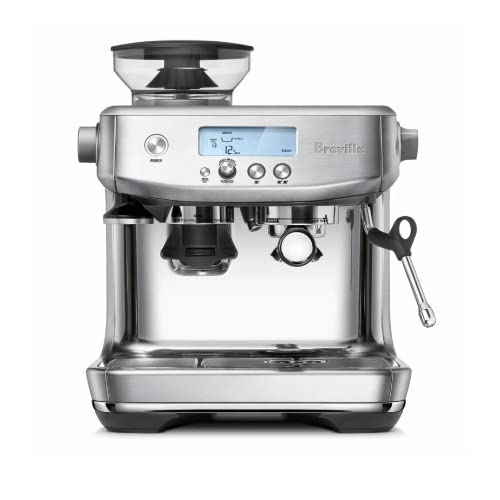
Breville Barista Express BES870XL with built-in grinderBest OverallBreville Barista Express BES870XL with built-in grinderIntegrated conical burr, adjustable grindManual steam wandAbout 67 oz removable
Breville Barista Pro BES878 with ThermoJet and LCDBest for Faster WorkflowBreville Barista Pro BES878 with ThermoJet and LCDIntegrated conical burr, finer stepsManual steam wandAbout 67 oz removable
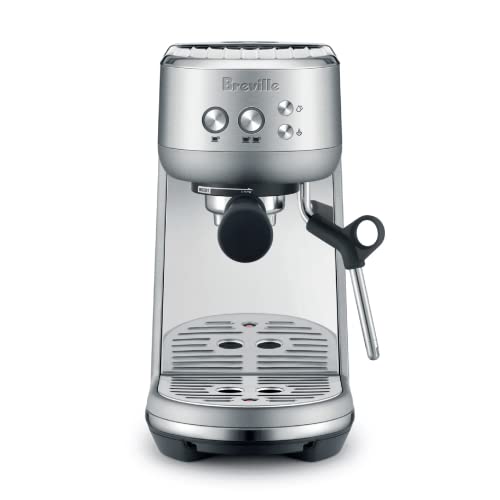
Breville Bambino BES450 compact espresso machineBest CompactBreville Bambino BES450 compact espresso machineNone, bring your ownAutomatic steam wand with set temperatureAbout 47 oz removable
CASABREWS CM5418 20-bar compact espresso machineBest ValueCASABREWS CM5418 20-bar compact espresso machineNone, bring your ownManual steam wandn/a
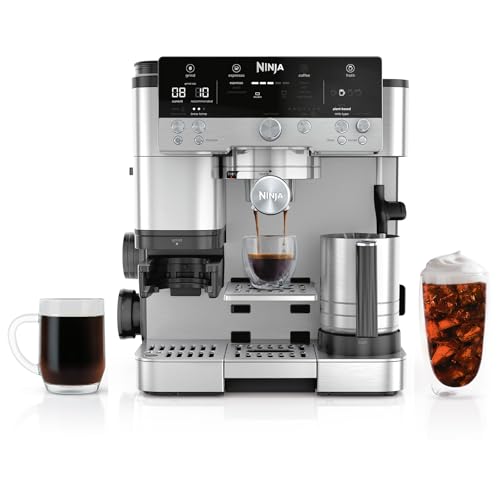
Ninja Luxe Cafe Premier ES601 espresso, drip and cold brewBest All-in-OneNinja Luxe Cafe Premier ES601 espresso, drip and cold brewIntegrated, assisted grindHands-free dual froth systemn/a

Espresso is coffee forced through a tightly packed puck of fine grounds under pressure, and the machine is only one third of the result. Grind size, dose and fresh beans matter just as much, which is why two machines with identical pump claims can taste very different in the cup.

The real decision is how much of the process you want to control. A semi-automatic with a built-in grinder rewards practice, a compact thermoblock model keeps cost low, and an all in one gives guided shortcuts. We evaluated five machines from the candidate pool using spec sheets, listing details and patterns in owner feedback, then ranked them by fit rather than feature count.

Before you buy

6 Criteria to Look For Before Buying an Espresso Machine

  1. 01

    Pump bar claims vs reality

    Espresso extraction targets about 9 bar at the puck, and the number printed on the box is usually the pump's peak rating. A 15 or 20 bar claim does not make better coffee, and a machine that regulates to 9 bar, like the Breville Barista Express, usually tastes more balanced than a 20 bar budget machine. The common mistake is paying extra for a bigger bar number. Look for a pressure valve and pre-infusion instead.

  2. 02

    Built-in grinder or separate

    Grind quality shapes the shot more than the machine, and cheap machines with no grinder need a burr grinder that is often 100 to 300 units on its own. An integrated grinder, as on the Breville Barista Express and Pro, saves counter space and gives a matched workflow. A separate grinder lets you upgrade each part later, which suits the Bambino or CASABREWS buyer. The mistake is pairing a pressurized machine with blade ground coffee.

  3. 03

    Heat-up and temperature stability

    Thermoblock and ThermoJet systems heat water on demand instead of keeping a large boiler hot. ThermoJet in the Bambino and Barista Pro reaches temperature in about three seconds, while older thermocoil designs like the Barista Express take longer but hold steady for a few shots. Cheaper thermoblocks can drift between the first and second shot. For a morning routine, favor fast heat-up, and for back to back drinks favor stability.

  4. 04

    Steam wand and milk method

    Milk drinks need a wand that can generate real microfoam, which requires strong, steady steam and a bit of technique. The Breville wands, including the Bambino's preset-temperature version, are good for learning. Automatic froth systems such as the Ninja's dual froth trade control for ease. If you drink mostly straight espresso or Americanos, steam power is a minor factor.

  5. 05

    Portafilter size and baskets

    A 54 mm portafilter, shared by the Bambino, Barista Express and Barista Pro, has the widest range of third party baskets and tampers at this tier. Pressurized baskets forgive poor grind and are common on budget machines, while non-pressurized baskets reward good grinding and give better flavor. A common mistake is buying a tamper that does not match the basket diameter, so check the size before ordering accessories.

  6. 06

    Water tank and descaling

    Tank size sets how many drinks you can pull before refilling, from roughly 34 oz on compact budget machines to 67 oz on the larger Breville units. Small boilers scale quickly with hard water, and scale is the leading cause of early failure in owner feedback patterns. Plan on filtered water and a regular descale, and pick a machine whose tank is removable and easy to fill.

Detailed reviews

The 5 best espresso machines, explained

01
Breville Barista Express BES870XL with built-in grinder
Built-in conical burr54 mm portafilterSteam wandPre-infusion
Check price on Amazon
Best for: Beginners who want to learn real espresso with one machine and one counter spot.

The Barista Express is a semi-automatic machine with a conical burr grinder mounted in the body, so beans go in at the top and ground coffee drops straight into a 54 mm portafilter. A low pressure pre-infusion phase wets the puck gently before full pressure, which helps even extraction, and an over pressure valve limits the shot to roughly the 9 bar that espresso recipes assume, even though the pump itself is rated higher. A manual steam wand handles milk.

The tradeoff is learning time. You set the grind, dose and tamp yourself, and the first week of shots will taste uneven while you dial in. It has no heat-up shortcut like the ThermoJet models, so the Breville Bambino is faster from cold, and it lacks the digital display of the Barista Pro. The built-in grinder is a strength because it removes the need for a separate 150 to 300 unit, but it also ties your grinder to your machine if either one fails.

Ownership centers on the grinder and the group head. Clean the burrs and hopper every few weeks, backflush with a blind basket, and descale on the schedule the manual gives. Owner feedback patterns mention grind chute clogging with oily beans and occasional steam wand wear, so keep a wet cloth at hand and purge after every pull. Expect a machine that rewards care for many years.

What works

  • Integrated conical burr grinder removes the need for a separate grinder
  • Pre-infusion and a pressure valve support balanced extraction
  • 54 mm portafilter accepts a wide range of baskets and tampers
  • Manual steam wand can produce proper textured milk for latte art

Watch out for

  • Requires dialing in grind, dose and tamp before shots taste good
  • Slower to reach brew temperature than ThermoJet machines
  • Grinder and brewer share one failure point if either breaks

Specs

Grinder
Integrated conical burr, adjustable grind
Portafilter
54 mm with dosing control
Pressure
15 bar pump, 9 bar extraction via valve
Milk
Manual steam wand
Water tank
About 67 oz removable
02
Breville Barista Pro BES878 with ThermoJet and LCD
ThermoJet heatingLCD displayBuilt-in grinderSteam wand
Check price on Amazon
Best for: Households that want fast heat-up and a clear display for repeatable shots.

The Barista Pro is the sibling of the Barista Express with a faster heating system and a digital interface. ThermoJet heating brings water to brewing temperature in a few seconds instead of a couple of minutes, and an LCD shows grind amount, shot time and extraction progress. The grinder is a conical burr unit with more adjustment steps than the Express, which makes fine tuning easier once you know which direction to move.

Compared with the Barista Express, the extra cost buys speed and clarity, not a different cup. The shot quality of two machines with the same pump and grinder family is close, so if you do not mind a short warm-up, the Express is the better value. Compared with the Breville Bambino, the Pro adds the grinder and the screen, while the Bambino stays smaller and cheaper but needs a separate grinder.

Day to day, the Pro is quieter to operate than a loud thermocoil machine and heats quickly, which suits mornings. Cleaning is the usual routine: knock out the puck, rinse the portafilter, run a cleaning cycle and descale on schedule. Owner feedback patterns point to the importance of using filtered or low hardness water because scale is the main long-term enemy of a fast heater, so choose a water source with that in mind.

What works

  • ThermoJet heating reaches brew temperature in seconds, not minutes
  • LCD shows shot timer and settings for repeatable results
  • Finer grind steps make dialing in more precise than basic models
  • Same 54 mm portafilter ecosystem as the Express and Bambino

Watch out for

  • Costs more than the Express for mostly the same cup quality
  • Fast heater is sensitive to scale if water is hard
  • Still needs a manual steam wand technique for good milk

Specs

Heating
ThermoJet, ready in a few seconds
Grinder
Integrated conical burr, finer steps
Display
LCD with shot timer and settings
Milk
Manual steam wand
Water tank
About 67 oz removable
03
Breville Bambino BES450 compact espresso machine
ThermoJet heating54 mm portafilterAuto steam wandCompact body
Check price on Amazon
Best for: Small kitchens and anyone who already owns a capable burr grinder.

The Bambino is the small machine in this lineup, built around the same 54 mm portafilter as its larger siblings but without a grinder or a big housing. ThermoJet heating makes it ready in a few seconds, and the steam wand is semi-automatic, with a preset milk temperature that stops overheating so a beginner can get usable microfoam. Low pressure pre-infusion is included, so the extraction logic matches the larger Breville machines.

The tradeoff is that grinding becomes a separate problem. A good burr grinder is part of the real cost, and a blade grinder or a coarse one will not make a good puck. Compared with the Barista Express, you save space and a lot of upfront cost, but you spend the difference on a grinder. If you already own one or buy a hand grinder, the Bambino is a strong value, otherwise the Express makes more sense.

For ownership, the narrow body fits under most cabinets and cleans quickly. Keep the steam wand tip clear with a purge and a damp cloth, backflush periodically and descale on schedule. Owner feedback patterns note that the plastic parts and small tank need attention, and that the tank empties faster than a large machine, so refill before heavy use.

What works

  • ThermoJet heating is ready in about three seconds from cold
  • Semi-automatic wand with preset temperature helps new milk steamers
  • Small footprint fits tight counters and low cabinets
  • Uses the same 54 mm accessories as larger Breville models

Watch out for

  • No grinder, so a separate burr grinder is a required extra
  • Smaller tank needs more frequent refills
  • Fewer controls to tweak extraction than the larger Breville models

Specs

Heating
ThermoJet, ready in about 3 seconds
Portafilter
54 mm
Milk
Automatic steam wand with set temperature
Grinder
None, bring your own
Water tank
About 47 oz removable
04
CASABREWS CM5418 20-bar compact espresso machine
20 bar pump ratedSteam wandCompact stainlessNo grinder
Check price on Amazon
Best for: First time buyers who want to learn espresso on a small budget.

The CM5418 is a compact, stainless steel semi-automatic that sits at the budget end of the shortlist. It pairs a pump listed at 20 bar with a steam wand and a pressure gauge on the front, which gives new users a visual cue while they learn. The 20 bar figure is a pump rating, not the pressure at the puck, which espresso recipes still aim at roughly 9 bar, so treat it as marketing more than a quality signal.

Its compromise is control. Thermoblock heating can swing in temperature and steam is less powerful than the Breville ThermoJet machines, so milk takes more patience. Compared with the Breville Bambino, you save a meaningful sum, but you give up the heating stability, the preset steam logic and the larger accessory ecosystem. Like the Bambino it has no grinder, so freshly ground beans from a decent burr grinder are non-negotiable for good shots.

Ownership is simple: wash the portafilter and basket, purge the steam wand after each use and descale regularly because small boilers scale quickly. Owner feedback patterns on budget semi-autos mention pump noise, plastic fittings and shorter service life than the premium brands, so treat it as a good entry point rather than a lifetime machine and keep water soft.

What works

  • Low cost entry into pressure based espresso with a real steam wand
  • Front pressure gauge helps beginners see what the pump is doing
  • Compact stainless body is easy to wipe and fits small counters
  • Works with pressurized baskets that forgive an inconsistent grind

Watch out for

  • The 20 bar rating overstates real extraction pressure
  • Temperature and steam stability trail the Breville machines
  • Needs a separate burr grinder to make good shots

Specs

Pump rating
20 bar listed, 9 bar is the target
Body
Stainless steel, compact
Milk
Manual steam wand
Grinder
None, bring your own
Style
Semi-automatic thermoblock
05
Ninja Luxe Cafe Premier ES601 espresso, drip and cold brew
3-in-1 brewerGuided Barista AssistBuilt-in grinderDual froth system
Check price on Amazon
Best for: People who want espresso drinks, drip coffee and iced coffee from one machine.

The Luxe Cafe Premier is not a classic prosumer espresso machine, it is a three in one that adds drip coffee and cold brew to espresso, with a built-in grinder and guided settings that suggest dose and grind. The dual froth system combines a spinning whisk with an automatic steamer so milk can be heated and textured without technique, which is the main point of the machine.

The tradeoff is flexibility. A hands-free froth system will not produce the control or latte art of a manual wand, and the guided workflow narrows how much you can tune compared with a Breville. For someone who wants one device that makes espresso based drinks, a regular cup of coffee and iced coffee, that breadth is the benefit. Compared with the Barista Express, the Ninja is easier to start, while the Breville is better if you want to learn the craft.

Ownership is about more parts: a grinder, a milk system, a drip path and a water tank all need cleaning. Run the descaling and cleaning cycle on the schedule the manual gives, empty and rinse the milk components after each use and expect more routine cleaning than a basic espresso machine. Owner feedback patterns on multi-function appliances emphasize that more mechanisms mean more places for residue to build, so factor in the time.

What works

  • Three brew styles cover espresso, drip and cold brew in one body
  • Guided Barista Assist settings reduce guesswork on dose and grind
  • Hands-free frothing makes milk drinks without wand technique
  • Built-in grinder keeps the whole workflow on one counter spot

Watch out for

  • Hands-free froth limits control and latte art compared with a manual wand
  • Many components need regular cleaning and descaling
  • Guided workflow gives fewer manual tuning options for enthusiasts

Specs

Brew styles
Espresso, drip coffee and cold brew
Espresso shots
Double or quad shot options
Grinder
Integrated, assisted grind
Milk
Hands-free dual froth system
Assistance
Barista Assist guided settings

Spec decoder

What the listing measurements really mean

The numbers brands lead with, translated into what they tell you about fit, comfort and wear at home.

Bar (pump pressure)

Bar is the unit of pressure the pump can generate. Espresso targets about 9 bar at the coffee, so bigger pump ratings do not equal better shots.

Watch forThe CASABREWS lists 20 bar, but 9 bar is still the recipe target.

Pre-infusion

Pre-infusion wets the puck at low pressure before full pressure builds. It reduces channeling and makes extraction more even.

Watch forThe Breville models list it, while basic budget machines may not.

Thermoblock vs ThermoJet

Both heat water on demand. ThermoJet is Breville's faster variant that reaches temperature in seconds, while a basic thermoblock can swing in temperature.

Watch forThe Bambino and Barista Pro use ThermoJet, the CASABREWS uses a plain thermoblock.

Portafilter diameter

The diameter, such as 54 mm, determines which baskets, tampers and accessories fit. Larger portafilters hold more coffee and usually give more even extraction.

Watch forCheck that a tamper matches the 54 mm basket on the Breville models.

Grind settings

The number of grind steps shows how finely you can tune extraction. More steps help when dialing in a new bean, but the quality of the burrs matters more than the count.

Watch forThe Barista Pro offers finer steps than the Express.

Methodology

How We Evaluated These Espresso Machines

Spec sheet comparison

We compared pump rating, portafilter size, heating system and tank size as published by each maker. We separated pump ratings from real extraction pressure, since the two are often confused. For example, the Barista Express and the CASABREWS use very different pressure logic.

Workflow and learning curve

We looked at how many steps stand between beans and a finished drink on each machine. Integrated grinders and assisted systems shorten the path, while separate grinders and manual wands lengthen it. This is why the Ninja and the Barista Express serve different buyers.

Milk steaming approach

We reviewed the steam wand type and any automation on each model. Manual wands give control, while presets and hands-free systems give consistency. The Bambino sits in the middle with a manual wand that has a set temperature.

Ownership and cleaning

We read owner feedback patterns for descaling, grinder clogging, steam wand wear and tank complaints. We then weighed how many parts each machine has to clean. A machine with more modules, like the Ninja, asks for more routine work.

Value for the use case

We compared what each machine does against the expected extra purchases such as a grinder or tamper. A cheap machine plus a separate grinder can cost as much as an integrated model. This shaped the order between the CASABREWS, Bambino and Express.

Decision guide

How to Choose the Right Espresso Machines

By Skill Level

SituationPickWhy
First espresso machineBreville Barista ExpressGrinder, wand and pressure valve in one body to learn on
Already own a burr grinderBreville BambinoFast heat-up and preset steam on a small machine
Want a screen and fast warm-upBreville Barista ProThermoJet heating plus LCD feedback
Want drinks without techniqueNinja Luxe Cafe PremierGuided settings and hands-free frothing

By Budget

SituationPickWhy
Lowest cost entryCASABREWS CM5418Cheapest in the shortlist with a real steam wand
Compact with proper heatingBreville BambinoLower tier of the premium brand with ThermoJet
Mid tier, grinder includedBreville Barista ExpressSaves buying a separate grinder
Higher spend, speed and screenBreville Barista ProAdds ThermoJet and LCD to the Express formula

Integrated Grinder vs Separate Grinder

Integrated grinder

The Barista Express, Barista Pro and Ninja put a grinder in the body. That saves space and cost and keeps the setup matched, but a grinder failure means servicing the whole unit.

Separate grinder

The Bambino and CASABREWS need a burr grinder. This lets you upgrade the grinder later, but it adds a purchase and a second appliance to the counter.

Choose integrated if you want one counter footprint, and separate if you plan to upgrade parts over time.

By Milk Preference

SituationPickWhy
Straight espresso or AmericanoCASABREWS CM5418Steam power matters little for black coffee
Learning latte artBreville Barista ExpressManual wand gives real texturing control
Beginner milk, set temperatureBreville BambinoPreset temperature wand limits overheating
Hands-free flat whiteNinja Luxe Cafe PremierDual froth system automates milk

For Small Kitchens Specifically

Look for

A narrow body, a removable tank you can fill at the sink and clearance for the portafilter to lock in. Check that the cabinet above leaves room to lift out the tank.

In this comparison

The Breville Bambino is the narrowest and most compact. The CASABREWS CM5418 is also small, while the Ninja and the Barista Express need more counter space.

When to Spend More

Spend more if

You want faster heat-up, better temperature stability and a grinder with finer steps, which the Breville Barista Pro offers over the Express and Bambino.

Save if

You make one or two drinks a day and mostly drink milk based coffee. The CASABREWS or Bambino with a decent burr grinder covers the need.

Ownership

Maintenance schedule

The upkeep that decides whether a piece still looks good in year five.

TaskIntervalWhy it matters
Purge and wipe the steam wandAfter every useMilk residue dries inside the tip and clogs the holes. A quick purge and a damp cloth keep steam strong and prevent bacteria growth.
Knock out the puck and rinse the portafilterAfter every shotOld grounds turn rancid and add bitterness to the next shot. Rinsing keeps the basket holes clear for even flow.
Backflush with a blind basketWeeklyOils and fines build up in the group head and valve. Backflushing clears them so water flows evenly and the machine stays reliable.
Clean grinder burrs and hopperEvery 3 to 4 weeksOily beans leave residue that stales fresh coffee and clogs the chute. Brushing or vacuuming the burrs keeps the grind consistent.
Descale with a machine-safe descalerEvery 2 to 3 months, sooner with hard waterScale narrows small passages and strains the heater. Following the manual's descale routine protects the pump and heating system.

FAQ

Frequently Asked Questions

Do I need a grinder to make espresso at home?

Yes, a good burr grinder is essential, because pre-ground coffee is rarely fine or fresh enough. The Breville Barista Express and Pro include one, while the Bambino and CASABREWS need a separate burr grinder.

Is a 20 bar pump better than 9 bar?

No. Espresso recipes target about 9 bar at the puck, and a 15 or 20 bar rating is the pump's peak, not what the coffee sees. Machines with a pressure valve, like the Breville models, regulate to a sensible level.

What is the best espresso machine for beginners on a budget?

The CASABREWS CM5418 gives the lowest cost way to learn with a real steam wand, as long as you add a burr grinder. If you can spend more, the Breville Barista Express removes the grinder purchase and teaches better habits.

How long does a home espresso machine last?

Many last several years with regular descaling and clean water, and scale is the common cause of failure. Premium brands such as Breville tend to hold up longer than budget machines, but all depend on maintenance.

Is an automatic milk frother as good as a steam wand?

It is easier but gives less control. The Ninja's dual froth system produces consistent warm foam, while a manual wand like the Breville's can texture silkier microfoam once you learn the technique.

Can I make cold brew or drip coffee on an espresso machine?

Not on a standard espresso machine, but the Ninja Luxe Cafe Premier adds drip and cold brew modes. For most other models you would dilute espresso into an Americano or iced drink.

Bottom line

The short version

Browse more espresso machineson Amazon →
Brianna Cole, Lead Product Editor

About the author

Brianna Cole

Lead Product Editor, SenseiReview

Brianna Cole leads SenseiReview's buying guides, turning published specifications, documentation and owner feedback patterns into clear verdicts across home, tech, fitness, outdoor and DIY products.

More from Brianna →

Keep reading

Related guides