
Amazon affiliate links - we earn a commission.Affiliate disclosure

Buying guide · 12 min read · Updated 2026-11-21

Best Hearing Protection for Power Tools (2026)

Hearing protection for power tools compared on NRR labels, muffs versus plugs, fit with glasses and helmets, and comfort over long jobs in the shop or yard.

Brianna Cole, Lead Product EditorBy Brianna ColeLead Product Editor6 picks comparedSpec-sheet verified
Best Hearing Protection for Power Tools

At a glance

Our top picks

Side by side

Spec comparison

Power tools are loud enough to damage hearing in minutes at close range, and the damage is cumulative and permanent. A chainsaw, rotary hammer or table saw can reach levels where protection is not optional, and the right device is the one you will actually wear for the whole job.

This guide focuses on tool and yard protection and is honest about the limits. We evaluated each product from published specifications and patterns in owner feedback, with attention to labelled rating, fit, comfort and durability of seals. A label number is a laboratory figure, and real-world protection is lower, so fit and consistent use matter more than chasing the highest number.

Before you buy

6 Criteria to Look For Before Buying a Hearing Protection for Power Tools

  1. 01

    NRR and what it means

    NRR is the noise reduction rating in decibels, measured in a laboratory under ideal fit. Real-world protection is lower, often by a large margin, because of imperfect fit. Most passive muffs are rated in the 20s and low 30s, and labels far above that deserve caution. Compare labels only within the same system, since SNR from Europe is not the same as NRR. A cautious habit is to assume you get roughly half of the label in real use, and to double up on plugs and muffs for the loudest tools.

  2. 02

    Muffs, plugs or both

    Muffs are quick to put on and take off and are easy to see in use. Foam plugs offer high attenuation and are small but need correct insertion. Wearing both together adds protection for very loud tools like chainsaws and rotary hammers. The 3M muffs and the GOL-SIV plugs can be paired. Corded plugs are easier to keep track of in a shop, and the cord keeps them around your neck when you take them out.

  3. 03

    Fit with glasses and helmets

    Safety glasses and thick frames break the seal on muffs. Low-profile cups and thin glasses arms help. Helmet-mounted muffs like the Optime 95 avoid headband conflicts with hard hats. A muff that does not seal is not protecting.

  4. 04

    Comfort and heat

    A hearing protector you cannot wear for an hour is not protecting you. Padded headbands and light cups help, and large cups can trap heat in summer. Plugs are cooler but can irritate the ear canal. Choose based on how long and where you work. Check that the headband does not press on the top of the head after an hour, since pressure points make people take muffs off early.

  5. 05

    Seal durability

    Cushions harden and crack with sweat, sun and age, which reduces protection. Premium muffs have replaceable cushions, while cheap muffs may not. Check the cushions every season and replace them when worn.

  6. 06

    Situational awareness

    Passive muffs reduce everything, including voices and warning sounds. For work with other people nearby, communicate with signals. Electronic muffs let in speech but cost more. Choose passive for tools and electronic if you need conversation. Be careful that electronic muffs are not a licence to turn volume up, because amplified sound still counts as noise exposure.

Detailed reviews

The 6 best hearing protection for power tools, explained

01
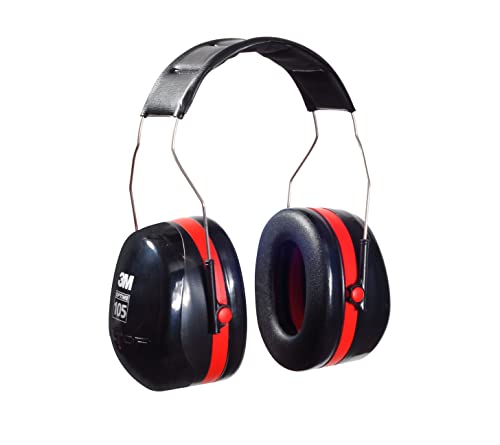
3M Peltor Optime 105 over-the-head earmuff, high attenuation, H10A
Over the headHigh NRROptime 105H10A
Check price on Amazon
Best for: Long sessions with very loud tools.

The 3M Peltor Optime 105 is a long-established, high-attenuation earmuff with a wide headband and large cups. The design approach uses deep cups and thick seals to reach the top of the rating range for passive muffs. For loud work like chainsaws, rotary hammers and routers, it is the safe choice.

Compared with the Optime 95 helmet-mounted muff, the 105 gives more attenuation but fits only over the head. Compared with the budget muffs, it is more comfortable over long sessions and holds its seals longer. It suits anyone who spends hours with noisy tools.

Ownership is about seals and fit. Wipe the cushions with a damp cloth, replace them when they harden or crack and keep the cups clear of dust. Do not wear thick glasses temples or hats under the seals, which break the fit. Put them on before you start the tool and leave them on until it has fully stopped, since the loudest moments are often startup and shutdown.

What works

  • High attenuation suits the loudest tools
  • Wide headband spreads pressure over a long session
  • Replaceable cushions extend service life
  • Established brand with consistent quality

Watch out for

  • Large cups feel hot in summer
  • Glasses arms can break the seal

Specs

Style
Over-the-head earmuff
Rating
High NRR in the 30 class
Series
Optime 105
Use
Loud tools and equipment
Brand
3M Peltor
02
3M Peltor Optime 95 helmet-mount earmuff, beige and black
Helmet mountOptime 95Low profileAttaches to hard hat
Check price on Amazon
Best for: Hard hat users in forestry and construction.

The 3M Optime 95 is a helmet-mounted earmuff that clips to a hard hat or forestry helmet. The design approach uses arms that swing out of the way when you do not need them. It is aimed at people who already wear a helmet for tree work, construction or utility jobs.

Compared with the Optime 105, the 95 has less attenuation and a lower profile, but it works with a helmet. Compared with the over-the-head muffs, it is more convenient for jobs where the helmet stays on all day. It suits forestry and construction users.

Ownership is about the mounting. Check that your helmet has compatible slots, adjust the arms for a good seal and replace the cushions when they harden. Keep the cups clean and dry. Swing the arms out when you need to talk to a coworker, and lower them as soon as the saw or chipper starts again.

What works

  • Clips to a hard hat or forestry helmet
  • Arms swing up when not needed
  • Low profile suits tight spaces
  • Established brand with replacement parts

Watch out for

  • Less attenuation than the Optime 105
  • Only works with compatible helmets

Specs

Style
Helmet-mounted earmuff
Series
Optime 95
Mount
Hard hat slots
Use
Hard hat and forestry work
Brand
3M Peltor
03
Pro For Sho 34 dB NRR ear protection, low profile, compact folding
34 dB NRR labelLow profileFoldingCompact
Check price on Amazon
Best for: Occasional tool use on a tight budget.

The Pro For Sho muff lists a 34 dB NRR, folds flat for storage and has a low-profile cup. The design approach is a budget earmuff that fits in a toolbox. A label this high should be read with caution, because most passive muffs are rated lower, and real-world protection is below any label figure.

Compared with the 3M Optime 105, the Pro For Sho costs less but has a less proven seal and headband. Compared with the ProCase, it has a similar profile and a higher listed rating. It suits occasional use with moderately loud tools such as a leaf blower or a circular saw.

Ownership is about care. Wipe the cushions, check the headband tension and replace the muff if the seals crack. Do not rely on a high label as permission to stay in loud noise for longer. Fold it away in a drawer when finished, since a muff left under heavy tools can bend its headband out of shape.

What works

  • Folds flat for storage in a toolbox
  • Low profile fits under some hats
  • Low cost for a full set of muffs
  • Easy to put on and take off

Watch out for

  • High label rating should be read with caution
  • Seals and headband are less durable than premium brands

Specs

Rating
34 dB NRR label
Style
Folding earmuff
Profile
Low profile
Storage
Compact fold
Color
White
04
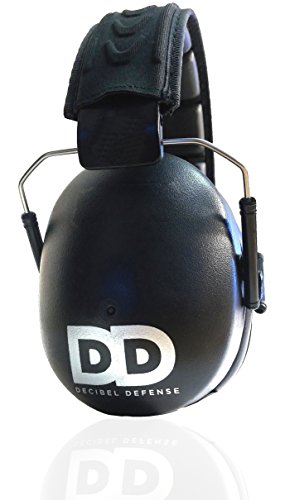
Decibel Defense 37 dB NRR earmuffs, highest-rated label, black
37 dB NRR labelOver the headPaddedBlack
Check price on Amazon
Best for: Users who want a heavy-duty muff with a high label.

The Decibel Defense lists the highest rating in the lineup, at 37 dB NRR, and adds a padded headband. The design approach is a heavy-duty muff aimed at shooting and tools. A label of 37 is unusually high for a passive muff, so treat it as a marketing number and judge the muff on fit and comfort.

Compared with the 3M Optime 105, the Decibel Defense claims a higher number, but 3M's record gives more confidence. Compared with the Pro For Sho, it is bulkier. It suits users who want the loudest rating on the label and a heavy-duty feel.

Ownership is about fit and seals. Check that the cups seal around your ears, wipe the cushions and replace them when worn. Do not stay in extreme noise longer because of a high label. Try it on with the glasses you actually wear to work, because a seal that works bare-headed may leak once you add frames.

What works

  • Highest label rating in the lineup
  • Padded headband for comfort
  • Heavy-duty build suits rough use
  • Suits both tools and shooting

Watch out for

  • 37 dB label is unusually high and should be read with caution
  • Bulkier than low-profile muffs

Specs

Rating
37 dB NRR label
Style
Over-the-head muff
Padding
Padded headband
Color
Black
Use
Shooting and tools
05
ProCase hearing protection ear muffs, SNR 33 dB, adjustable headband
SNR 33 dBAdjustablePaddedNoise reduction
Check price on Amazon
Best for: Mowing, trimming and light shop work.

The ProCase muff lists an SNR of 33 dB, which is a European rating different from the US NRR figure. The design approach is an adjustable, padded muff at a low tier. It is aimed at mowing, trimming and light shop work.

Compared with the Pro For Sho, the ProCase uses SNR rather than NRR, so do not compare the numbers directly. Compared with the 3M Optime 105, it is cheaper and less proven. It suits occasional yard work.

Ownership is routine. Wipe the cushions, check the headband tension and replace the muff when the seals harden. Keep it in a clean place away from heat. Keep a spare pair on the hook next to your mower so protection is never a reason to skip a quick trim.

What works

  • Low cost for a full set of muffs
  • Adjustable headband suits many head sizes
  • Padded cups are comfortable for short jobs
  • Lightweight body

Watch out for

  • SNR is not directly comparable to NRR
  • Less proven seals than premium brands

Specs

Rating
SNR 33 dB
Style
Over-the-head muff
Headband
Adjustable
Use
Tools and lawn care
Audience
Adults
06
GOL-SIV corded foam ear plugs, NRR 33 dB label, 50 pairs
33 dB NRR label50 pairsCordedFoam
Check price on Amazon
Best for: Wearing under muffs on the loudest tools.

The GOL-SIV pack gives you 50 pairs of corded foam plugs with a 33 dB NRR label. The design approach is a disposable plug that you roll, insert and let expand. Foam plugs offer the highest attenuation per dollar when they are inserted correctly.

Compared with the muffs, plugs are smaller and cooler but depend on correct insertion. Compared with the Optime 105, they cost far less per use. For very loud tools, wear plugs under muffs for added protection. It suits anyone who wants a stock of plugs for the shop.

Ownership is about technique. Roll the plug into a thin cylinder, pull the ear up and back and hold it until it expands. Throw away dirty plugs, and do not reuse them for long. Wash your hands before rolling the plugs, because dirt on foam is carried straight into the ear canal.

What works

  • Foam plugs can offer high attenuation when inserted well
  • 50 pairs cover many sessions
  • Small and cool compared with muffs
  • Can be doubled with muffs for extra protection

Watch out for

  • Requires correct insertion to reach the label rating
  • Disposable, so you must restock

Specs

Rating
33 dB NRR label
Style
Corded foam plugs
Quantity
50 pairs
Use
Disposable
Wrap
Individually wrapped

Spec decoder

What the listing measurements really mean

The numbers brands lead with, translated into what they tell you about fit, comfort and wear at home.

NRR

Noise reduction rating, measured in decibels in a laboratory. It is a US standard.

Watch forReal-world protection is lower, so do not rely on the label alone. Real-world protection is lower, so do not rely on the label alone, and treat any figure much above the low 30s on a passive muff with scepticism.

SNR

Single number rating, used in Europe. It is calculated differently from NRR.

Watch forThe ProCase lists SNR 33, which is not directly comparable to an NRR of 33.

Passive muff

A muff with no electronics that blocks sound with materials. It is simple and durable.

Watch forAll the muffs here are passive, so they block voices too.

Helmet-mount

A muff with arms that clip to a hard hat. It avoids headband conflicts.

Watch forThe Optime 95 uses it, so check your helmet slots.

Foam plug

A compressible plug that expands in the ear canal. It offers high attenuation when inserted correctly.

Watch forThe GOL-SIV plugs need proper rolling and insertion to work.

Methodology

How We Evaluated These Hearing Protection for Power Tools

Label and plausibility

We compared listed NRR and SNR and judged whether the claims were plausible. The 3M models have a record, while very high labels on lesser-known muffs raised caution. We treated labels as a starting point. We compared listed NRR and SNR and judged whether the claims were plausible against the usual range for passive muffs. The 3M models have a long record, while very high labels on lesser-known muffs raised caution. We treated labels as a starting point and gave more weight to fit and seal design.

Fit and compatibility

We looked at fit with glasses, helmets and different head sizes. The Optime 95 suits helmets, while the others suit open-head use. We weighted seal quality. We looked at fit with glasses, helmets and different head sizes. The Optime 95 suits helmets, while the others suit open-head use. We weighted seal quality and adjustability, since a muff that does not seal does not protect.

Comfort and heat

We read feedback on weight, headband pressure and heat. Premium muffs tend to be more comfortable over long sessions. Plugs are cooler but depend on insertion.

Durability and parts

We considered seal quality and replaceable cushions. The 3M muffs have replacement parts, while budget muffs often do not. Seals wear first.

Value in context

We placed each product in the tool-use range and asked what it gives up. The GOL-SIV plugs are the value pick, the Optime 105 is the best balance and the ProCase is the budget muff. Warranty was a tiebreaker.

Decision guide

How to Choose the Right Hearing Protection for Power Tools

By Tool Noise

SituationPickWhy
Chainsaw or rotary hammerOptime 105 plus foam plugsDouble protection for the loudest tools
Table saw or routerOptime 105 or Decibel DefenseHigh attenuation muffs
Mowing and trimmingProCase or Pro For ShoBudget muffs for moderate noise
Hard hat workOptime 95Helmet-mounted muffs

By Budget

SituationPickWhy
Lowest cost per useGOL-SIV plugs50 pairs of foam plugs
Cheap muffProCaseBudget over-the-head muff
Best balanceOptime 105Proven attenuation and comfort
Heavy-duty feelDecibel DefensePadded and bulky

Muffs vs Plugs

Muffs

The Optime 105, Decibel Defense, ProCase and Pro For Sho are quick to wear and easy to check. They can be hot and bulky.

Plugs

The GOL-SIV foam plugs are small, cool and high in attenuation when inserted properly. They need technique and fresh stock.

Use muffs for convenience and plugs for comfort, and combine them for the loudest tools.

Fit and Compatibility

SituationPickWhy
Safety glassesLow-profile muffsThin arms break the seal less
Hard hatOptime 95Helmet-mounted arms
Hot weatherFoam plugsCooler than muffs
Long sessionsOptime 105Padded and comfortable

For Power Tools Specifically

Look for

A proven rating, a good seal with your glasses, comfort for the length of your job and replaceable cushions.

In this comparison

The Optime 105 is the all-rounder, the Optime 95 is the helmet pick and the GOL-SIV plugs are the double-up pick.

When to Spend More

Spend more if

You use loud tools weekly, wear glasses or want comfort for long jobs. The Optime 105 is built for that.

Save if

You use quieter tools occasionally. The ProCase or Pro For Sho is enough.

Ownership

Maintenance schedule

The upkeep that decides whether a piece still looks good in year five.

TaskIntervalWhy it matters
Wipe the cushionsAfter each useSweat and dust break down the seal material. A damp cloth keeps them supple.
Replace worn cushionsYearly or when hardenedHard or cracked cushions reduce protection. Replacement kits restore the seal. Hard or cracked cushions reduce protection. Replacement kits restore the seal, and swapping them yearly is cheaper than replacing the whole muff.
Check headband tensionEach seasonA weak headband lets the cups gap. Replace the muff if tension drops.
Restock foam plugsAs neededDirty plugs lose elasticity and can irritate. Use fresh plugs often.
Store clean and dryAfter useHeat and dirt degrade seals. A clean case or hook prolongs life.

FAQ

Frequently Asked Questions

How loud are power tools?

Many power tools exceed levels where protection is advised, and chainsaws and rotary hammers are especially loud. Check the tool's manual and wear protection whenever you need to raise your voice to be heard. As a simple test, if you cannot hold a normal conversation at arm's length while the tool runs, you need protection.

How much should hearing protection cost?

Prices move, so check the current listing. Foam plugs are the cheapest per use, basic muffs cost more and premium muffs sit near the top. Pay more for comfort and seals.

Is a higher NRR always better?

Not always. Labels are laboratory figures and real-world fit matters more. Very high labels on lesser-known muffs deserve caution. A good fit and consistent wear beat a high number you only wear half the time.

Can I wear plugs and muffs together?

Yes. Double protection adds a bit of attenuation for very loud tools. Use it for chainsaws and rotary hammers. Insert the plugs first, then put on the muffs so the cups seat over the cords.

Do earmuffs work with safety glasses?

They can, but thick frames break the seal. Choose low-profile cups and thin glasses arms. Frames with thin, flat arms are the easiest to seal under, and some safety glasses are made to be worn with muffs.

What if my ears ring after using tools?

Ringing is a warning sign of noise damage. Stop, rest in quiet and see an audiologist if it persists. No protector reverses existing damage.

Bottom line

The short version

Browse more hearing protection for power toolson Amazon →
Brianna Cole, Lead Product Editor

About the author

Brianna Cole

Lead Product Editor, SenseiReview

Brianna Cole leads SenseiReview's buying guides, turning published specifications, documentation and owner feedback patterns into clear verdicts across home, tech, fitness, outdoor and DIY products.

More from Brianna →

Keep reading

Related guides