
Amazon affiliate links - we earn a commission.Affiliate disclosure

Buying guide · 12 min read · Updated 2026-11-27

Best Lawn Aerators for Small Yards (2026)

Manual lawn aerators compared by core versus spike design, tine type and effort, with honest notes on aerator shoes, clay soil and timing for small lawns.

Brianna Cole, Lead Product EditorBy Brianna ColeLead Product Editor6 picks comparedSpec-sheet verified
Best Lawn Aerators for Small Yards

At a glance

Our top picks

Side by side

Spec comparison

PieceTypeTinesClassOperation
LawnVigor Rolling Lawn Aerator, Non-Clogging Hollow Tines, Manual PushBest OverallLawnVigor Rolling Lawn Aerator, Non-Clogging Hollow Tines, Manual PushRolling core aeratorHollow tines, 5 pre-installed and 2 extraMid tiern/a
LANDZIE Rolling Lawn Aerator, Manual Core Plug Aerator, Hollow TinesBest Rolling AlternativeLANDZIE Rolling Lawn Aerator, Manual Core Plug Aerator, Hollow TinesRolling core plug aeratorHollow tinesMid tiern/a
hugeneroy Heavy Duty Steel Hollow Tine Core Aerator for Clay SoilBest for Clay Soilhugeneroy Heavy Duty Steel Hollow Tine Core Aerator for Clay SoilManual core aeratorSteel hollow tines with beveled, anti-clogging tipsMid tierManual, stand-up design
Walensee 4-Row Lawn Aerator Tool with 20 Steel Spikes for Small YardsBest Spot AeratorWalensee 4-Row Lawn Aerator Tool with 20 Steel Spikes for Small YardsManual spike aeratorn/aLow tierStand-up tool
Grenebo Manual Lawn Aerator Tool with 16 SpikesBest Budget Spike ToolGrenebo Manual Lawn Aerator Tool with 16 SpikesManual spike aeratorn/aLowest tierStand-up foot tool
Ohuhu Lawn Aerator Shoes with Shovel, Hook and Loop StrapsMost Limited OptionOhuhu Lawn Aerator Shoes with Shovel, Hook and Loop StrapsSpiked aerator shoesn/aLow tiern/a

Lawn aeration opens the soil so air, water and nutrients reach grass roots, and it helps on lawns that are compacted by foot traffic, clay soil or years of mowing. For a small yard, a manual aerator is often enough, though the work can be tiring.

This guide compares manual aerators for small lawns. We evaluated each on published specifications, tine type, design, handle, effort and owner feedback patterns, and we explain why hollow-tine core tools generally beat spikes, and why aerator shoes are the weakest option. Results depend on soil and timing.

Before you buy

6 Criteria to Look For Before Buying a Lawn Aerator for Small Yards

  1. 01

    Core or spike

    Core aerators, with hollow tines, pull plugs of soil from the lawn and leave room for roots, air and water. Spike aerators punch holes and can compact the sides of the hole, especially in clay. For real compaction, cores are the better choice. Spikes suit light soil and quick touch-ups, and the choice is the single biggest factor in results. Cores can look messy for a week or two, but they break down and feed the soil, so leave them where they fall.

  2. 02

    Soil type

    Clay is dense and clogs tines, so beveled hollow tines, as on the hugeneroy, help. Sandy soil rarely compacts as much and may need only a light spike pass. Test your soil by pushing a screwdriver into moist ground: if it is hard to push, you likely have compaction. Matching the tool to the soil saves effort. Lawns with thick thatch, bare patches or standing water after rain are also signs of compaction worth treating.

  3. 03

    Rolling or stand-up design

    Rolling tools, like the LawnVigor and LANDZIE, are efficient on open lawn, while stand-up tools, like the hugeneroy and Walensee, use body weight and suit patches. Rolling tools can struggle on hard soil because they depend on weight. Stand-up tools are harder on knees. Choose by lawn shape and your fitness. A tool that you dread using will stay in the shed, so choose the design you will actually use.

  4. 04

    Tine quality and spares

    Steel tines resist bending, and spare tines extend life. The LawnVigor includes two extra tines. Tines wear and bend on rocks and roots. Clean them after each use to prevent rust, and replace bent ones. Cheap thin spikes bend early. A tool with a replaceable tine set stays useful for years, while a welded spike head ends its life when the spikes bend.

  5. 05

    Effort and lawn size

    Manual aeration is physical work, and effort rises with compaction and lawn size. A small yard of a few hundred square feet is realistic by hand, but a larger lawn is a long job. Consider renting a power aerator for a big or very hard lawn. Plan the work over a weekend, not an hour. Work in the cool of the morning and take breaks, because coring is hard exercise.

  6. 06

    Timing and aftercare

    Aerate in the growing season of your grass, with soil moist but not wet. Water a day before. Leave the cores on the lawn to break down, then overseed and topdress for best results. Avoid aerating in drought, frost or heat. Mark sprinkler heads and shallow lines first. Fertilizer and seed placed right after aeration reach the root zone more easily.

Detailed reviews

The 6 best lawn aerators for small yards, explained

01
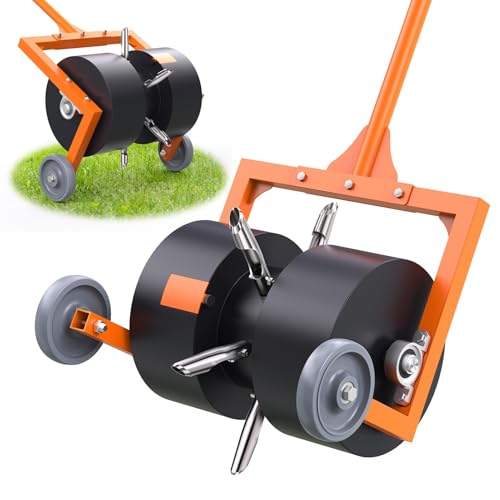
LawnVigor Rolling Lawn Aerator, Non-Clogging Hollow Tines, Manual Push
Hollow tinesRolling push design5 tines plus 2 extraNon-clogging
Check price on Amazon
Best for: Small to medium lawns with compacted soil where core aeration is worth the effort.

The LawnVigor is a manual push core aerator with hollow tines that pull small plugs of soil from the lawn, with five tines installed and two extra in the box. The maker describes the tines as non-clogging and suited to compacted soil. You push it across the grass like a small cart, and the tines rotate into the ground.

Hollow tines are the better design for compacted soil, since they remove cores and leave room for the soil to expand. Compared with the Grenebo spike tool, it removes soil and does not just poke holes. Compared with the Landzie rolling aerator, it is similar in concept, with spare tines included. A rolling design is easier on the back than a stand-on tool, though it still takes effort on hard ground.

Ownership notes: water the lawn the day before so the soil is moist, and aerate in the growing season of your grass type. Push in straight, overlapping passes and leave the cores to break down. Clean the tines after use to prevent rust and clogging. Mark sprinkler heads and shallow lines before you start, and plan to overseed afterward for the best results.

What works

  • Hollow tines pull soil cores instead of just poking holes
  • Rolling push design is easier than a stand-on tool
  • Two spare tines in the box
  • Suited to compacted soil

Watch out for

  • Mid cost tier
  • Pushing on hard or dry soil is hard work
  • Large lawns would take a long time

Specs

Type
Rolling core aerator
Tines
Hollow tines, 5 pre-installed and 2 extra
Design
Manual push, non-clogging
Soil
Aimed at compacted soil
Class
Mid tier
02
LANDZIE Rolling Lawn Aerator, Manual Core Plug Aerator, Hollow Tines
Hollow tinesRollingCore plugHeavy duty
Check price on Amazon
Best for: Small lawns with compacted soil where a rolling push tool is practical.

The LANDZIE is a rolling manual core aerator with hollow tines, billed as a quick, efficient and affordable way to reduce soil compaction. It uses the same plug-pulling principle as the LawnVigor, and the maker emphasizes a heavy-duty push design. It is another solid choice for small lawns.

The core idea matters more than the brand, so the choice often comes down to fit and finish. Compared with the LawnVigor, it lists fewer extras but a similar approach. Compared with the hugeneroy stand-up tool, it rolls instead of stepping into the ground. A rolling aerator suits large flat areas, while a stand-up tool suits patches.

Ownership notes: push it with steady pressure, and overlap passes about half a pass for even coverage. Do not use it on frozen or very dry ground, since the tines will not penetrate. Rinse and dry the tines after each use. Replace bent tines, and keep the wheels free of mud.

What works

  • Hollow tines pull cores from compacted soil
  • Rolling design covers open lawn areas quickly
  • Heavy-duty build per the listing
  • Mid cost tier for a core tool

Watch out for

  • Effort is high on dry, hard ground
  • Wheels can clog with wet clay
  • Less effective in tight spaces

Specs

Type
Rolling core plug aerator
Tines
Hollow tines
Design
Heavy-duty push aerator
Claim
Reduces soil compaction and improves growth
Class
Mid tier
03
hugeneroy Heavy Duty Steel Hollow Tine Core Aerator for Clay Soil
Hollow tinesSteelBeveled tinesClay soil
Check price on Amazon
Best for: Small lawns on clay soil that clogs lighter aerators.

The hugeneroy aerator is a heavy-duty manual core tool with steel hollow tines and anti-clogging beveled tips, described as built for clay soil. Clay compacts easily and clogs aeration tines, so a beveled design that sheds soil is a practical feature. The steel build is meant to take the strain of hard ground.

Clay is the toughest case for a small yard, since spikes tend to glaze the walls of the hole and add little. Compared with the LawnVigor, it is aimed at clay specifically. Compared with the Walensee spike tool, it removes cores and handles dense soil better. A stand-up tool lets you use body weight, which helps in tough soil.

Ownership notes: water the lawn well a day ahead, since dry clay resists tines. Work in sections, and clear the cores from the tines if they clog. Wear sturdy boots. Rinse the tines and dry them to prevent rust.

What works

  • Beveled hollow tines shed clay and resist clogging
  • Heavy-duty steel construction
  • Uses body weight for penetration
  • Mid cost tier for a clay-focused tool

Watch out for

  • Effort is high on hard ground
  • Slower than a rolling tool across open grass
  • Stand-up tool is harder on knees and back

Specs

Type
Manual core aerator
Tines
Steel hollow tines with beveled, anti-clogging tips
Soil
Built for clay soil
Operation
Manual, stand-up design
Class
Mid tier
04
Walensee 4-Row Lawn Aerator Tool with 20 Steel Spikes for Small Yards
20 steel spikes4 rowsSmall yardsSpot aeration
Check price on Amazon
Best for: Spot aeration of lightly compacted lawn patches at a low cost.

The Walensee tool is a stand-up spike aerator with four rows of 20 steel spikes, designed for small yards and targeted spot aeration. Spikes punch holes through the turf with a foot on the bar. It is a light and inexpensive option for lightly compacted patches.

Spike aerators do not remove soil, so they work best on loose or sandy ground and less well on heavy clay. Compared with the hollow tine tools, it is faster to use and much cheaper but less effective. Compared with the Grenebo, it has more spikes in four rows, which covers more ground per step. It suits touch-up work.

Ownership notes: step it into moist soil and rock slightly, then lift and move on. Do not use it on frozen or dry ground. Spikes can bend if they hit a rock or root, so check the ground. Clean and dry the spikes after use, and store in a dry place to avoid rust.

What works

  • 20 steel spikes cover more ground per step
  • Low cost tier
  • Light and easy to store
  • Quick to use on small patches

Watch out for

  • Spikes do not remove soil, so less effective than coring
  • Poor on heavy clay
  • Spikes can bend on rocks and roots

Specs

Type
Manual spike aerator
Spikes
20 steel spikes in four rows
Use
Small yards and spot aeration
Operation
Stand-up tool
Class
Low tier
05
Grenebo Manual Lawn Aerator Tool with 16 Spikes
16 spikesManualStand-upLow cost
Check price on Amazon
Best for: Tiny lawns and spot patches where a very low-cost tool is enough.

The Grenebo aerator is a manual stand-up tool with 16 sharp spikes that you press into the lawn with your foot. It is the lowest cost tool in this guide, and its simplicity is the point. The listing calls it an efficient yard aerator.

Spike tools suit a quick refresh of a small patch, and they do not clear soil cores. Compared with the Walensee, it has fewer spikes. Compared with the hollow tine tools, it is lighter and cheaper but less effective for real compaction. It is the right tool for a tiny lawn or a play area that needs a light touch.

Ownership notes: work in moist soil, and press the spikes in fully before lifting. Overlap steps for coverage. Do not force it into dry or stony ground, because the spikes can bend. Wipe and dry it after use.

What works

  • Lowest cost tier
  • 16 sharp spikes for quick punching
  • Light and easy to store
  • No assembly needed

Watch out for

  • Spikes do not remove soil cores
  • Less effective on compaction and clay
  • Slow for anything larger than a patch

Specs

Type
Manual spike aerator
Spikes
16 sharp spikes
Operation
Stand-up foot tool
Colors
Black and green
Class
Lowest tier
06
Ohuhu Lawn Aerator Shoes with Shovel, Hook and Loop Straps
Spiked shoesHook and loop strapsShovel includedFree installation
Check price on Amazon
Best for: People who want a very light, shallow refresh of soft soil and accept the limits.

The Ohuhu aerator shoes are spiked sandals that strap over your shoes with hook and loop fasteners, and the set includes a small shovel. You walk across the lawn and the spikes poke holes in the soil. They are popular because they look easy, but they are the weakest tool in this guide.

Walking in spikes pushes small holes into the soil, but body weight is too little to drive spikes deeply, and spikes do not remove cores. Compared with a stand-up spike tool or a core tool, they are slower and less effective. They can also be awkward on slopes and risky to walk in. They may be enough for a quick, shallow refresh of soft soil.

Ownership notes: wear them only on level lawns in moist soil, and walk slowly. Check the straps before each use, since a loose shoe is a tripping hazard. Do not wear them on hard or stony ground. Clean and dry after use.

What works

  • Low cost tier
  • No bending over to use
  • Hook and loop straps fit over most shoes
  • Includes a small shovel

Watch out for

  • Body weight drives spikes only shallowly
  • Does not remove soil cores
  • Trip risk if straps loosen

Specs

Type
Spiked aerator shoes
Fastening
Hook and loop straps
Includes
Small shovel
Use
Walk-over aeration
Class
Low tier

Spec decoder

What the listing measurements really mean

The numbers brands lead with, translated into what they tell you about fit, comfort and wear at home.

Hollow tine

A tube-shaped tine that removes a plug of soil. It is the basis of core aeration.

Watch forThe LawnVigor, LANDZIE and hugeneroy tools use hollow tines.

Spike

A solid pointed tine that punches a hole without removing soil. It is simpler but less effective in compacted soil.

Watch forThe Walensee, Grenebo and Ohuhu tools use spikes.

Beveled tine

A tine with an angled edge that sheds soil and resists clogging. It is useful in clay.

Watch forThe hugeneroy lists anti-clogging beveled tines.

Core plug

The cylinder of soil removed by a hollow tine. It is left to break down on the lawn.

Watch forThe LANDZIE and LawnVigor produce core plugs.

Spike count

The number of spikes on a tool. More spikes cover more ground per step but need more force.

Watch forThe Walensee lists 20 spikes and the Grenebo lists 16.

Methodology

How We Evaluated These Lawn Aerators for Small Yards

Method

We separated core and spike designs and weighted coring for compacted soil. Our scores are editorial assessments based on published specifications and owner feedback patterns, and results depend on soil.

Tines

We compared hollow, beveled and solid spikes and noted spare tines.

Effort

We compared rolling and stand-up designs for effort and suitability to small lawns. We assumed a lawn of a few hundred square feet when judging effort.

Soil fit

We looked at clay and light soil and matched each tool to the conditions.

Value and honesty

We judged each tool by relative cost tier and avoided price figures. Aerator shoes were flagged as the weakest option.

Decision guide

How to Choose the Right Lawn Aerators for Small Yards

By Soil

SituationPickWhy
Compacted soilLawnVigor RollingHollow core tines.
Heavy clayhugeneroy Core AeratorBeveled tines.
Light, sandy soilWalensee 4-RowSpikes are enough.
Tiny patchGrenebo 16 SpikeLow cost.

By Budget

SituationPickWhy
Lowest spendGrenebo 16 SpikeLowest tier.
LowWalensee or Ohuhu ShoesSpikes or shoes.
Midhugeneroy, LawnVigor or LANDZIECore tools.
Best value per resultLawnVigorCore tines with spares.

Core vs Spike

Core

The LawnVigor, LANDZIE and hugeneroy remove soil plugs, and work best on compacted and clay soil.

Spike

The Walensee, Grenebo and Ohuhu poke holes, and work best on light soil and quick touch-ups.

Choose a core tool for real compaction. Choose spikes only for light soil or spot work.

By Lawn Shape

SituationPickWhy
Open flat lawnLANDZIE RollingRolls across grass.
Odd-shaped patcheshugeneroy Stand-UpStep into place.
Small play areaWalensee 4-RowQuick passes.
SlopesStand-up tool, not shoesSafer footing.

For Small Yards Specifically

Look for

Hollow tines for compaction, a design that suits your lawn shape, spare tines and a plan for overseeding. Aerate when soil is moist. Check the soil moisture first.

In this comparison

The LawnVigor leads on balance, the hugeneroy on clay and the Grenebo on cost.

When to Spend More

Spend more if

Your soil is compacted or clay. A hollow tine tool pays back in results.

Save if

Your lawn is soft and small. A spike tool does a light job.

Ownership

Maintenance schedule

The upkeep that decides whether a piece still looks good in year five.

TaskIntervalWhy it matters
Clean the tinesAfter each useSoil and clay stick and cause rust. Rinse and dry them. A stiff brush clears dried clay quickly.
Check for bent tinesBefore each useBent tines penetrate poorly. Replace or straighten them.
Oil the metal partsEach seasonA light oil film prevents rust. Wipe with a lightly oiled rag. Steel wool removes light rust before you oil.
Tighten bolts and wheelsEach seasonLoose parts wobble and wear. Tighten with the right tools.
Store dryAlwaysDamp storage rusts steel. Hang the tool in a dry shed. Keep the tool off a damp floor.

FAQ

Frequently Asked Questions

When should I aerate?

In the active growing season of your grass type, with moist soil. Avoid drought and frost. Cool-season grasses usually prefer early autumn, while warm-season grasses prefer late spring.

Do aerator shoes work?

They are the weakest option. Body weight drives spikes only shallowly, and they do not remove cores. Strapping spikes on your shoes also changes how you walk, which adds a slip risk.

Should I overseed after aerating?

Many people do. Seed falls into the holes and gets good soil contact. Water gently afterward so seed does not wash away.

How often should I aerate?

Compacted lawns may need it yearly. Healthy lawns may need it less often. Heavy clay lawns may benefit more often than sandy ones.

Can I aerate wet soil?

Avoid very wet soil, since it clogs tines. Moist but not soggy is best. Let a soggy lawn dry for a day or two first.

Is a rental power aerator better?

For large or very hard lawns, yes. For a small yard, a manual tool is enough. Rental units are heavy and need a strong person or a trailer.

Bottom line

The short version

Browse more lawn aerators for small yardson Amazon →
Brianna Cole, Lead Product Editor

About the author

Brianna Cole

Lead Product Editor, SenseiReview

Brianna Cole leads SenseiReview's buying guides, turning published specifications, documentation and owner feedback patterns into clear verdicts across home, tech, fitness, outdoor and DIY products.

More from Brianna →

Keep reading

Related guides