
Amazon affiliate links - we earn a commission.Affiliate disclosure

Buying guide · 12 min read · Updated 2026-11-27

Best Log Splitters for Home Use (2026)

Log splitters for home firewood compared by tonnage, electric versus gas, cycle time and log capacity, with honest safety, upkeep and force notes.

Brianna Cole, Lead Product EditorBy Brianna ColeLead Product Editor6 picks comparedSpec-sheet verified
Best Log Splitters for Home Use

At a glance

Our top picks

Side by side

Spec comparison

A log splitter turns large rounds into firewood with a hydraulic ram that pushes the log into a fixed wedge. It saves your back compared with an axe, and it handles knotty or green wood that is hard to split by hand.

This guide compares log splitters for home use, from small electric units to larger gas models and a hand-powered splitter for small pieces. We evaluated each on published specifications, tonnage, engine or motor, cycle time and log capacity, and we explain which tons and cycle times matter. Always follow the safety instructions, because a splitter is a dangerous machine.

Before you buy

6 Criteria to Look For Before Buying a Log Splitter for Home Use

  1. 01

    Tonnage and what it means

    Tons describe the maximum force of the hydraulic ram. About 5 to 10 tons splits small, straight, seasoned logs, while 20 to 35 tons handles large, knotty and green hardwood. The BILT HARD 6.5 ton and TECSPACE 7 ton are entry units, and the 22, 30 and 33 ton models are for serious firewood. More force does not help if the log is larger than the machine's capacity. Wet, green wood is often easier to split than dry, knotty wood, so a stalled machine does not always mean the log is too big.

  2. 02

    Electric or gas

    Electric splitters, like the BILT HARD 6.5 ton and TECSPACE, are quiet, need no fuel and suit suburban yards, but they are weaker and slower. Gas splitters, like the BILT HARD 22 and 30 ton and the Full Boar, give more force and work anywhere, with noise, fuel and engine upkeep. Choose by the amount and hardness of the wood and by where you work. Think about neighbors as well, since a gas engine running for an hour is loud.

  3. 03

    Cycle time

    Cycle time is how long the ram takes to push out and return. The Full Boar lists 14.3 seconds, and many gas units have similar figures, while small electric ones are slower. A two-stage pump, as in the BILT HARD 22 ton, speeds the cycle. Over a cord of wood, a few seconds per log add up to hours. A pile of rounds beside the machine and a pile of split wood on the other side makes the cycle smoother.

  4. 04

    Log capacity and orientation

    Check the maximum log length and diameter. The BILT HARD 22 ton lists 21 inches of length, and the electric unit lists 9.8 inches diameter. Horizontal beams need you to lift each log, while vertical use, as on the BILT HARD 30 ton, lets you split heavy rounds on the ground. Choose by the size of your logs and your strength. Lifting heavy rounds repeatedly is the main reason people stop using horizontal machines.

  5. 05

    Safety and operation

    A log splitter can cause serious injury. Keep your hands clear of the wedge and ram, use gloves, eye and ear protection, and keep bystanders far away. Do not run engines indoors. Never try to clear a stuck log with the machine running. Read the manual before use. Work in a clear, level area with good light and no distractions.

  6. 06

    Upkeep and storage

    Gas models need oil changes, fresh fuel and hydraulic fluid checks. Electric models need a dry place and a good cord. Wedges dull and ram seals wear. Store with the ram retracted and drain old fuel before long storage. A cover protects from rain. Keep the owner's manual in a dry place so you can check the intervals.

Detailed reviews

The 6 best log splitters for home use, explained

01
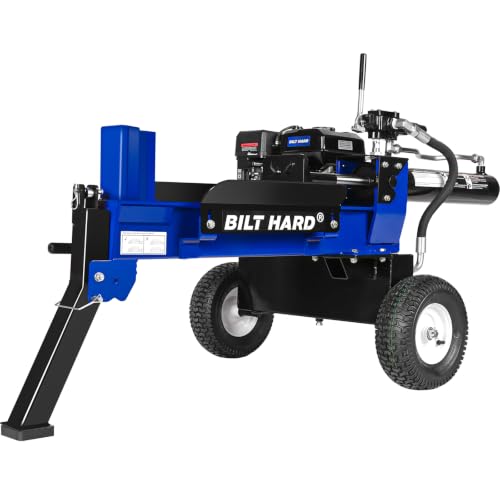
BILT HARD 22 Ton Gas Log Splitter, 209cc Engine, 2-Stage 14 GPM Pump
22 ton force209cc engine14 GPM pump21 in logs
Check price on Amazon
Best for: Homes that split a few cords of mixed hardwood and softwood each year.

The BILT HARD 22 ton splitter has a 209cc gas engine driving a two-stage hydraulic pump rated at 14 GPM, with a 21 inch log capacity. The maker lists up to 22 tons of splitting force. That is enough for most home firewood, including stubborn rounds and moderately knotty logs.

The two-stage pump speeds the ram when the log is not resisting and switches to high force when it meets resistance, which cuts cycle time. Compared with the 6.5 ton electric models, it handles larger and tougher logs, at the cost of noise, fuel and upkeep. Compared with the Full Boar 33 ton, it is smaller, lighter and cheaper. For a home that cuts a few cords a year, 22 tons is a sound middle.

Ownership notes: check the oil in the engine and the hydraulic fluid before each session, and use fresh fuel. Use the splitter on level ground, wear gloves, eye and hearing protection, and keep your hands out of the path of the wedge. Do not run it indoors. Sharpen or replace the wedge when it dulls, and drain old fuel before storage.

What works

  • 22 ton listed force handles most home firewood
  • Two-stage 14 GPM pump shortens the cycle
  • 21 inch log capacity suits standard firewood lengths
  • Gas engine works without a power outlet

Watch out for

  • Mid to upper cost tier
  • Engine noise and fuel upkeep
  • Heavy to move without a good hitch or wheels

Specs

Force
Up to 22 tons
Engine
209cc gas engine
Pump
2-stage, 14 GPM
Log capacity
21 inches long
Class
Mid to upper tier
02
BILT HARD 6.5 Ton Electric Log Splitter with Stand, 15 Amp Motor
6.5 ton force15 amp motor9.8 in logsWith stand
Check price on Amazon
Best for: Modest firewood loads of straight, seasoned logs near an outlet.

The BILT HARD 6.5 ton electric splitter has a 15 amp motor, a hydraulic ram and a stand, and the maker says it splits logs up to 9.8 inches in diameter. Electric splitters are quiet and need no fuel, which makes them friendly for a suburban backyard. It is the lowest-cost splitter in this guide.

The 6.5 ton rating limits it to straight, seasoned logs of moderate size, since tougher knots stall it. Compared with the TECSPACE 7 ton, it is nearly identical in class. Compared with the gas splitters, it is slower and weaker but much easier to live with. It suits a homeowner who splits a modest amount of firewood each season.

Ownership notes: assemble it on the stand, which may need two people, and use a suitable heavy-duty extension cord. Keep logs square and straight cut. Do not try to split a log larger than the stated size. Keep the area clear and your hands away from the wedge.

What works

  • Quiet electric motor with no fuel
  • Includes a stand
  • Lowest cost tier
  • Light enough to move easily

Watch out for

  • 6.5 tons stalls on knotty or green rounds
  • Slower than gas splitters
  • Needs a heavy-duty extension cord and an outlet

Specs

Force
6.5 tons
Motor
15 amp electric
Log size
Logs up to 9.8 inches in diameter
Includes
Stand
Class
Low tier
03
TECSPACE 7 Ton Electric Log Splitter, 15 Amp, Horizontal
7 ton force15 amp motorHorizontalPortable
Check price on Amazon
Best for: Small households that need an easy-to-store electric splitter for occasional use.

The TECSPACE 7 ton electric splitter has a 15 amp motor and a hydraulic wood splitter in a portable horizontal design. The maker lists 7 tons of hydraulic force. It is among the lowest-cost options here and suits homeowners with a few logs to split.

A horizontal layout means you lift logs onto the beam, which limits log size to what you can lift. Compared with the BILT HARD 6.5 ton, it lists a bit more force with a similar motor. Compared with the 22 ton gas splitter, it is much smaller and quieter. It is a reasonable choice for small, regular jobs.

Ownership notes: check the log size limits on the listing, and cut logs square. A 15 amp motor needs a dedicated outlet and a heavy-duty cord. Keep your hands clear, and never reach in while the ram moves. Use a work table at a comfortable height.

What works

  • Lists 7 tons of hydraulic force
  • Portable and easy to store
  • Quiet electric operation
  • Low cost tier

Watch out for

  • Limited to smaller, easier logs
  • You must lift logs onto the beam
  • Requires an outlet and a heavy extension cord

Specs

Force
7 tons hydraulic
Motor
15 amp
Orientation
Horizontal
Portability
Portable design
Class
Low tier
04
Full Boar 33 Ton Log Splitter, 223cc Engine, 14.3 Second Cycle
33 ton force223cc engine14.3 s cycleGas
Check price on Amazon
Best for: Households that split several cords of hardwood and want force in reserve.

The Full Boar 33 ton splitter uses a 223cc OHV engine that the maker says cycles in 14.3 seconds, in a version sold in 49 states. A 33 ton rating splits large, knotty hardwood rounds that smaller machines cannot. It is the strongest machine for the money in this guide.

Cycle time of about 14 seconds is a typical figure for a gas splitter, and it sets how quickly you work through a pile. Compared with the BILT HARD 22 ton, it offers more force and a bigger engine at a higher cost. Compared with the electric units, it is in another class of capability. It suits people who split several cords a year or tackle tough logs.

Ownership notes: this is a heavy machine, so use a hitch or wheels with care. Check engine oil and hydraulic fluid, and use fresh fuel. Wear full protective gear, and keep bystanders far away. Never place hands between the log and the wedge.

What works

  • 33 tons handles large, knotty rounds
  • 223cc OHV engine with a listed 14.3 second cycle
  • Gas engine works anywhere
  • Strong choice for heavy use

Watch out for

  • Upper cost tier
  • Heavy and noisy
  • Needs engine and hydraulic upkeep

Specs

Force
33 tons
Engine
223cc OHV
Cycle time
14.3 seconds
Fuel
Gas, 49-state version
Class
Upper tier
05
BILT HARD Full Beam 30 Ton Gas Log Splitter, 223cc Engine, Horizontal/Vertical
30 ton force223cc, 7.5 HPHorizontal and verticalFull beam
Check price on Amazon
Best for: Homeowners with heavy rounds that are hard to lift onto a beam.

The BILT HARD Full Beam 30 ton splitter has a 223cc OHV engine rated at 7.5 HP, and it works in horizontal or vertical positions. The vertical mode lets you split heavy rounds that you cannot lift onto the beam, since the log sits on the ground. The full beam design is aimed at strength and stability.

Orientation flexibility is the useful feature: horizontal for lighter logs at a comfortable height, vertical for large rounds. Compared with the Full Boar 33 ton, it offers a similar class of force and the added flexibility, at a similar tier. Compared with the 22 ton BILT HARD, it adds force and orientation. It suits people with large rounds from felled trees.

Ownership notes: switch orientation following the manual, and secure the beam. In vertical mode, keep your hands away from the wedge and the base of the log. Use a stable, level surface. Check fluids and fuel before use.

What works

  • 30 ton force for large and knotty rounds
  • Horizontal and vertical modes for heavy logs
  • 223cc OHV engine rated at 7.5 HP
  • Full beam design for stability

Watch out for

  • Upper cost tier
  • Heavy and large to store
  • More controls to learn than a simple model

Specs

Force
30 tons
Engine
223cc OHV, 7.5 HP
Orientation
Horizontal and vertical
Beam
Full beam design
Class
Upper tier
06
Kindling Cracker King XL Cast Iron Kindling Splitter, 9 Inch Opening
Cast iron9 in openingFixed bladeManual
Check price on Amazon
Best for: Small households that need kindling and small logs without a machine.

The Kindling Cracker King XL is a cast iron kindling splitter with a 9 inch opening and a fixed splitting blade inside a protective ring. You stand the log on end inside the ring and strike it with a hammer or the back of an axe, and the blade splits it. The maker presents it as a safe way to split kindling.

It is a different tool from a hydraulic splitter, made for small pieces and kindling, not for large rounds. Compared with the powered splitters, it needs no fuel or power and costs far less. It is the right tool for small households that need kindling and small logs. It cannot handle large rounds.

Ownership notes: place it on a stump or sturdy base, and use a heavy mallet. Keep hands out of the path of the mallet. Wear eye protection. Keep the blade sharp and the metal dry to avoid rust.

What works

  • Lowest cost tier with no fuel or electricity
  • Cast iron construction is durable
  • Fixed blade with a protective ring
  • Quiet and simple

Watch out for

  • Only for kindling and small logs
  • Needs a mallet and a stable base
  • Not suitable for large rounds

Specs

Material
Cast iron
Opening
9 inches
Design
Fixed splitting blade with a protective ring
Power
Manual, no fuel
Class
Lowest tier

Spec decoder

What the listing measurements really mean

The numbers brands lead with, translated into what they tell you about fit, comfort and wear at home.

Tons of force

The maximum push of the hydraulic ram. It indicates how tough a log the machine can split. Real splitting depends on log size and wood type as well.

Watch forThe BILT HARD lists 6.5, 22 and 30 tons, the TECSPACE lists 7 tons and the Full Boar lists 33 tons.

Cycle time

The time for the ram to go out and return. Shorter times mean faster work.

Watch forThe Full Boar lists 14.3 seconds.

Two-stage pump

A pump that moves fast under light load and switches to high force under resistance.

Watch forThe BILT HARD 22 ton lists a two-stage 14 GPM pump.

Engine displacement

The size of a gas engine in cubic centimeters. Larger engines drive bigger pumps.

Watch forThe listings range from 209cc to 223cc.

Horizontal vs vertical

The orientation of the beam. Vertical use lets you split heavy rounds on the ground.

Watch forThe BILT HARD 30 ton works in both modes.

Methodology

How We Evaluated These Log Splitters for Home Use

Force and engine

We compared tonnage, motors and engines, from 6.5 tons electric to 33 tons gas. Our scores are editorial assessments based on published specifications and owner feedback patterns.

Cycle and capacity

We read cycle times and log capacities and noted that small units slow down on tough logs.

Orientation

We compared horizontal and horizontal-vertical designs and who each suits.

Safety

We noted safety features such as the guard ring on the Kindling Cracker and the need for protective gear.

Value and honesty

We judged each splitter by relative cost tier and avoided price figures. Marketing force claims were treated as maker figures.

Decision guide

How to Choose the Right Log Splitters for Home Use

By Wood Volume

SituationPickWhy
Occasional logs near the houseBILT HARD 6.5 Ton ElectricQuiet and low cost.
A cord or two a yearBILT HARD 22 Ton GasBalanced force.
Several cords of hardwoodFull Boar 33 TonHigh force.
Only kindlingKindling Cracker King XLManual and simple.

By Budget

SituationPickWhy
Lowest spendKindling Cracker King XLManual tool.
LowBILT HARD 6.5 Ton or TECSPACE 7 TonElectric.
Mid to upperBILT HARD 22 Ton GasBalanced.
UpperBILT HARD 30 Ton or Full Boar 33 TonHigh force.

Electric vs Gas

Electric

The BILT HARD 6.5 ton and TECSPACE are quiet and fuel-free, but weaker and need an outlet.

Gas

The BILT HARD 22 and 30 ton and the Full Boar give more force and go anywhere, but need fuel and care.

Choose electric for small, straight logs near the house. Choose gas for volume and tough wood.

By Log Size

SituationPickWhy
Straight logs up to 9.8 inBILT HARD 6.5 Ton ElectricRated for that size.
Standard firewood lengthsBILT HARD 22 Ton Gas21 inch capacity.
Large rounds on the groundBILT HARD 30 Ton Full BeamVertical mode.
Small pieces and kindlingKindling Cracker King XL9 inch opening.

For Home Firewood Specifically

Look for

Force that matches your wood, a log capacity that fits, a cycle time you can live with and a safe, stable design. Use full protective gear.

In this comparison

The BILT HARD 22 ton leads on balance, the 6.5 ton electric on value and the Full Boar on force.

When to Spend More

Spend more if

You split several cords a year or tough hardwood. A 30 ton gas unit saves hours.

Save if

You split a few small logs a season. An electric unit or a kindling cracker is enough.

Ownership

Maintenance schedule

The upkeep that decides whether a piece still looks good in year five.

TaskIntervalWhy it matters
Check hydraulic fluidBefore each sessionLow fluid damages the pump and slows the ram. Top up as the manual says.
Change engine oilEach season or per hours of useFresh oil protects the engine. Follow the manual's interval.
Inspect hoses and fittingsEvery sessionLeaks and wear are safety issues. Replace damaged hoses.
Sharpen or clean the wedgeYearlyA dull wedge needs more force and stalls. File it lightly and wipe sap away. Clean sap with a safe solvent.
Store with the ram retractedEnd of seasonA retracted ram protects the rod from rust and dirt. Cover the machine and drain old fuel.

FAQ

Frequently Asked Questions

How many tons do I need?

About 5 to 10 tons for small, straight, seasoned logs. 20 to 35 tons for large, knotty or green hardwood. Hardwood such as oak or hickory needs more than softwood like pine.

Is an electric splitter enough?

For small straight logs, yes. Tough or large logs stall it.

Is it dangerous?

Yes. Keep hands clear of the wedge, wear protection and read the manual. Bystanders and pets should stay well back.

Why does it stall on a log?

Knots and large diameters can exceed the machine's force. Cut logs shorter or use a stronger splitter. Turn the log so the grain faces the wedge.

Can I use it indoors?

Never use a gas splitter indoors. Electric units should be used in dry, ventilated spaces.

Do I need to wear gear?

Yes. Wear gloves, eye and ear protection and sturdy boots.

Bottom line

The short version

Browse more log splitters for home useon Amazon →
Brianna Cole, Lead Product Editor

About the author

Brianna Cole

Lead Product Editor, SenseiReview

Brianna Cole leads SenseiReview's buying guides, turning published specifications, documentation and owner feedback patterns into clear verdicts across home, tech, fitness, outdoor and DIY products.

More from Brianna →

Keep reading

Related guides