
Amazon affiliate links - we earn a commission.Affiliate disclosure

Buying guide · 12 min read · Updated 2026-11-21

Best Pasta Makers (2026)

Six pasta makers compared on roller design, manual versus electric, extruder discs, cleanup and counter space, with picks for fresh sheets and shapes.

Brianna Cole, Lead Product EditorBy Brianna ColeLead Product Editor6 picks comparedSpec-sheet verified
Best Pasta Makers

At a glance

Our top picks

Side by side

Spec comparison

A pasta maker turns flour and eggs into fresh noodles, either by rolling dough into sheets and cutting it, or by mixing and extruding it through shaped discs. The two styles produce very different pasta, and the choice between them matters more than any single model.

Rollers reward practice and last for years, while electric extruders favor speed and convenience but need more cleaning of small parts. Knowing which style you will enjoy using decides whether the machine becomes a weekly habit or a cupboard ornament.

Before you buy

6 Criteria to Look For Before Buying a Pasta Maker

  1. 01

    Roller versus extruder

    Roller machines like the Marcato Atlas 150 flatten dough into sheets and cut them into lasagne, fettuccine or tagliolini. Extruders like the Philips 7000 push dough through discs to make shapes like penne and spaghetti. The textures differ, and buyers often pick an extruder and then miss the delicate feel of rolled noodles.

  2. 02

    Manual versus powered

    Hand-crank machines such as the Imperia and Atlas cost less and last for decades but need two hands and a stable counter. Motorized options, including the KitchenAid KSMPRA and Philips 7000, remove effort at the price of more parts and noise. If you cook pasta weekly, power pays off. For occasional use, a hand crank is simpler.

  3. 03

    Roller width

    Width sets the sheet size, such as 150 mm on the Atlas 150 versus 180 mm on the Atlas 180. A wider roller makes bigger lasagne sheets but needs more space and strength. Most households do well with 150 mm, so do not pay extra for width you will not use.

  4. 04

    Build and materials

    Chrome and nickel-plated steel, as on the Marcato, hold alignment for decades, while cheaper machines use thinner metals or more plastic. The rollers themselves should be smooth and stay parallel. If a roller gap slips from one side to the other, sheets will taper and tear.

  5. 05

    Cleaning and parts

    Rollers are never washed; you dry the dough and brush it out. Extruders have mixing chambers, screws and discs that can be cleaned with water, but small holes clog. Owner feedback often cites cleaning as the reason electric machines gather dust.

  6. 06

    Dough control

    Manual machines let you adjust hydration by feel, which helps with flour differences. Electric extruders need precise flour-to-liquid ratios, usually from the supplied recipe. A bad ratio gives crumbly output, so expect a few trial batches.

Detailed reviews

The 6 best pasta makers, explained

01
Marcato Atlas 150 manual pasta machine for lasagne, fettuccine and tagliolini
150 mm rollersHand crankMade in ItalySteel build
Check price on Amazon
Best for: Home cooks who want a classic, long-lasting manual pasta machine.

The Marcato Atlas 150 is a hand-crank roller with a 150 mm roller width, made in Italy from chrome-plated and nickel-plated steel with ABS parts. It kneads, thins and cuts dough through a clamp-on frame, and its thickness dial lets you step down from thick to paper-thin sheets. It is the benchmark manual machine that most others are measured against.

The tradeoff is that it takes both hands and some practice. A clamp holds it to a counter edge, so you need the right worktop, and the crank needs a steady rhythm. Compared with the wider Atlas 180, it makes narrower sheets, which suits two to four people better than a large party. Against the Philips 7000 electric, it needs flour, rolling and cutting by hand, but the pasta texture is closer to traditionally rolled dough.

For care, the rollers are never washed. Let the dough dry, then brush and wipe it off with a dry cloth, and use a wooden skewer for stubborn bits. Water causes rust, so keep the machine dry and wipe it with a lightly oiled cloth only if the manual allows.

What works

  • Steel roller build is made to last for many years of regular use
  • Thickness dial steps from thick sheets down to thin lasagne and angel hair
  • Clamp attachment keeps the machine stable during cranking
  • Includes cutters for lasagne, fettuccine and tagliolini

Watch out for

  • Needs a counter edge for the clamp and practice for smooth dough sheets
  • Cannot be washed, so dried dough has to be brushed out

Specs

Type
Manual roller and cutter
Roller width
150 mm
Material
Chrome and nickel-plated steel, ABS
Cuts
Lasagne, fettuccine, tagliolini
Brand
Marcato
02
Imperia iPasta Classic manual machine, made in Italy, heavy duty steel
3 pasta shapesMade in ItalySteel buildWood grip handle
Check price on Amazon
Best for: Beginners who want a traditional hand-crank machine at a modest price.

The Imperia iPasta Classic is another Italian-made hand-crank machine, with heavy steel construction, an easy-lock dial and a wooden grip on the handle. It rolls dough into sheets and cuts it into three common shapes. It follows the same workflow as the Atlas, which makes it an alternative rather than an upgrade.

The tradeoff is brand ecosystem and accessory range. Compared with the Marcato Atlas 150, Marcato offers more attachments and a stronger name in replacement parts, while Imperia often sits in a slightly lower price tier. Against the KitchenAid roller set, it needs your hands but costs less and takes up less space. It suits someone who wants to learn pasta making without committing to a stand mixer.

Care matches every roller machine. Never wash it, brush off dried dough, and store it with the clamp loosened. A little extra flour in the dough avoids sticking and keeps the rollers clean.

What works

  • Heavy steel body feels solid and keeps rollers aligned
  • Easy-lock dial holds the thickness setting securely
  • Wood grip handle is comfortable for longer cranking sessions
  • Makes three common pasta shapes with simple attachments

Watch out for

  • Fewer accessories and spare parts than the Marcato system
  • Clamp-based setup needs a suitable counter edge

Specs

Type
Manual roller and cutter
Origin
Made in Italy
Build
Heavy duty steel
Handle
Wood grip
Brand
Imperia
03
KitchenAid KSMPRA 3-piece pasta roller and cutter set
3-piece setFits KitchenAid mixersRoller plus 2 cuttersMotor powered
Check price on Amazon
Best for: KitchenAid owners who want powered rolling without another standalone machine.

The KitchenAid KSMPRA is a three-piece attachment set that includes a pasta roller and two cutters, powered by the stand mixer's hub. It fits household KitchenAid mixers and replaces hand cranking with motor power so both hands are free to guide the sheet. For an existing mixer owner, it is the simplest way into fresh pasta.

The tradeoff is that the attachments depend on the mixer. Compared with the Marcato Atlas 150, the cranking effort is gone but the mixer must stay in place, and the roller is not a standalone tool you can take anywhere. Against the Philips electric, it makes sheet pasta rather than extruded shapes. The mixer's speed can also run too fast for delicate dough, so use the lowest setting.

In ownership, clean it like a manual roller: dry, brush and wipe. Do not wash the rollers in water. Check the shaft fit and store the attachments in a dry drawer to avoid rust and bent parts.

What works

  • Motor power frees both hands to guide and catch the sheet
  • Genuine attachment is designed for KitchenAid hub fitment
  • Roller and two cutters cover the most popular pasta shapes
  • No extra clamp or counter edge is required

Watch out for

  • Only useful if you already own a compatible stand mixer
  • Rollers must be kept dry, so cleanup is a brushing job

Specs

Type
Stand mixer attachment
Included
Roller and two cutters
Fit
Household KitchenAid mixers
Power
Mixer motor
Brand
KitchenAid
04
Philips 7000 Series pasta maker with ProExtrude, 150 W and 8 shaping discs
150 W motor8 discsAuto mix and extrudeUnder 10 minutes
Check price on Amazon
Best for: Busy cooks who want shaped pasta quickly with minimal hand work.

The Philips 7000 Series is an electric pasta maker that mixes, kneads and extrudes through one of eight shaping discs using ProExtrude technology and a 150 W motor. The listing promises fresh pasta in under ten minutes, with no hand rolling. It is the most automatic option in the group and the highest price tier.

The tradeoff is precision and cleaning. Extruded pasta has a different, often denser texture than rolled sheets, and the discs and mixing chamber have small holes that clog with dried dough. Compared with the Marcato Atlas 150, it is faster but cannot make wide lasagne sheets. It still depends on getting the flour-to-liquid ratio right.

Ownership centers on cleaning. Let the dough dry, then pop it out with the included tool, and wash only the parts that the manual allows. Plan on 10 to 15 minutes of cleanup after each session, and avoid putting disc parts in a hot dishwasher unless the manual says it is safe.

What works

  • Automatic mixing and extruding replaces kneading and rolling
  • Eight shaping discs cover spaghetti, penne and other shapes
  • 150 W motor handles dough without hand effort
  • Fresh pasta in about ten minutes from start to finish

Watch out for

  • Many small parts to clean, and dried dough clogs the discs
  • Cannot produce wide lasagne sheets like a roller machine

Specs

Type
Electric extruder
Power
150 W
Shaping discs
8
Process
Automatic mix, knead, extrude
Brand
Philips
05
Marcato Atlas 180 classic manual pasta machine, chrome steel
180 mm rollersChrome steelMade in ItalyHand crank
Check price on Amazon
Best for: Cooks who make big batches or wide lasagne sheets by hand.

The Marcato Atlas 180 is the wider sibling of the Atlas 150, with a 180 mm roller width and chrome steel construction. The extra width produces a bigger sheet in one pass, which helps when making lasagne or when cooking for a crowd. It shares the same method and the same cutter family as the 150.

The tradeoff is size. Compared with the Atlas 150, the 180 needs more counter space and a stronger clamp point, and the sheets are harder to handle for beginners. Against the Imperia, it carries Marcato's accessory range but also a higher price tier. If you cook for two to four people, the 150 is usually enough, and the 180 mainly pays off for big batches.

As with all roller machines, never wash it. Brush off dried dough, wipe the exterior and store it dry. Check that the clamp is tight before each use to avoid wobbling on thicker doughs.

What works

  • Wider 180 mm rollers make bigger sheets in fewer passes
  • Chrome steel build is made to last for decades
  • Same dependable cutters and settings as the Atlas family
  • Strong accessory and spare part support from Marcato

Watch out for

  • Larger machine takes more counter and storage space
  • Higher price tier than the narrower Atlas 150 for a gain few small households need

Specs

Type
Manual roller and cutter
Roller width
180 mm
Material
Chrome steel, anodized aluminium
Cuts
Lasagne, fettuccine, tagliolini
Brand
Marcato
06
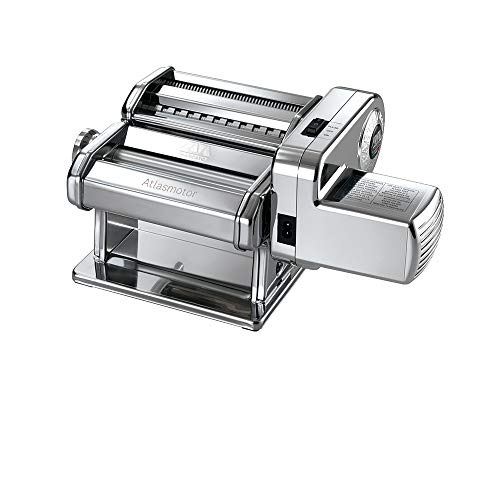
Marcato Atlasmotor electric pasta machine set with Atlas 150, handcrank and clamp
Atlas 150 includedElectric motorHandcrank includedMade in Italy
Check price on Amazon
Best for: Cooks who want Atlas-quality rolled pasta with motor assistance.

The Marcato Atlasmotor is a set that pairs the Atlas 150 roller with an electric motor, a handcrank and a clamp, all made and assembled in Italy. The motor turns the same rollers you would otherwise crank by hand, so the pasta quality matches the manual machine. The included handcrank means you can still go manual whenever you like.

The tradeoff is cost and bulk. Compared with the plain Atlas 150, the set adds the motor at a higher price tier and takes more storage space. Against the KitchenAid KSMPRA, it does not need a stand mixer, so it suits cooks who have no KitchenAid. Compared with the Philips 7000, it still requires making the dough, but you gain true rolled sheets and a machine with decades of service life.

Ownership follows the roller rules: brush off dried dough and never wash the rollers. Keep the motor body away from flour dust and moisture, and store the clamp and crank with the unit so nothing goes missing. Check the motor mount screw periodically, since vibration can loosen it.

What works

  • Motor drives the same steel rollers for true rolled pasta with less effort
  • Includes the handcrank so you can switch to manual at any time
  • Clamp and Atlas 150 are included in the one set
  • Italian-made build suits long-term regular use

Watch out for

  • Higher price tier and bigger footprint than the manual Atlas 150
  • Motor adds a part that can wear out and that must be kept clean and dry

Specs

Type
Motorized roller and cutter
Includes
Atlas 150, motor, handcrank, clamp
Roller width
150 mm
Voltage
110 V
Brand
Marcato

Spec decoder

What the listing measurements really mean

The numbers brands lead with, translated into what they tell you about fit, comfort and wear at home.

Roller width

Roller width is the width of the pasta sheet in millimeters, for example 150 mm or 180 mm. It decides how large a sheet you can make in one pass.

Watch forCheck that your counter and clamp point can handle the wider Atlas 180 before buying it.

Thickness settings

Thickness settings control how thin the sheet becomes, from thick for fettuccine down to thin for filled pasta. More steps give finer control.

Watch forAll Marcato and Imperia models use a dial, but the feel of the click differs, so read owner feedback.

Motor wattage

Wattage describes how strongly an electric machine can knead and push dough, such as 150 W on the Philips 7000. More power handles denser dough with less strain.

Watch forWattage alone does not tell you how well the machine mixes or how easy it is to clean.

Shaping discs

Discs determine pasta shapes on an extruder, from spaghetti to macaroni. More discs give more variety but also more small parts to store.

Watch forThe Philips lists eight discs, so check that the shapes you want are included.

Hub compatibility

Hub fit tells you whether a stand mixer attachment matches your mixer. KitchenAid attachments fit its household models through the front hub.

Watch forConfirm your mixer model before buying the KSMPRA.

Methodology

How We Evaluated These Pasta Makers

Research basis

We evaluated each pasta maker from manufacturer specifications, listing details and recurring themes in owner feedback. Judgments are editorial assessments, not measured results. Roller widths, wattage and disc counts come from the listings.

Roller and extruder design

We compared manual rollers, a stand mixer attachment and electric extruders. The Marcato Atlas 150 and 180 differ in roller width, while the Philips 7000 uses eight discs and 150 W.

Build quality

We weighed the materials, including steel construction on the Marcato and Imperia, and likely long-term alignment of rollers. Cheaper machines tend to lose roller alignment first.

Cleaning burden

We considered how each machine is cleaned. Roller machines are dry-cleaned, while the Philips has several small parts that need washing and drying after each use.

Fit for cooks

We matched picks to cooks: hand crank for tradition, KitchenAid for mixer owners and Philips for speed. Each pick states who should skip it.

Decision guide

How to Choose the Right Pasta Makers

By Cook Type

SituationPickWhy
Traditional fresh noodlesMarcato Atlas 150Hand-cranked rollers give classic sheet texture.
Stand mixer ownerKitchenAid KSMPRAMotor power with no extra standalone machine.
Quick weeknight pastaPhilips 7000Automatic mixing and extruding in minutes.
Beginner on a budgetImperia iPastaHand-crank design at a modest price.

By Budget

SituationPickWhy
Lower tierImperia iPastaTraditional machine without brand premium.
Lower to middleMarcato Atlas 150Best long-term value among manual machines.
MiddleKitchenAid KSMPRAPays for powered rolling if you have a mixer.
Higher tierPhilips 7000 or Atlas 180Pay for automation or wider sheets.

Manual vs Electric

Manual rollers

Marcato and Imperia machines last for decades, make true rolled pasta and have no motor to fail, but need effort and practice.

Electric extruders

The Philips 7000 mixes and shapes dough automatically, saving time but adding small parts to clean and giving a different texture.

Choose manual if you value texture and longevity. Choose electric if time and convenience matter more.

By Pasta Shape

SituationPickWhy
Lasagne and ravioli sheetsMarcato Atlas 150 or 180Roller sheets can be filled or layered.
Fettuccine and taglioliniMarcato or ImperiaIncluded cutters cover these shapes.
Spaghetti and pennePhilips 7000Extruder discs form tubes and strands.
Mixed shapes with a mixerKitchenAid KSMPRARoller and cutters add to a stand mixer.

For Beginners Specifically

Look for

A stable clamp, an easy thickness dial, included cutters and a clear recipe or guide. A hand crank forces you to learn the dough.

In this comparison

The Imperia and Marcato Atlas 150 are the simplest to learn, while the Philips 7000 is the easiest if you want automation.

When to Spend More

Spend more if

You make pasta weekly, want a machine that lasts decades or need wide lasagne sheets, as with the Atlas 150 or 180.

Save if

You are trying pasta for the first time and the Imperia covers the technique at a lower price.

Ownership

Maintenance schedule

The upkeep that decides whether a piece still looks good in year five.

TaskIntervalWhy it matters
Brush off dried doughAfter each useWater rusts steel rollers. Let scraps dry for an hour, then brush and wipe the machine clean.
Wipe with a dry clothAfter brushingA dry cloth removes flour dust without moisture. Keep any oil off the rollers unless the manual specifies it.
Clean extruder partsAfter each Philips useDried dough hardens in small holes. Use the supplied tool and wash parts only as the manual allows.
Tighten the clampBefore each sessionA loose clamp makes the machine wobble and produces uneven sheets. Check it on the counter edge every time.
Store dry and assembledBetween usesMoisture causes rust and sticky rollers. Keep the machine in its box or a dry cabinet away from steam.

FAQ

Frequently Asked Questions

Should I buy a manual or electric pasta maker?

A manual roller like the Marcato Atlas 150 makes true rolled pasta and lasts for decades. An electric extruder like the Philips 7000 saves time but gives a different texture. Pick manual for quality and electric for speed.

Can I wash pasta machine rollers?

No. Water causes rust on steel rollers. Let dough dry, then brush and wipe it off. Only electric extruder parts are meant to be washed, and only as the manual allows.

Is the Atlas 180 better than the Atlas 150?

Only if you need wider sheets. The 180 mm width makes bigger lasagne sheets but needs more space. For two to four people, the 150 mm Atlas 150 is usually enough.

Do I need a stand mixer for pasta?

No. Hand-crank machines like the Imperia work on their own. The KitchenAid KSMPRA is only worth it if you already own a compatible mixer.

Why is my pasta dough crumbly in an electric machine?

Extruders are sensitive to the flour-to-liquid ratio, so small errors cause crumbs or sticky output. Follow the recipe closely at first, then adjust a teaspoon at a time.

How long do pasta machines last?

Steel roller machines can last for decades with dry storage. Electric extruders last as long as the motor and plastic parts hold up, and clogged discs are the common frustration.

Bottom line

The short version

Browse more pasta makerson Amazon →
Brianna Cole, Lead Product Editor

About the author

Brianna Cole

Lead Product Editor, SenseiReview

Brianna Cole leads SenseiReview's buying guides, turning published specifications, documentation and owner feedback patterns into clear verdicts across home, tech, fitness, outdoor and DIY products.

More from Brianna →

Keep reading

Related guides