
Amazon affiliate links - we earn a commission.Affiliate disclosure

Buying guide · 12 min read · Updated 2026-11-21

Best Plyo Boxes (2026)

We evaluated six plyo boxes in wood, steel and foam on stability, landing surface, height options and storage to help you choose the right jump box for home.

Brianna Cole, Lead Product EditorBy Brianna ColeLead Product Editor6 picks comparedSpec-sheet verified
Best Plyo Boxes

At a glance

Our top picks

Side by side

Spec comparison

A plyo box is a simple platform, yet it decides how safe and productive your jump training feels. A box that wobbles, slides or bites your shins turns a useful power drill into a risk, while a solid, well-sized one makes step-ups and box jumps repeatable.

The big choice is material. Wood and steel give a firm, predictable surface that coaches prefer, while foam forgives a missed jump but compresses over time. Height range, footprint, weight rating and how the box stores all matter just as much as the headline height.

Before you buy

6 Criteria to Look For Before Buying a Plyo Box

  1. 01

    Material: wood, steel or foam

    Wood and steel give a firm, consistent landing that coaches prefer, while foam forgives mistakes but compresses. Beginners and anyone nervous about shins should lean toward foam like the BalanceFrom. Experienced jumpers benefit from the Amazon Basics wood or JFIT steel. The common error is choosing hard material before your jump form is reliable.

  2. 02

    Height range that fits you

    Most people jump onto 12 to 24 inches, with 16 to 20 inches a sensible target for beginners. The Amazon Basics reaches only 16 inches, while the BalanceFrom and VEVOR reach 24. A box that is too tall invites poor landings, so buy for the height you can control, not the height you aspire to.

  3. 03

    Landing surface size

    A larger top is easier to land on accurately. The JFIT has a 14 by 14 inch top, tighter than the 16 by 20 inch faces of the foam cubes. Smaller tops reward good footwork but punish misses. Check the listing for top dimensions, not just the outside size.

  4. 04

    Weight rating and stability

    A weight rating of 450 to 500 pounds, as on the Amazon Basics and VEVOR, gives headroom for dynamic landings that load the box well beyond body weight. Rubber feet and a trapezoid or wide base keep the box from sliding. Skip any box that does not list a rating.

  5. 05

    Storage and footprint

    A rotating cube is a single large object, a steel adjustable like the JFIT folds flatter, and a set like the VEVOR needs space for three boxes. Measure your closet or garage corner before buying. A box that is a chore to move gets used less.

  6. 06

    Single box versus stackable set

    One 3-in-1 box is cheap and simple, but jumps between three fixed heights. A stackable set such as the REP lets you progress in small steps and add pieces later. Stacked foam is less stable, so keep towers low and on a non-slip mat.

Detailed reviews

The 6 best plyo boxes, explained

01
Amazon Basics 3-in-1 Wooden Plyo Box, 12 14 16 Inch
12, 14, 16 inWood build450 lb ratingNon-slip top
Check price on Amazon
Best for: Beginners and home gym users who want a firm, stable box at low and medium heights.

The Amazon Basics box is a flat-packed wooden cube with three usable heights of 12, 14 and 16 inches, set by rotating it onto a different face. It has a non-slip surface, sanded edges and built-in handles, and the maker rates it to 450 pounds. Wood gives the firm, predictable landing that most strength coaches prefer for jump training.

The tradeoff is that the heights are lower than the other boxes in this guide, which suits home users, beginners and step-ups but not athletes aiming at a 24 inch jump. Against the BalanceFrom foam box, which reaches 24 inches, the wood unit is more stable and does not compress, but a missed jump will hurt your shins more. It is designed primarily for indoor use, so keep it off wet decks.

Assembly is the main ownership task, and it is wise to tighten the hardware after the first few sessions. Check the screws or joints every month or so, wipe the surface to keep the grip strip clean, and keep the box dry, since plywood can swell if left in damp rooms or garages.

What works

  • Three heights from 12 to 16 inches cover step-ups and starter jumps
  • Solid wood build gives a predictable, non-compressing landing
  • Rated to 450 lb, so it suits heavier users and loaded step-ups
  • Built-in handles make it easy to flip and carry around

Watch out for

  • Tallest setting is only 16 inches, too low for advanced jumpers
  • Wood and edges are unforgiving if a jump goes wrong

Specs

Heights
12, 14 and 16 inches
Material
Wood with non-slip surface
Weight rating
Up to 450 lb
Handles
Built-in wide hand holds
Intended use
Indoor home gym
02
JFIT Adjustable Steel Plyo Box, 12 16 20 Inch
12, 16, 20 inWelded steel14x14 in topRubber feet
Check price on Amazon
Best for: Athletes who want a sturdy adjustable box with a taller 20 inch setting.

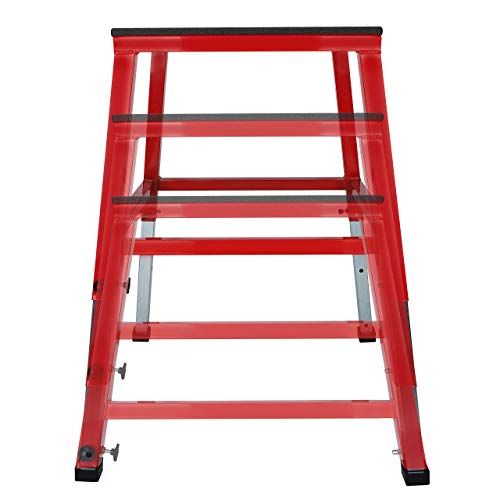
The JFIT is a different design from the wooden cubes: a welded steel frame whose legs adjust to 12, 16 or 20 inches, topped with a vinyl non-slip landing mat. The top platform is 14 by 14 inches and the base is 19 by 19 inches, and rubber pads grip each corner. Because the legs, not the platform, change height, the listing says it keeps more stability when you jump.

The tradeoff is the smaller landing area. A 14 inch top is tighter than the 16 by 20 inch faces of the foam and wood boxes, so you need accurate footwork. Compared with the Amazon Basics wood cube it is taller at 20 inches and more rigid in feel, but it is not as quiet on landings and steel edges can hurt if you clip them. It stores flatter than a solid box.

Check the leg pins and bolts before each session, because a loose leg is the one failure that matters. Wipe the vinyl mat and replace worn rubber pads, since they keep the box from sliding on hard floors.

What works

  • Welded steel frame feels rigid and sheds almost no flex
  • Legs adjust to 12, 16 or 20 inches for progression
  • Rubber corner pads grip smooth gym and garage floors
  • Folded-down legs make it easier to store than a cube

Watch out for

  • 14 inch top is a smaller target than foam or wood boxes
  • Steel edges can bruise shins if a jump falls short

Specs

Heights
12, 16 and 20 inches
Frame
Welded iron bar steel
Top platform
14 by 14 inches
Base
19 by 19 inches
Feet
Non-slip rubber pads
03
BalanceFrom 3-in-1 Foam Plyo Box, 16 20 24 Inch
16, 20, 24 inHigh-density foamAnti-slip coverRotate to adjust
Check price on Amazon
Best for: Beginners nervous about shin scrapes who want a forgiving surface up to 24 inches.

The BalanceFrom is a foam-core cube measuring 16 by 20 by 24 inches, wrapped in a textured cover. You rotate it to switch between 16, 20 and 24 inch jump heights. The foam absorbs the impact of a missed jump and avoids the shin scrapes that hard boxes cause, which is why foam is a common starting choice.

The tradeoff is firmness. Foam compresses with use, and a very dense wood box like the Amazon Basics gives a more consistent landing. It is also a larger object, so it takes room in a small apartment and does not stack neatly. Against the REP 3-in-1 soft box, which uses a similar idea, this unit is similar in heights, so the choice often comes down to cover durability and local availability.

For the long term, wipe the cover with a damp cloth and avoid sharp objects that can tear it. Rotate the faces you land on so one side does not flatten faster, and retire the box if the foam dents permanently or the seams open.

What works

  • Foam core cushions a missed jump and spares the shins
  • Three heights up to 24 inches suit many athletes
  • Light weight makes it easy to reposition between sets
  • Textured cover gives decent grip for landings

Watch out for

  • Foam compresses over time and loses consistent height
  • Bulky shape needs space and cannot be disassembled

Specs

Heights
16, 20 and 24 inches
Dimensions
16 by 20 by 24 inches
Core
High-density foam
Surface
Textured anti-slip cover
Adjustment
Rotate to change height
04
REP Fitness Stackable Soft Foam Plyo Box Set
6, 12, 20 in setStackable foamVinyl coverWipe-clean
Check price on Amazon
Best for: Progressive trainers who want fine height steps and gentle landings.

REP Fitness sells this as a set of separate foam boxes, 6, 12 and 20 inches, that stack in different combinations to hit custom heights. Each is wrapped in a wipe-clean vinyl cover. The listing also notes that 4, 24 inch and other sizes exist in the family, so you can buy only what you need and add later.

The tradeoff is stability when stacked: a tower of foam shifts more than a single solid box, so keep stacks low and on a non-slip mat. Compared with the BalanceFrom, which offers three fixed faces, the REP set lets you move up in smaller steps, which suits someone building confidence gradually. It takes more storage than a single cube and costs more as you add pieces.

Ownership is simple. Wipe the vinyl clean, keep boxes away from heat sources and sharp tools, and watch the seams for splitting. Replace any piece whose foam has visibly collapsed, because uneven height changes your landing mechanics.

What works

  • Stackable sizes build almost any height you want
  • Soft foam cushions mistimed jumps and step-downs
  • Wipe-clean vinyl shrugs off sweat and chalk
  • Buy only the sizes you need and add more later

Watch out for

  • Stacked foam can shift and is less stable than one box
  • Set takes more storage and adds up in cost

Specs

Set sizes
6, 12 and 20 inches
Stacking
Combine for custom heights
Core
Soft foam
Cover
Wipe-clean vinyl
Best use
Progressive height training
05
VEVOR Steel Plyo Box Set, 12 18 24 Inch, 500 lb
12, 18, 24 in set500 lb ratingSteelTrapezoid shape
Check price on Amazon
Best for: Households or small teams that need several fixed heights ready at once.

VEVOR supplies three separate steel boxes at 12, 18 and 24 inches, each with a trapezoidal profile, rubber feet and a textured top. The maker rates the set to 500 pounds. Separate boxes mean no height changing: you just pick the box for the day, and each one is rigid.

The tradeoff is that three boxes take far more space than a single rotating cube, and a metal landing surface is unforgiving on mistimed jumps. Compared with the JFIT, which is a single adjustable frame, the VEVOR set is better if you want different heights ready at once, such as for circuit training or a coach working with several users. It also costs more overall.

Check rubber feet and any welds regularly, because the pads are what keep steel from sliding. Wipe the textured tops to keep grip, and keep the set off damp floors to avoid rust on exposed metal.

What works

  • Three separate heights ready without any adjusting
  • Steel build rated to 500 lb handles heavy users
  • Trapezoid shape and rubber feet resist sliding
  • Textured top gives reliable footing on landings

Watch out for

  • Three boxes demand a lot of storage space
  • Hard steel surface offers no forgiveness on mistakes

Specs

Set sizes
12, 18 and 24 inches
Material
Steel
Weight rating
Up to 500 lb
Shape
Trapezoidal for stability
Feet
Rubber pads and textured top
06
REP 3-in-1 Soft Foam Plyo Box, 24 Inch
3-in-1 heights24 in maxDense foam coreVinyl cover
Check price on Amazon
Best for: Home users who want one forgiving 3-in-1 box and easy movement.

The REP soft box is a 3-in-1 foam cube with a dense core and an anti-slip vinyl cover, topping out at 24 inches. Like the BalanceFrom it rotates between three heights, and the foam cushions landings and protects joints compared with a hard box. It is light enough to move around the room without effort.

The tradeoff is the same one all foam boxes share: compression over time and a less crisp feel than wood or steel. Compared with the REP stackable set, this single cube is simpler and cheaper to start with, but you lose the small height steps. The vinyl cover is easy to wipe but can scuff on rough floors.

Ownership is mostly about the cover. Wipe it clean, avoid dragging it over concrete, and rotate the faces you land on. When the foam begins to hold a dent or the vinyl splits at a seam, replace the box rather than patching it.

What works

  • Dense foam core absorbs impact and protects shins
  • Three rotating heights up to 24 inches
  • Lightweight shape moves easily between exercises
  • Anti-slip vinyl cover wipes clean in seconds

Watch out for

  • Foam gradually compresses and loses crisp edges
  • Vinyl can scuff if dragged across rough floors

Specs

Max height
24 inches
Heights
Three rotating faces
Core
High-density foam
Cover
Anti-slip vinyl
Use
Home gyms and studios

Spec decoder

What the listing measurements really mean

The numbers brands lead with, translated into what they tell you about fit, comfort and wear at home.

Height settings

The jump heights the box offers, set by rotating a cube or adjusting legs. Common ranges run from 12 to 24 inches.

Watch forThe Amazon Basics tops out at 16 inches while the BalanceFrom reaches 24, so check the maximum before buying.

Weight rating

The load the manufacturer says the box can hold. Landings produce forces well above body weight.

Watch forThe Amazon Basics lists 450 pounds and the VEVOR lists 500 pounds, so compare the headroom, not just the number.

Top platform size

The dimensions of the landing surface. A bigger platform makes accurate landings easier.

Watch forThe JFIT top is 14 by 14 inches, which is smaller than the cube-style foam boxes.

Core density

Foam density controls how much the box compresses under a landing. Denser foam stays firmer for longer.

Watch forThe REP and BalanceFrom both advertise high-density foam, but density is not independently verified in the listings.

Non-slip features

Textured tops, vinyl covers and rubber pads stop shoes and the box itself from sliding.

Watch forThe JFIT and VEVOR use rubber feet, which matter more on smooth floors than a textured top alone.

Methodology

How We Evaluated These Plyo Boxes

Stability and construction

We compared materials, footprints and stated weight ratings from published specifications. Boxes with rubber feet and a wide base, like the JFIT and VEVOR, scored well. We favoured designs that do not rock when you land.

Landing surface and safety

We looked at top size, grip and material to judge how forgiving a missed jump would be. Foam boxes such as the BalanceFrom earned credit for cushioning. Hard boxes were rated on grip and edge treatment.

Height range and progression

We checked the available heights and how they are set. A range from 12 to 24 inches suits most users, and stackable sets allow smaller steps. Products whose tallest setting is only 16 inches were flagged for limited growth.

Storage and portability

We considered weight, footprint and whether the box folds or stacks. A single rotating cube beats a three-piece set for tight spaces. We used owner feedback patterns to spot boxes that are awkward to move.

Long-term durability

We researched wear points such as foam compression, loose hardware and rust on exposed steel. The Amazon Basics and REP boxes needed care of the cover or joints. We discounted any claim we could not tie to a physical feature.

Decision guide

How to Choose the Right Plyo Boxes

By Material

SituationPickWhy
Firm, stable landing at moderate heightAmazon Basics 3-in-1 WoodRigid wood and a 450 lb rating
Taller, adjustable steel frameJFIT Adjustable SteelWelded legs reach 20 inches
Forgiving landings for beginnersBalanceFrom 3-in-1 FoamFoam cushions missed jumps
Several fixed heights at onceVEVOR Steel SetThree separate boxes up to 24 inches
Progressive, small height stepsREP Stackable Foam SetStack to build custom heights

By Budget

SituationPickWhy
Lowest cost entryAmazon Basics 3-in-1 WoodA solid starter at an entry tier
Mid-range foamBalanceFrom 3-in-1 FoamMore height range without a set
Mid-range steelJFIT Adjustable SteelAdjustable and sturdy at a middle tier
Higher tier for setsREP Stackable Foam SetYou pay for flexible sizing

Wood vs Foam

Wood or steel

A firm box like the Amazon Basics or JFIT gives consistent landings and long life, but a missed jump hurts.

Foam

A box like the BalanceFrom or REP cushions mistakes, but it compresses and feels less precise.

Beginners often start on foam and move to wood or steel once their form is reliable.

By Training Goal

SituationPickWhy
Step-ups and low box jumpsAmazon Basics 3-in-1 Wood12 to 16 inch heights fit these drills
Vertical jump trainingBalanceFrom 3-in-1 FoamReaches 24 inches with a forgiving top
Circuit training with varietyVEVOR Steel SetGrab a different height each station
Learning to jump safelyREP Soft 3-in-1Soft landings and light weight

For Home Gyms Specifically

Look for

A box that fits your ceiling clearance, stores easily and sits on a non-slip surface. Confirm you have room for a run-up and safe landing.

In this comparison

The Amazon Basics and REP Soft 3-in-1 are the easiest to move, while the JFIT folds flattest.

When to Spend More

Spend more if

You train often, jump high or share the box with others. The JFIT and VEVOR justify it with steel construction.

Save if

You are new to jumping or only do step-ups. The Amazon Basics covers the basics at a low tier.

Ownership

Maintenance schedule

The upkeep that decides whether a piece still looks good in year five.

TaskIntervalWhy it matters
Check hardware and legsBefore each sessionLoose bolts or leg pins are the most dangerous failure on adjustable boxes. A quick check takes seconds.
Wipe the cover or topWeeklySweat and chalk reduce grip on vinyl and textured tops. A damp cloth restores traction.
Inspect foam for dentsMonthlyCompressed foam changes landing height and feel. Retire the box when dents no longer rebound.
Replace worn rubber feetEvery 6 monthsWorn pads let the box slide on smooth floors. Fresh pads keep it planted.
Keep dry and indoorsBetween sessionsMoisture swells wood and rusts steel. Store away from damp garages and decks.

FAQ

Frequently Asked Questions

Is a foam plyo box better than a wooden one?

Foam is more forgiving on mistakes and kinder to shins, so it suits beginners. Wood and steel give a firmer, more consistent landing that experienced jumpers prefer.

How much should I spend on a plyo box?

A simple wood box covers most beginners at an entry tier. Spend more for steel, a taller range or a stackable set only if you need those features.

How long does a plyo box last?

Wood and steel can last many years if kept dry and the hardware is checked. Foam compresses over time, so expect to replace it sooner under heavy use.

Does a taller box build more power?

Not necessarily. Jumping onto a box you can land on softly with good form matters more than height. Choosing a lower box lets you repeat sets safely.

Is box jumping safe for everyone?

No. Plyometrics load the knees and ankles, so people with joint problems or injuries should ask a clinician or coach first. Start low and stop if you feel sharp pain.

Can I use a plyo box for step-ups?

Yes. Step-ups, elevated push-ups and seated work are common uses. Pick a box with a stable base and a non-slip top so it does not slide as you step.

Bottom line

The short version

Browse more plyo boxeson Amazon →
Brianna Cole, Lead Product Editor

About the author

Brianna Cole

Lead Product Editor, SenseiReview

Brianna Cole leads SenseiReview's buying guides, turning published specifications, documentation and owner feedback patterns into clear verdicts across home, tech, fitness, outdoor and DIY products.

More from Brianna →

Keep reading

Related guides