

Amazon affiliate links - we earn a commission.Affiliate disclosure

Buying guide · 12 min read · Updated 2026-11-27

Best Portable Power Stations for Camping (2026)

Portable power stations for camping compared on watt-hours, AC output, weight and recharge time, with honest runtime math for fridges, CPAPs and lights.

Brianna Cole, Lead Product EditorBy Brianna ColeLead Product Editor6 picks comparedSpec-sheet verified
Best Portable Power Stations for Camping

At a glance

Our top picks

Side by side

Spec comparison

PieceCapacityAC outputClassWeight
Anker SOLIX C1000 Gen 2 Power Station, 1,024 Wh, 2,000 WBest OverallAnker SOLIX C1000 Gen 2 Power Station, 1,024 Wh, 2,000 W1,024 Wh LiFePO42,000 W, 3,000 W peakUpper-mid tiern/a
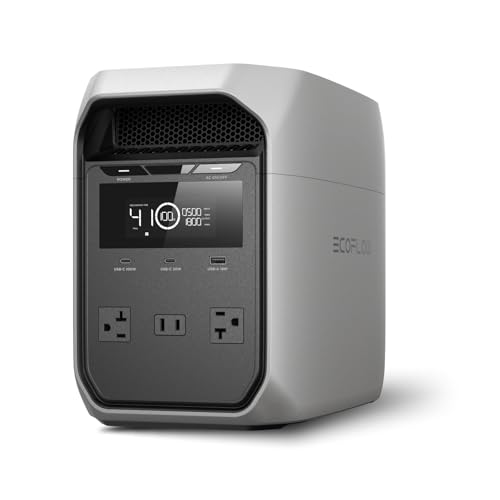
EcoFlow Delta 3 Classic, 1,024 Wh, 1,800 W AC, 3,600 W SurgeBest High-Output AlternativeEcoFlow Delta 3 Classic, 1,024 Wh, 1,800 W AC, 3,600 W Surge1,024 Wh1,800 W with 3,600 W surgeUpper-mid tiern/a
BLUETTI Elite 100 Mini, 1,004.8 Wh, 700 W LFP, 23.59 lbBest Compact 1 kWhBLUETTI Elite 100 Mini, 1,004.8 Wh, 700 W LFP, 23.59 lb1,004.8 Wh LFP700 Wn/a23.59 lb
LIBRIDS C600 Portable Power Station, 640 Wh, 600 W, 4 AC OutletsBest Mid-Size ValueLIBRIDS C600 Portable Power Station, 640 Wh, 600 W, 4 AC Outlets640 Wh LiFePO4600 W rated, 1,200 W surgeLow to mid tiern/a
Jackery Explorer 300 Power Station, 292 Wh, 7.5 lbBest Lightweight ValueJackery Explorer 300 Power Station, 292 Wh, 7.5 lb292 Whn/aLow tier7.5 lb
BLUETTI Elite 30 V2 Power Station, 288 Wh, 600 W, 9.4 lbBest Compact High OutputBLUETTI Elite 30 V2 Power Station, 288 Wh, 600 W, 9.4 lb288 Wh LFP600 W, with a 1,500 W power lifting modeLow to mid tier9.4 lb

A portable power station is a big battery with an inverter, so you can run lights, a fridge, a laptop or a CPAP at the campsite without a generator. The key numbers are capacity in watt-hours, how many watts it can output at once, and how long it takes to recharge.

This guide compares power stations sized for camping, from compact 300 Wh units to 1,000 Wh class stations. We evaluated each on published specifications, capacity, output, weight, ports, charging speed and owner feedback patterns, and we show the runtime math so you can match a station to your gear.

Before you buy

6 Criteria to Look For Before Buying a Portable Power Station for Camping

  1. 01

    Capacity in watt-hours

    Capacity tells you how long you can run a load. Divide watt-hours by the load in watts, then take about 85 percent for inverter losses. A 1,024 Wh unit like the Anker C1000 runs a 50 W load for roughly 17 hours, and a 292 Wh Jackery Explorer 300 runs it for about 5 hours. Estimate your gear first, because overbuying adds weight and cost.

  2. 02

    AC output and surge

    Output in watts limits what you can run at once. The Elite 100 Mini lists 700 W, while the Anker C1000 lists 2,000 W and the EcoFlow Delta 3 Classic lists 1,800 W with 3,600 W surge. Motors, such as fridge compressors, draw a startup surge, so surge ratings matter. Heating appliances use huge power and are poor camp loads.

  3. 03

    Weight and carry

    Power stations are heavy. The Jackery Explorer 300 weighs 7.5 lb, the BLUETTI Elite 30 V2 weighs 9.4 lb and the Elite 100 Mini weighs 23.59 lb. A 1 kWh unit with high output is heavier still. If you carry it far from the car, weight dominates. Campsites near the car allow a larger station.

  4. 04

    Recharge speed and sources

    Wall charging speed varies, with claims such as 49 minutes for the Anker C1000 and 0 to 80 percent in 45 minutes for the EcoFlow. Car and solar charging are slower, and solar input depends on the panels. Check the maximum input for each source. A fast recharge helps if you can top up between trips.

  5. 05

    Battery chemistry and life

    LiFePO4 or LFP batteries last more charge cycles than older lithium types, which matters over years. The listings for the Anker, BLUETTI and LIBRIDS state LFP chemistry. Cycle life claims are maker figures. All lithium batteries should be stored partly charged and kept out of heat.

  6. 06

    Ports and safety

    Check AC outlets, USB-C PD wattage and a car port. The LIBRIDS C600 has four AC outlets. Do not use power stations in enclosed tents with poor ventilation, and keep them away from fuel and heat. Power stations are not allowed on aircraft in most cases, because of their battery size. Follow the manual.

Detailed reviews

The 6 best portable power stations for camping, explained

01
Anker SOLIX C1000 Gen 2 Power Station, 1,024 Wh, 2,000 W
1,024 Wh LiFePO42,000 W output3,000 W peak49 min recharge
Check price on Amazon
Best for: Families and car campers who want one station for a fridge, lights and laptops over a weekend.

The Anker SOLIX C1000 Gen 2 pairs a 1,024 Wh LiFePO4 battery with 2,000 W of AC output, 3,000 W peak and ten ports. The maker claims a full recharge in 49 minutes using up to 1,600 W of input. It is a strong all-round camp station for a family or a campsite with a fridge and lights.

The fast recharge is the standout: a station that refills in under an hour from a wall outlet is easy to top up before a trip or in a car park. Compared with the EcoFlow Delta 3 Classic, it offers similar capacity and a slightly higher continuous output. Compared with the BLUETTI Elite 100 Mini, it is heavier and more powerful but less compact. It handles most camp appliances, including a small electric cooler, a laptop and lights.

In use, estimate runtime by dividing capacity by load, then subtract about 15 percent for inverter losses. A 60 W fridge cycles, so it draws less on average than its label. Heating appliances such as kettles and hair dryers drain a station quickly, so avoid them. Keep the station shaded and ventilated, and store it partly charged between trips.

What works

  • 1,024 Wh LiFePO4 capacity for multi-day use
  • 2,000 W AC output runs most camp appliances
  • Claimed 49 minute full recharge
  • Ten ports cover AC, USB-C and car outputs

Watch out for

  • Heavier and bulkier than 300 Wh class units
  • Upper-mid cost tier
  • High-draw heaters still drain it quickly

Specs

Capacity
1,024 Wh LiFePO4
AC output
2,000 W, 3,000 W peak
Ports
10 output ports
Recharge
Full charge in 49 minutes at 1,600 W
Class
Upper-mid tier
02
EcoFlow Delta 3 Classic, 1,024 Wh, 1,800 W AC, 3,600 W Surge
1,024 Wh1,800 W AC3,600 W surge0 to 80% in 45 min
Check price on Amazon
Best for: Campers with a compressor fridge or higher-surge appliances who like app control.

The EcoFlow Delta 3 Classic is a 1,024 Wh station with 1,800 W of AC output and 3,600 W of surge, and a claimed charge from 0 to 80 percent in about 45 minutes. The surge rating helps with motors that draw a spike on startup, such as a compressor fridge. It is the main rival to the Anker C1000.

Compared with the Anker, its continuous output is a little lower, with a higher listed surge. Compared with the LIBRIDS C600, it has much more capacity and power, at a higher cost tier. The EcoFlow ecosystem adds app control and expansion options. It is a good fit if you want to power a camp kitchen with a small induction cooktop for short bursts.

Ownership notes: check the fan noise and the app, and keep the unit ventilated. Do not run it flat out for long in a hot tent. Charging from a car outlet is slower than wall charging, so plan your recharge. Store the station about half charged during long gaps, and check it every few months.

What works

  • 1,800 W continuous with 3,600 W surge handles motor loads
  • 0 to 80 percent in about 45 minutes claimed
  • 1,024 Wh capacity for a weekend
  • App and ecosystem expansion options

Watch out for

  • Upper-mid cost tier
  • Heavy to carry far from the car
  • Surge rating does not extend run time

Specs

Capacity
1,024 Wh
AC output
1,800 W with 3,600 W surge
Recharge
0 to 80 percent in about 45 minutes
Chemistry
LiFePO4 per the listing
Class
Upper-mid tier
03
BLUETTI Elite 100 Mini, 1,004.8 Wh, 700 W LFP, 23.59 lb
1,004.8 Wh LFP700 W output23.59 lbUnder 10 W idle
Check price on Amazon
Best for: Campers who want about 1 kWh in a compact, lighter case and have modest power needs.

The BLUETTI Elite 100 Mini packs 1,004.8 Wh into a unit that weighs 23.59 lb and measures about 9.25 by 8.48 by 11.54 inches. The maker says it is 45 percent smaller and 36 percent lighter than a previous design, and lists idle consumption of under 10 W. AC output is 700 W, which limits what you can run.

The low output is the tradeoff: 700 W handles lights, laptops, a CPAP and a small fridge, but not a kettle or a microwave. Compared with the Anker C1000 or EcoFlow Delta 3 Classic, it has about the same capacity in a smaller and lighter package, but with much lower output. It is built for campers who prize carrying ease and low idle drain.

In practice, the low idle draw matters when you leave the inverter on overnight, because every watt of idle load eats stored energy. Estimate runtime with the same capacity-over-load math. The compact size fits a small car or a canoe. If you need to run a hot appliance, choose a higher-output station instead.

What works

  • 1,004.8 Wh in a compact 23.59 lb body
  • Low idle consumption of under 10 W claimed
  • LFP battery chemistry per the listing
  • Fits small vehicles and tight storage

Watch out for

  • 700 W output limits high-draw appliances
  • Upper-mid cost tier for the output
  • Lower output than the 1 kWh rivals

Specs

Capacity
1,004.8 Wh LFP
AC output
700 W
Weight
23.59 lb
Size
9.25 x 8.48 x 11.54 in
Idle draw
Under 10 W claimed
04
LIBRIDS C600 Portable Power Station, 640 Wh, 600 W, 4 AC Outlets
640 Wh600 W AC1,200 W surge4 AC outlets
Check price on Amazon
Best for: Two or three campers who want multiple AC outlets and moderate capacity at a low to mid cost.

The LIBRIDS C600 offers 640 Wh with 600 W of AC output, 1,200 W of surge and eight output ports, including four AC outlets. It is a lesser-known brand positioned as a solar generator. It sits in the low to mid tier, between compact 300 Wh units and 1 kWh stations.

Four AC outlets are handy for a group, since you can power a lamp, a laptop charger and a small fridge at once. Compared with the Jackery Explorer 300, it has more than twice the capacity. Compared with the Anker C1000, it is smaller and cheaper, with much less capacity and output. It suits a weekend for two without a heavy electric load.

Ownership notes: the brand has a shorter track record, so check warranty and support terms. Keep the unit ventilated and use the manufacturer's charging cables. Runtime depends on load, and a 640 Wh unit runs a 50 W load for roughly ten hours after inverter losses. Check the solar input specifications before buying panels.

What works

  • 640 Wh capacity suits a weekend for two
  • Four AC outlets and eight ports in total
  • 600 W rated output with 1,200 W surge
  • Low to mid cost tier

Watch out for

  • Lesser-known brand with limited track record
  • Not enough for a hot appliance or a large fridge
  • Solar input details need checking

Specs

Capacity
640 Wh LiFePO4
AC output
600 W rated, 1,200 W surge
Ports
8 output ports including 4 AC outlets
Use
Camping and solar generator
Class
Low to mid tier
05
Jackery Explorer 300 Power Station, 292 Wh, 7.5 lb
292 Wh7.5 lb2 AC outlets100 W USB-C PD
Check price on Amazon
Best for: Short trips and light loads such as lights, phones, a laptop and a CPAP.

The Jackery Explorer 300 stores 292 Wh in a 7.5 lb body and powers six devices through two AC outlets, a 100 W USB-C PD port and USB-A ports. It is the lightest and lowest cost station in this guide. It is a good fit for phones, lights, a laptop and a CPAP on a short trip.

The small capacity is its limit: 292 Wh runs a 30 W device for roughly eight hours after losses. Compared with the BLUETTI Elite 30 V2, it has similar capacity and weight, with a different brand and port layout. Compared with the LIBRIDS C600, it is much smaller. For someone who only needs light power at camp, it is the practical choice.

Ownership notes: if you use a CPAP, check its wattage, and turn off the humidifier to extend runtime. Avoid running anything with a heating element. Recharge before each trip, and store the unit partly charged. For one-night trips or kayak camping, the light weight is a real benefit.

What works

  • Light 7.5 lb body is easy to carry
  • Two AC outlets, 100 W USB-C PD and USB-A ports
  • Lowest cost tier in the lineup
  • Established brand with wide support

Watch out for

  • 292 Wh runs out quickly with larger loads
  • Cannot run heating appliances
  • Limited output for multiple devices

Specs

Capacity
292 Wh
Weight
7.5 lb
Outlets
2 AC outlets, 100 W USB-C PD, USB-A and more
Battery
LiFePO4 per the listing
Class
Low tier
06
BLUETTI Elite 30 V2 Power Station, 288 Wh, 600 W, 9.4 lb
288 Wh600 W output9.4 lbPower lifting 1,500 W
Check price on Amazon
Best for: Campers who want a small, light station that can run an occasional higher-wattage item.

The BLUETTI Elite 30 V2 is a 288 Wh station that weighs 9.4 lb and offers 600 W of AC output, with a power lifting mode up to 1,500 W for some resistive loads. The maker says 600 W is twice as much as others in its class. It is aimed at storms and camping where a small unit must still run a real appliance.

The high output for the capacity is the draw, but capacity is what limits run time. Compared with the Jackery Explorer 300, it offers double the AC output at a similar capacity. Compared with the LIBRIDS C600, it is smaller, lighter and lower in capacity. Power lifting extends what it can run, but only for loads that behave simply, and it drains the battery quickly.

In use, plan runtime using capacity divided by load, and do not expect a hot appliance to run long. A 600 W load takes the 288 Wh to empty in well under half an hour. Use the unit for short, higher-power tasks, like a blender or a small tool, in addition to lights and phones. Keep it cool and charged.

What works

  • 600 W AC output from a 9.4 lb unit
  • Power lifting mode for some higher loads
  • LFP chemistry per the listing
  • Easy to carry and store

Watch out for

  • 288 Wh capacity limits run time
  • High loads drain the battery in minutes
  • Power lifting only suits certain appliances

Specs

Capacity
288 Wh LFP
AC output
600 W, with a 1,500 W power lifting mode
Weight
9.4 lb
Claim
Twice the output of similar-capacity units
Class
Low to mid tier

Spec decoder

What the listing measurements really mean

The numbers brands lead with, translated into what they tell you about fit, comfort and wear at home.

Watt-hours (Wh)

The energy stored in the battery. It sets how long a given load can run.

Watch forThe Jackery lists 292 Wh, the LIBRIDS lists 640 Wh and the Anker and EcoFlow list 1,024 Wh.

Continuous vs surge watts

Continuous watts are what the inverter can supply steadily. Surge is a short burst for startup spikes.

Watch forThe EcoFlow lists 1,800 W with 3,600 W surge and the LIBRIDS lists 600 W with 1,200 W surge.

LiFePO4 or LFP

A lithium chemistry known for long cycle life and thermal stability, at some cost in weight.

Watch forThe BLUETTI, Anker and LIBRIDS listings state LFP.

Idle consumption

The power the inverter uses while on with no load. It drains the battery overnight.

Watch forThe Elite 100 Mini claims under 10 W.

Input wattage

The maximum power the station accepts when charging. Higher input means faster charging.

Watch forThe Anker C1000 lists 1,600 W for its 49 minute recharge.

Methodology

How We Evaluated These Portable Power Stations for Camping

Capacity and output

We compared watt-hours and AC output, from the 288 Wh BLUETTI Elite 30 V2 to the 1,024 Wh Anker and EcoFlow, and showed the runtime math. Our scores are editorial assessments based on published specifications and owner feedback patterns.

Weight and size

We compared weights from 7.5 lb to the heavier 1 kWh units and the size of the BLUETTI Elite 100 Mini.

Charging

We read recharge claims and input limits and treated them as maker figures.

Battery and safety

We noted chemistry claims and basic safety, such as ventilation and avoiding heating appliances.

Value and honesty

We judged each station by relative cost tier and avoided price figures. The LIBRIDS was flagged for limited track record.

Decision guide

How to Choose the Right Portable Power Stations for Camping

By Trip

SituationPickWhy
One night, light loadsJackery Explorer 3007.5 lb and low cost.
Weekend for twoLIBRIDS C600640 Wh with four AC outlets.
Family weekend with a fridgeAnker SOLIX C1000 Gen 21,024 Wh and 2,000 W.
Compact 1 kWhBLUETTI Elite 100 MiniSmaller and lighter.

By Budget

SituationPickWhy
Lowest spendJackery Explorer 300Cheapest tier.
Low to midLIBRIDS C600 or BLUETTI Elite 30 V2Mid capacity or compact output.
Upper-midAnker C1000 Gen 2 or EcoFlow Delta 3 Classic1 kWh stations.
Compact 1 kWhBLUETTI Elite 100 MiniSmaller, lower output.

Compact vs High Output

Compact

The Jackery Explorer 300, BLUETTI Elite 30 V2 and Elite 100 Mini are light and easy to carry, with limited output or capacity.

High output

The Anker C1000 and EcoFlow Delta 3 Classic power fridges and small appliances, but weigh more.

Choose compact for hikes from the car and light loads. Choose high output for a family car camp.

By Load

SituationPickWhy
Phones and lightsJackery Explorer 300Low draw.
CPAP overnightBLUETTI Elite 100 MiniCapacity and low idle draw.
Compressor fridgeEcoFlow Delta 3 ClassicHigh surge rating.
Laptop and small toolsBLUETTI Elite 30 V2600 W for short tasks.

For Camping Specifically

Look for

Watt-hours that match your loads, enough surge for motors, a weight you can carry and a recharge plan. Keep it shaded and ventilated.

In this comparison

The Anker C1000 leads on power, the Elite 100 Mini on portability and the Jackery on weight.

When to Spend More

Spend more if

You run a fridge, camp for several days or want fast recharge. The Anker or EcoFlow pays back in capacity.

Save if

You only charge devices and run lights. A Jackery or BLUETTI Elite 30 V2 is enough.

Ownership

Maintenance schedule

The upkeep that decides whether a piece still looks good in year five.

TaskIntervalWhy it matters
Store partly chargedBetween tripsLithium cells age faster when stored full or empty. Keep them around half charged.
Top up before storage endsEvery few monthsBatteries self-discharge slowly. Charge to the recommended level.
Keep it cool and dryAlwaysHeat and moisture shorten battery life and affect safety. Store indoors.
Check vents and fansBefore tripsDust blocks cooling. Wipe the vents with a dry cloth.
Inspect cables and portsBefore tripsDamaged cables are a fire and shock risk. Replace worn cables.

FAQ

Frequently Asked Questions

How long will a power station run a fridge?

Divide capacity by the fridge's average draw, then subtract losses. A compressor fridge cycles on and off, so average draw is lower than its label.

Can I run a CPAP?

Usually yes. Check your CPAP's wattage and turn off the humidifier to extend runtime.

Can I bring one on a plane?

Generally no. Airlines restrict large lithium batteries, and most power stations exceed the limit.

Is LFP better than other lithium?

It offers longer cycle life and good thermal stability, but weighs more. Cycle life claims are maker figures.

Can I use it in a tent?

Power stations do not burn fuel, but keep them ventilated and out of heat. Follow the manual.

Do I need solar panels?

Not for a weekend if you can recharge at home. Solar helps on long trips, and input limits vary.

Bottom line

The short version

Browse more portable power stations for campingon Amazon →
Brianna Cole, Lead Product Editor

About the author

Brianna Cole

Lead Product Editor, SenseiReview

Brianna Cole leads SenseiReview's buying guides, turning published specifications, documentation and owner feedback patterns into clear verdicts across home, tech, fitness, outdoor and DIY products.

More from Brianna →

Keep reading

Related guides