
Amazon affiliate links - we earn a commission.Affiliate disclosure

Buying guide · 13 min read · Updated 2026-11-26

Best Rivet Guns (2026)

Seven rivet guns compared by type: cordless, hand and pneumatic, with rivet size range, pulling force and nosepieces for sheet metal, trim and aircraft work.

Brianna Cole, Lead Product EditorBy Brianna ColeLead Product Editor7 picks comparedSpec-sheet verified
Best Rivet Guns

At a glance

Our top picks

A rivet gun sets a blind rivet by pulling its mandrel until the rivet body swells on the far side of the work and the mandrel snaps off. It joins sheet metal, trim and panels from one side, where a bolt would need access to both.

Tool types differ in speed, force and cost. Hand riveters are cheap and portable, cordless tools save your hands, and pneumatic guns suit solid rivets. This guide compares seven tools across those groups and explains how to match rivet size and material.

Before you buy

6 Criteria to Look For Before Buying a Rivet Gun

  1. 01

    Tool type

    Hand riveters are cheap and need no power, cordless tools are fast and easy on the hands, and pneumatic guns drive solid rivets. Choose by the volume and type of rivets you set. Buyers who set many rivets by hand regret it. The DEWALT and Milwaukee are cordless, the Marson, Arrow, BILITOOLS and NEXTACK are manual and the Wicks is pneumatic.

  2. 02

    Rivet size range

    Rivet diameter sets the nosepiece and force needed. Common sizes are 3/32, 1/8, 5/32, 3/16 and 1/4 inch. Most hand tools stop at 3/16, and 1/4 inch needs long handles or power. The NEXTACK reaches 1/4 inch and the DEWALT reaches 3/16. A quick rule is that the nosepiece, rivet and drilled hole should all match the same nominal diameter, with the hole slightly larger than the rivet body so it can enter freely.

  3. 03

    Pulling force and rivet material

    Aluminum rivets need little force, while steel and stainless rivets need far more. Cordless tools list pull force in pounds, a maker figure that depends on the rivet. Manual tools struggle with steel above 1/8 inch. The DEWALT lists up to 2,100 pounds.

  4. 04

    Nosepieces and changeover

    Each rivet size needs its own nosepiece. Tool free changes and onboard storage save time. Lost nosepieces are the most common nuisance. The DEWALT and BILITOOLS offer tool free changes.

  5. 05

    Reach and ergonomics

    Extended noses reach tight spots, and long handles give leverage. One handed tools free a hand but have less force. Pick a tool that suits your usual workspace. The Arrow has an extended nose.

  6. 06

    Rivet length and grip range

    The rivet length must match the material thickness. Too short fails to set, and too long bulges. Keep assorted lengths on hand. The NEXTACK kit includes eight lengths.

Detailed reviews

The 7 best rivet guns, explained

01
DEWALT 20V MAX XR cordless rivet tool DCF403B, 3/16 inch, bare tool
20V MAX3/16 in2100 lbfBrushless
Check price on Amazon
Best for: Auto body, HVAC and sheet metal workers who set many rivets.

The DEWALT DCF403B is a cordless rivet tool with a brushless motor, a stated pulling force of up to 2,100 pounds and a 3/16 inch capacity. A tool free nose change and onboard nosepiece storage speed up switching between sizes.

The maker says it can set about 800 rivets per charge, a figure that depends on the rivet size and material, so expect fewer with 3/16 inch steel. It sells as a bare tool, so you need a battery and charger from the 20V MAX platform. Compared with the Milwaukee M12, the DEWALT offers a larger rivet capacity and more force. Compared with hand tools, it saves your wrist and is far faster over many rivets.

Ownership centers on the nose and mandrel debris. Empty the mandrel catcher regularly, keep the jaws clean and use the right nosepiece for the rivet. Store the tool with a partial battery charge. A practical tip for the DEWALT: set the first rivet in scrap of the same thickness to confirm the nosepiece and grip range, because a 3/16 inch steel rivet needs the full stroke and a short rivet will stall the tool.

What works

  • Cordless tool sets rivets up to 3/16 inch
  • Brushless motor with a stated 2,100 lbf pull
  • Tool free nose change speeds up size swaps
  • Uses the common 20V MAX battery platform

Watch out for

  • Sold as a bare tool, so a battery is extra
  • Much higher cost than hand riveters

Specs

Platform
20V MAX, bare tool
Max rivet
3/16 inch
Pull force
Up to 2,100 lbf, per the maker
Motor
Brushless
Productivity
800 rivets per charge, maker figure
02
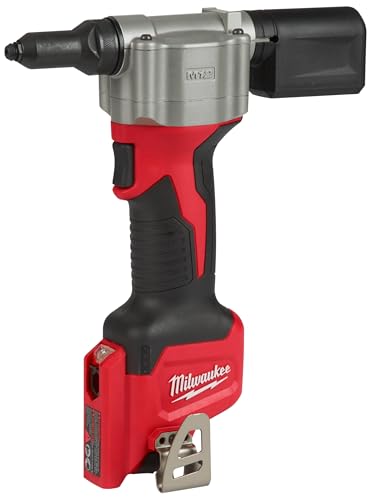
Milwaukee 2550-20 M12 rivet tool, 3/32 to 3/16 inch, bare tool
M123/32 to 3/16 in450 rivets per chargeCompact
Check price on Amazon
Best for: Installers who want a light cordless tool for tight spaces.

The Milwaukee M12 rivet tool pulls rivets from 3/32 to 3/16 inch and runs on the compact M12 battery. The maker lists 450 rivets of 1/8 inch steel per charge, which is a useful benchmark for the tool's capacity.

The smaller platform keeps the tool light and easy to carry, which is a benefit in tight spots like HVAC ductwork and van conversions. Compared with the DEWALT 20V, the Milwaukee is smaller and lighter, but has less stated force and fewer rivets per charge. Compared with the Marson hand riveter, it is faster and less tiring, though much more expensive.

Ownership is similar to other cordless tools. Clean the nose and jaws, empty the mandrel catcher and use the correct nosepiece. Because it sells as a bare tool, you need an M12 battery and charger. For example, a van conversion with a few hundred 1/8 inch aluminum rivets is well within a single M12 battery, while a day of 3/16 inch steel rivets will need a spare pack.

What works

  • Compact M12 size is light and easy to carry
  • Handles 3/32 to 3/16 inch rivets
  • Stated 450 steel rivets per charge
  • Fits tight spaces better than larger tools

Watch out for

  • Less stated force than the DEWALT
  • Sold as a bare tool

Specs

Platform
M12, bare tool
Rivet range
3/32, 1/8, 5/32, 3/16 inch
Productivity
450 1/8 inch steel rivets per charge, maker figure
Size
Compact
Cost tier
Upper
03
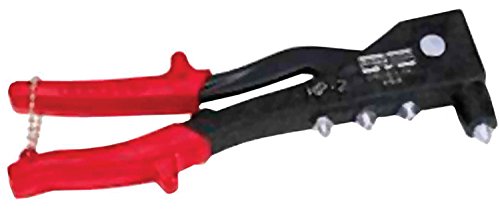
Marson HP-2 professional hand riveter, aluminum body, vinyl grips
Hand riveterAluminum bodyCold formed pinVinyl grips
Check price on Amazon
Best for: Tradespeople who want a durable manual riveter for occasional use.

The Marson HP-2 is a professional grade hand riveter with a high strength aluminum alloy body and a square shouldered fulcrum pin of cold formed, heat treated steel. The square shoulder stops the pin from rotating, which is a common failure point on cheaper tools.

A manual tool is slower than a cordless one, but it has no battery to charge and is dependable over many years. The vinyl grips are comfortable for a moderate run of rivets. Compared with the Arrow, the Marson is better built and costs more. Compared with the DEWALT, it is a fraction of the cost but far more tiring for large jobs.

Ownership is about the jaws and nose. Clean aluminum shavings out of the head, replace worn jaws and keep the pivot lightly oiled. Use rivets matched to the nosepiece. For a metal roof or sign shop that sets perhaps twenty rivets an hour, the Marson is comfortable; beyond that, the repetitive squeeze starts to cost accuracy.

What works

  • Square shoulder pin resists rotation failures
  • Aluminum alloy body keeps weight down
  • Cushioned vinyl grips are comfortable
  • Professional build with serviceable parts

Watch out for

  • Manual effort is tiring over many rivets
  • Costs more than basic kit riveters

Specs

Type
Manual hand riveter
Body
High strength aluminum alloy
Fulcrum pin
Square shoulder, cold formed, heat treated steel
Grips
Cushion molded vinyl
Use
Sheet metal, trim, repairs
04
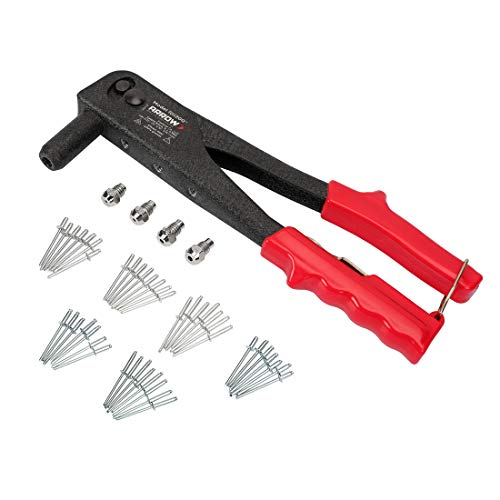
Arrow heavy duty riveter kit with 120 assorted rivets, extended nose
3/32 to 5/32 inExtended nose4 nosepieces120 rivets
Check price on Amazon
Best for: Homeowners and hobbyists who want a complete starter kit.

The Arrow kit pairs a manual riveter with an extended nose and four nosepieces, plus 120 assorted rivets. It handles rivet diameters from 3/32 to 5/32 inch, which covers gutters, trim, signs and light sheet metal.

The extended nose reaches into tight spots, and the included rivets mean you can start immediately. Compared with the BILITOOLS, the Arrow has a long established brand and a more traditional two handed build. Compared with the Marson, it sits at a lower cost tier and is meant for lighter use.

Ownership is simple. Clean mandrel stubs from the nose, keep the nosepieces together and oil the pivot occasionally. For steel rivets, the manual effort is high, so use aluminum rivets when you can. The kit's 3/32, 1/8 and 5/32 inch rivets match its nosepieces, so a first project such as a gutter splice or a license plate bracket can be finished straight from the box.

What works

  • Starter kit includes 120 assorted rivets
  • Extended nose reaches tight spots
  • Four nosepieces cover common sizes
  • Recognized brand at a low cost tier

Watch out for

  • Limited to 5/32 inch rivets
  • Manual effort is high on steel rivets

Specs

Rivet range
3/32 to 5/32 inch
Nose
Extended for tight spots
Nosepieces
4 included
Rivets
Assorted 120
Type
Manual
05
BILITOOLS 9 inch one hand pop rivet gun, 27 to 1 leverage, tool free nosepieces
9 in27:1 leverageOne handTool free nose
Check price on Amazon
Best for: Quick jobs with small rivets where one hand must hold the work.

The BILITOOLS is a 9 inch one handed riveter with a stated 27 to 1 leverage ratio that multiplies hand force. Knurled one piece nosepieces change by hand without a wrench, and one stays installed while the others are stored.

A one hand design is helpful when you need the other hand to hold the work, but the shorter handle limits force. The listed leverage ratio is a maker figure, so judge the tool by how it handles a 1/8 inch aluminum rivet. Compared with the long handled NEXTACK, it is quicker for small rivets but less suited to large ones. Compared with the Arrow, it is more compact and has tool free nose changes.

Ownership is about the nosepieces and jaws. Keep the nosepieces together, clean the jaws and avoid forcing oversized rivets. Replace a jaw that no longer grips. Its 9 inch length also fits in a tool pouch, which makes it handy for roadside or boat repairs where a full size riveter would not travel.

What works

  • One handed use frees the other hand for the work
  • Tool free nosepiece changes
  • Stated 27 to 1 leverage reduces effort
  • Compact nine inch body

Watch out for

  • Short handle limits force on larger rivets
  • Leverage figure is a maker claim

Specs

Length
9 inches
Leverage ratio
27 to 1
Nosepieces
Knurled, tool free change
Body
Alloy head, Cr-Mo steel parts
Use
One hand operation
06
NEXTACK 1/4 inch rivet gun kit with 350 rivets and long handles
1/4 in capacityLong handles5 nosepieces350 rivets
Check price on Amazon
Best for: Thick metal and large rivets where a cordless tool is not justified.

The NEXTACK kit is a long handled two hand riveter that accepts rivets up to 1/4 inch and includes five interchangeable nosepieces and 350 rivets in eight lengths. The long rivets are designed for thick sheet and layered panels.

An eight length assortment is useful because a rivet that is too short fails to set and one that is too long bulges. Compared with the Arrow, the NEXTACK offers bigger capacity and more rivets but needs two hands. Compared with a cordless tool, it takes far more effort for 1/4 inch rivets.

Ownership is about technique. Match the rivet length to the material thickness, hold the gun square to the work and use both hands. Clean the jaws and keep the nosepieces sorted. Because the handles are long, it needs about a hand span of clearance on each side, so check access before choosing it for work inside a panel or a wheel arch.

What works

  • Accepts rivets up to 1/4 inch
  • Eight rivet lengths suit thick material
  • Long handles give good leverage
  • Five nosepieces included

Watch out for

  • Two handed operation is slow and tiring
  • Large kit adds bulk to carry

Specs

Max rivet
1/4 inch
Handles
Long, two handed
Nosepieces
5 including 1/4, 3/16 and 5/32 inch
Rivets
350 in 8 assorted lengths
Use
Thick metal sheets
07
Wicks Aircraft 3X pneumatic rivet gun kit with rivet sets and bucking bars
Pneumatic3X gun5 rivet sets2 bucking bars
Check price on Amazon
Best for: Restoration and aircraft style projects that use solid rivets.

This is not a blind rivet tool. The Wicks 3X is a pneumatic hammer gun that drives solid rivets against a bucking bar, the method used in aircraft and vintage metal work. The kit includes the gun, a pressure regulator, a quick connect, five straight rivet sets, two bucking bars and retainer springs.

Solid riveting is a two person or two handed craft, and it takes practice to produce a clean shop head without damaging the skin. Compared with the pop rivet tools above, it demands an air compressor and technique, but it produces joints that a blind rivet cannot match in some applications. It sits at the highest cost tier in the lineup.

Ownership requires a compressor and regulated air. Practice on scrap, set the regulator low and use the correct rivet set for the rivet. Keep the gun lightly oiled and store the sets together. Expect to spend an hour practicing on scrap 2024 style aluminum sheet before touching a real panel, since a poorly formed shop head cannot be fixed without drilling the rivet out.

What works

  • Drives solid rivets with a bucking bar
  • Kit includes rivet sets and bucking bars
  • Regulator and quick connect included
  • Suited to restoration work

Watch out for

  • Needs a compressor and practice to use well
  • Not a tool for blind pop rivets

Specs

Type
Pneumatic hammer rivet gun
Included
Regulator and quick connect
Rivet sets
5 straight sets
Bucking bars
2
Use
Solid rivets, aircraft style work

Spec decoder

What the listing measurements really mean

The numbers brands lead with, translated into what they tell you about fit, comfort and wear at home.

lbf pulling force

Pounds of force the tool can apply to the mandrel. Higher numbers set bigger or harder rivets.

Watch forThe DEWALT lists up to 2,100 lbf, a maker figure.

Rivets per charge

A maker estimate of how many rivets a battery will set. It varies with rivet size and material.

Watch forThe Milwaukee lists 450 steel 1/8 inch rivets per charge.

Leverage ratio

How much a manual tool multiplies hand force. Higher ratios reduce effort but may need more handle travel.

Watch forThe BILITOOLS lists 27 to 1, a maker figure.

Nosepiece

An interchangeable tip sized to the rivet mandrel. The wrong one jams or slips.

Watch forThe Arrow includes four, and the NEXTACK five.

Bucking bar

A heavy bar held against a solid rivet while the gun hammers the other side.

Watch forThe Wicks kit includes two.

Methodology

How We Evaluated These Rivet Guns

Spec sheet review

We evaluated tool type, rivet range, stated force, nosepieces and kit contents from each listing. We compared them with the rivets most users set. The DEWALT and Marson anchored the comparison.

Owner feedback patterns

We looked for repeating comments on jammed mandrels, worn jaws, weak springs and wrist fatigue. These issues decide whether a riveter is a pleasure or a chore. Jaw wear and jams came up most.

Fit for the work

Gutters, auto panels, thick sheet and aircraft style work need different tools. We graded each product on those jobs, from the Arrow for light use to the Wicks for solid rivets.

Cost relative to the lineup

We used relative cost tiers and quote no listing prices. The Arrow and BILITOOLS sit at the low end, while the DEWALT and Wicks sit at the top.

Claims we discounted

Phrases like professional and heavy duty appear on most listings. We treat them as marketing and rank on stated capacity and build.

Decision guide

How to Choose the Right Rivet Guns

By Rivet Volume

SituationPickWhy
Hundreds of rivets, 3/16 inchDEWALT 20V MAX XRCordless force and speed
Tight spaces and ductworkMilwaukee M12Compact cordless
Occasional repairsArrow kitManual riveter with rivets
Quick small rivetsBILITOOLS one handTool free nosepieces
Thick sheet and large rivetsNEXTACK 1/4 inchLong handles

By Budget

TierPickWhy
LowestBILITOOLS one handCompact manual riveter
LowArrow kitComplete starter kit
Low to middleNEXTACK kitLarge capacity with rivets
MiddleMarson HP-2Professional manual build
HighestDEWALT, Milwaukee and WicksCordless or pneumatic

Cordless vs Manual

Cordless

The DEWALT and Milwaukee set rivets quickly and spare your hands. They sell as bare tools, so you need a battery.

Manual

The Marson, Arrow, BILITOOLS and NEXTACK cost less and need no power. They tire your hand on large jobs.

Choose cordless if you set more than a few dozen rivets a month, and manual for occasional repairs.

By Rivet Material

MaterialPickWhy
Aluminum rivets, light workArrow kitEnough force for 5/32 inch aluminum
Steel rivets up to 3/16 inchDEWALT 20V MAXStated 2,100 lbf
Large aluminum rivetsNEXTACKLong handles for 1/4 inch
Solid rivetsWicks 3XPneumatic hammer with bucking bar

For Sheet Metal Work Specifically

Look for

A tool that covers 3/32 to 3/16 inch, with nosepieces stored on the tool and rivets matched to the metal thickness. Drill holes slightly larger than the rivet body.

In this comparison

The DEWALT is the first choice for volume, with the Arrow as the value alternative.

When to Spend More

Spend more if

You set rivets weekly or work with steel. A cordless DEWALT or Milwaukee saves time and wear.

Save if

You set a handful a year. The Arrow or BILITOOLS is enough.

Ownership

Maintenance schedule

The upkeep that decides whether a piece still looks good in year five.

TaskIntervalWhy it matters
Empty the mandrel catcherEvery sessionBroken mandrels pile up and can jam the tool. Emptying it keeps jaws clear.
Clean the jawsAfter each jobAluminum shavings and mandrel chips cut grip. A brush and compressed air clear them.
Keep nosepieces togetherAfter each useLost nosepieces stop a job. A small case keeps them handy.
Oil the pivotsEvery few monthsDry pivots stiffen and wear. A drop of oil keeps a manual tool smooth.
Charge batteries to partial levelBefore storageLithium packs last longer at partial charge. Avoid heat and full discharge.

FAQ

Frequently Asked Questions

What size rivet do I need?

Match the rivet to the hole and the material thickness. Common diameters are 3/32 to 1/4 inch, and the length must suit the grip range.

Can a hand riveter set steel rivets?

Small steel rivets, yes, but it takes strong hands. Above 1/8 inch, a cordless tool is much easier.

Are cordless rivet tools worth it?

If you set many rivets, yes. They are faster and spare your hands, though they cost far more than manual tools.

What is the difference between pop and solid rivets?

Pop rivets are set from one side by pulling a mandrel. Solid rivets need a hammer gun and a bucking bar on the other side.

Why does my rivet not set?

The rivet may be too short, the hole too large or the nosepiece wrong. Check the grip range and the nosepiece.

How do I clear a jammed mandrel?

Remove the nosepiece and clear broken mandrels from the jaws and the catcher. Keep the jaws clean to prevent a repeat.

Bottom line

The short version

Browse more rivet gunson Amazon →
Brianna Cole, Lead Product Editor

About the author

Brianna Cole

Lead Product Editor, SenseiReview

Brianna Cole leads SenseiReview's buying guides, turning published specifications, documentation and owner feedback patterns into clear verdicts across home, tech, fitness, outdoor and DIY products.

More from Brianna →

Keep reading

Related guides