
Amazon affiliate links - we earn a commission.Affiliate disclosure

Buying guide · 13 min read · Updated 2026-11-26

Best Soil Test Kits (2026)

Seven soil test kits compared by method, from mail in lab to strips and meters, with notes on pH, NPK, sampling and which results you can trust.

Brianna Cole, Lead Product EditorBy Brianna ColeLead Product Editor7 picks comparedSpec-sheet verified
Best Soil Test Kits

At a glance

Our top picks

Side by side

Spec comparison

A soil test tells you what is in the ground before you add amendments. The most useful numbers are pH, which controls whether plants can take up nutrients, and the levels of nitrogen, phosphorus and potassium.

Kits fall into three families: mail-in lab tests, chemical or strip kits that you run yourself, and electronic probes. Their accuracy differs sharply, and listings blur the line. This guide ranks seven options by how much you can trust the numbers they give.

Before you buy

6 Criteria to Look For Before Buying a Soil Test Kit

  1. 01

    Test method and trust

    Lab tests measure nutrients directly and give the most reliable numbers. Chemical kits and strips use color matching and give approximate bands. Probes read electrical properties and give indicative values only. Buyers often assume a digital screen means accuracy, and it does not. MySoil is the lab option, the LaMotte and NewTest are chemical, and the SONKIR and Buladeke are probes.

  2. 02

    What the kit measures

    pH, nitrogen, phosphorus, potassium and organic matter are the common targets. pH is the most useful for choosing plants and amendments, and N, P and K guide fertilizer. A kit that skips nutrients may be fine for a pH check. The Dewilde strips measure pH only, while the NewTest covers four parameters.

  3. 03

    Number of tests and cost per test

    A kit with ten tests per parameter covers a few beds, while 100 strips cover a full season of sampling. Cost per test falls as the count rises, but precision may fall too. Count how many spots you plan to sample. The AESCULIX lists 200 tests and the NewTest lists 40.

  4. 04

    Sampling technique

    Results depend on the sample. Take cores from several spots at the same depth, remove stones and roots, mix, and dry the sample before testing. A single scoop from one corner misleads. This applies to every kit, including lab tests. The MySoil instructions walk through the steps.

  5. 05

    Ease of reading results

    Color charts depend on lighting and eyesight, and some people struggle to tell shades apart. Dial and digital meters are easier to read but less reliable. A written lab report is the clearest. Test in daylight, not under warm indoor bulbs.

  6. 06

    Probe claims to treat with caution

    Digital probes often claim to read nitrogen, phosphorus and potassium. A metal probe cannot measure those nutrients, and what it shows is an electrical value. We treat those claims as marketing and rank probes below lab and chemical kits.

Detailed reviews

The 7 best soil test kits, explained

01
MySoil mail in soil test kit with lab analysis of pH and nutrients
Mail in labpH and nutrientsWritten reportAny soil type
Check price on Amazon
Best for: Gardeners who want real nutrient numbers and written recommendations.

MySoil takes a different route from strips and probes. You collect a soil sample, mail it to a laboratory and receive a report on pH and nutrient levels, with recommendations for what to add.

The listing contrasts its lab approach with at-home pH meters and test strips, and that contrast is fair: lab methods measure nutrients directly rather than guessing from color or conductivity. The cost per sample is higher than a bag of strips, and you wait days for results, so it suits once a year testing for a lawn or a new bed. Compared with the NewTest kit, you get a full report instead of color matching. Compared with the LaMotte, it needs no chemistry at the kitchen table.

Ownership is about sampling. Take cores from several spots at the same depth, mix them, dry the sample and follow the packing steps. A poor sample gives a poor report no matter how good the lab is.

What works

  • Lab analysis measures nutrients directly
  • Written report turns numbers into next steps
  • Works for lawns, beds and mixed plantings
  • No color matching or chemistry to learn

Watch out for

  • Waiting days for results delays quick decisions
  • Highest cost per test in this lineup

Specs

Method
Mail in professional lab
Measures
Nutrient and pH analysis
Output
Report with recommendations
Soil types
Lawn, garden, any scenario
Turnaround
Days, plus shipping
02
LaMotte Model EL turf and garden soil test kit with manuals
Chemical kitGarden guideSoil handbookMulti test
Check price on Amazon
Best for: Hands on gardeners who want to test many spots with real reagents.

The LaMotte Model EL is a chemical test kit from a company known for water and soil testing. It uses reagents and color charts, and it comes with a garden guide and a soil handbook that explain how to interpret the results.

The manuals are a real advantage, since a number without context is hard to act on. The chemistry takes some patience, and the color comparison still depends on your eyes and the lighting. Compared with the cheaper strip kits, the reagents give a finer reading. Compared with MySoil, it is a more hands on choice that lets you test many samples without paying for each one.

Ownership is about reagents. Store the kit out of heat and sunlight, note the expiry dates on the chemicals and rinse the test vials thoroughly between samples. Old reagents give faint or wrong colors.

What works

  • Reagent tests give finer readings than strips
  • Includes a garden guide and soil handbook
  • Lets you test many samples without lab fees
  • Long established test brand

Watch out for

  • Color matching depends on lighting and eyesight
  • Reagents expire and need replacement

Specs

Method
Chemical reagents and color charts
Includes
Garden guide and soil handbook
Use
Turf and garden
Brand
LaMotte, long established test maker
Cost tier
Highest tier of the kits
03
NewTest soil test kit, 4 parameters, 40 tests for pH, N, P and K
40 testspH, N, P, K10 tests eachStep by step
Check price on Amazon
Best for: Gardeners who want N, P, K and pH readings from a simple kit.

The NewTest kit covers four parameters: pH, nitrogen, phosphorus and potassium, with ten tests for each. It uses a color comparison method, so you mix the soil with a solution and match the result to a chart.

The listing claims that other kits cannot accurately detect soil values, a boast we treat as marketing. With only ten tests per parameter, it is enough for a few beds and a couple of seasons, not for a large property. Compared with the AESCULIX strips, it offers fewer tests but uses a more involved mixing method. Compared with the LaMotte, it has a smaller scope and no handbook.

Ownership centers on technique. Use clean water, take consistent soil amounts and read the color in daylight. Because nutrient levels shift with fertilizer and rain, record the date of each test so you can compare over time.

What works

  • Covers pH plus three major nutrients
  • Ten tests per parameter cover a few beds
  • Step by step instructions suit beginners
  • Lower cost than lab testing

Watch out for

  • Color matching gives approximate, not exact values
  • Only forty total tests, so a large yard runs out

Specs

Tests
40 total
Parameters
pH, nitrogen, phosphorus, potassium
Per parameter
10 tests each
Method
Capsule or tablet color comparison
Instructions
Step by step guide included
04
AESCULIX soil test strips for pH, N, P and K, 200 tests with case
200 testsStrip onlypH, N, P, KStorage case
Check price on Amazon
Best for: Gardeners who want many quick tests across a larger area.

The AESCULIX kit is built around test strips, with a storage case and a listed 200 total tests. The strips dip into a soil and water mixture and change color to indicate pH, nitrogen, phosphorus or potassium.

The count of tests is the appeal. A small garden can be sampled in dozens of spots over a season for a low cost per test. The tradeoff is precision: strips give coarse color bands, so you learn whether a nutrient is low, medium or high and not an exact number. The listing mentions 150 strips alongside 200 tests, so check the contents before relying on the larger figure. Compared with the NewTest, there are more tests but less detail.

Ownership is about moisture. Keep the strips sealed in the case, since humidity ruins them, and discard any that look discolored before use.

What works

  • Large test count lowers the cost per test
  • Hard case protects strips from humidity
  • Fast and simple for beginners
  • Covers pH and three nutrients

Watch out for

  • Strips give coarse color bands, not precise numbers
  • Test count and strip count figures need checking

Specs

Tests
200 total per the listing
Strips
150 strips in three packs
Parameters
pH, nitrogen, phosphorus, potassium
Method
Strip, color chart
Case
Hard plastic storage case
05
SONKIR MS02 3 in 1 soil meter for moisture, light and pH
3 in 1No batteryMoisturepH and light
Check price on Amazon
Best for: Houseplant and container growers who mainly want a moisture check.

The SONKIR MS02 is an analog probe with a dial display. You push the metal probe into the soil and read moisture, pH or light level from the needle, with no battery required.

It is the cheapest tool in the lineup and works well as a moisture check for houseplants and containers. The pH reading is a rough estimate, since probe based pH meters tend to drift and vary with soil moisture and contact. Compared with strips, it is faster, but also less trustworthy for pH. Compared with the Buladeke digital meter, it has fewer functions and less to go wrong.

For ownership, wipe the probe clean after each use with a dry cloth, and polish the metal tip lightly if it dulls. Store it dry, and treat its pH reading as a hint to confirm with strips or a lab sample.

What works

  • No battery needed, so nothing to replace
  • Quick moisture reading for pots and beds
  • Lowest cost tier of this lineup
  • Simple dial is easy to read

Watch out for

  • pH reading is rough and can drift
  • Light reading is only a basic indication

Specs

Format
Analog probe meter
Measures
Moisture, pH, light
Power
No battery needed
Limit
Soil only, not other liquids
Cost tier
Lowest in this lineup
06
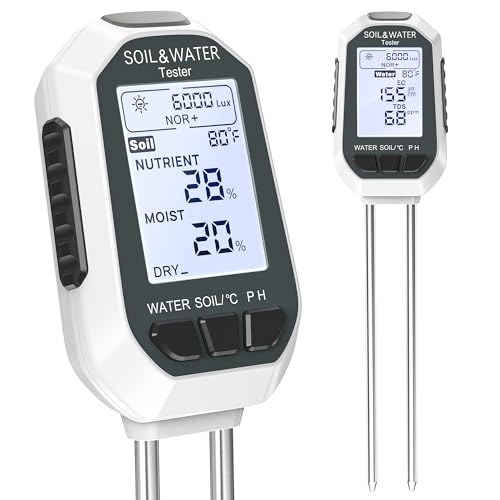
Buladeke 7 in 1 digital soil tester with LCD for pH and EC
7 in 1LCD backlightpH and ECDigital probe
Check price on Amazon
Best for: Gardeners who like a quick digital reading and understand its limits.

The Buladeke is a seven function digital probe with a backlit LCD that reports moisture, pH, EC and other readings. EC, or electrical conductivity, is a rough indicator of dissolved salts in the soil and not a direct nutrient reading.

Multi function probes are popular, but the number of functions is not the same as accuracy. A probe reads electrical properties at the tip, and those vary with moisture and contact. The 2025 probe technology claim is marketing, so we treat the readings as indicative. Compared with the SONKIR, it offers more readouts and a clearer screen, but needs batteries. Compared with lab kits, it cannot give real nitrogen, phosphorus or potassium values.

Ownership means probe care. Clean the metal tip after each use, replace the batteries when the display dims and recheck against strips or a lab test now and then.

What works

  • Backlit LCD is easy to read in shade
  • Reports moisture, pH and EC in one tool
  • Fast reading helps with watering decisions
  • Compact and light to carry

Watch out for

  • Probe pH and EC are indicative, not exact
  • Cannot measure nitrogen, phosphorus or potassium

Specs

Format
Digital probe meter
Measures
Moisture, pH, EC and more
Display
Large LCD with backlight
Power
Battery
Claim
2025 probe technology
07
Dewilde 100 soil pH test strips, range 3.5 to 9
100 stripspH 3.5 to 9Simple testGarden and lawn
Check price on Amazon
Best for: Gardeners who only need an honest, low cost pH check.

The Dewilde kit is a pack of 100 pH test strips with a range of 3.5 to 9, which covers the soils most gardeners will meet. You mix a soil sample with water, dip a strip and compare the color to the chart.

It measures pH only, which is the single most valuable number for deciding what to plant and whether to add lime or sulfur. It does not tell you about nutrients, so pair it with another method if you need that information. Compared with the AESCULIX, it offers more precision on pH only and less on everything else. Compared with the SONKIR probe, a strip tends to be more consistent from test to test.

Ownership is about sampling and storage. Keep the strips dry, use distilled water for the mix and read the color in good light. Record the readings so you can see trends from season to season.

What works

  • Covers a pH range of 3.5 to 9
  • One hundred strips lower the cost per test
  • Simple mixing method suits beginners
  • Focused on the number that matters most

Watch out for

  • Reports pH only, with no nutrient information
  • Color reading depends on lighting

Specs

Strips
100
pH range
3.5 to 9
Method
Mix soil with water, dip strip
Measures
pH only
Cost tier
Low

Spec decoder

What the listing measurements really mean

The numbers brands lead with, translated into what they tell you about fit, comfort and wear at home.

pH range

The span of acidity the test can read. A range of about 3.5 to 9 covers most garden soils.

Watch forThe Dewilde strips list 3.5 to 9, which suits typical soils.

NPK

Nitrogen, phosphorus and potassium, the three main nutrients in fertilizer. Chemical kits estimate them by color.

Watch forThe NewTest and AESCULIX list NPK, while probes cannot truly measure them.

EC

Electrical conductivity, an indicator of dissolved salts in the soil. It is not a direct nutrient reading.

Watch forThe Buladeke reports EC, so use it as a salt hint only.

Total tests

The number of individual readings the kit supports. It divides across the parameters in multi nutrient kits.

Watch forThe NewTest has 10 tests per parameter, and the AESCULIX lists 200 total.

Mail in lab

A method where a laboratory analyzes your sample and returns a report. It is the most direct measure of nutrients.

Watch forMySoil uses it, so budget for waiting time.

Methodology

How We Evaluated These Soil Test Kits

Spec sheet review

We evaluated the test method, parameters, test count and included guidance from each listing. We ranked methods by how directly they measure soil. Lab, chemical, strip and probe approaches formed the four tiers.

Owner feedback patterns

We looked for repeating comments about unclear colors, expired reagents and drifting probes. Those themes shape trust in a kit more than any marketing line. Probe pH drift came up most.

Fit for the garden

A raised bed, a lawn and a houseplant need different tests. We graded each kit on those uses, from the lab approach of MySoil to the moisture focus of the SONKIR.

Cost relative to the lineup

We used relative cost tiers and quote no listing prices. The SONKIR and Dewilde sit at the low end, while the LaMotte and MySoil sit at the high end.

Claims we discounted

Words like professional, accurate and latest probe technology appear often. We treat them as marketing and rank by method.

Decision guide

How to Choose the Right Soil Test Kits

By Test Method

SituationPickWhy
Want real nutrient numbersMySoil lab kitLaboratory analysis with a report
Hands on testing at homeLaMotte Model ELReagents with manuals
Quick N, P, K and pHNewTest 4 parameterColor comparison for four values
Many quick testsAESCULIX stripsLarge test count
pH onlyDewilde stripsFocused pH range of 3.5 to 9

By Budget

TierPickWhy
LowestSONKIR MS02Analog probe for moisture
LowDewilde pH stripsOne hundred pH tests
Low to middleBuladeke digitalBacklit multi readout
MiddleNewTest and AESCULIXMulti nutrient color kits
HighestLaMotte and MySoilReagents or lab analysis

Lab Test vs Home Kit

Lab test

MySoil sends your sample to a lab and returns nutrient numbers and recommendations. It is the most direct method and takes days.

Home kit

The LaMotte, NewTest and AESCULIX give results in minutes by color matching. They are coarser, but you can test as often as you like.

Use a lab test once a year for a baseline, and home kits to check changes between seasons.

By Garden Type

SituationPickWhy
New lawn or large bedMySoilBaseline report for amendments
Raised vegetable bedsNewTestN, P, K and pH in one kit
Houseplants and containersSONKIRMoisture check without chemicals
Acid loving plantsDewilde stripsQuick pH check

For Vegetable Gardens Specifically

Look for

A pH reading in the range most vegetables like, and nutrient data from a lab or chemical kit. Test in early spring before adding amendments.

In this comparison

The MySoil lab kit is the first choice, with the NewTest as a hands on alternative.

When to Spend More

Spend more if

You are setting up a new lawn or large beds and want real numbers. A lab test avoids guessing about amendments.

Save if

You only want to check pH or moisture. The Dewilde strips or SONKIR are enough.

Ownership

Maintenance schedule

The upkeep that decides whether a piece still looks good in year five.

TaskIntervalWhy it matters
Store strips and reagents dryAlwaysHumidity ruins test strips and heat degrades reagents. Keep them sealed in a cool cabinet.
Check expiry datesEach seasonOld reagents give faint or wrong colors. Replace them before the main testing season.
Clean probe tipsAfter each useSoil residue changes the reading and corrodes the metal. Wipe with a dry cloth or fine abrasive pad.
Replace probe batteriesWhen the display dimsLow power gives erratic readings. Fresh batteries restore stable numbers.
Log your resultsAfter each testA record by date and location shows trends. It also helps you judge whether an amendment worked.

FAQ

Frequently Asked Questions

How accurate are home soil test kits?

Chemical kits and strips give approximate bands, and probes give indicative values. A mail in lab test is the most direct measure of nutrients.

Can a digital probe measure NPK?

No. A probe reads electrical properties at the tip, and it cannot measure nitrogen, phosphorus or potassium directly. Treat such claims as marketing.

When should I test my soil?

Early spring or fall is best, before you add amendments. Avoid testing right after fertilizer or heavy rain.

How do I take a good sample?

Take cores from several spots at the same depth, remove stones and roots, mix them and dry the sample. One scoop from one spot misleads.

What pH should my soil be?

Most vegetables like slightly acidic to neutral soil, while some plants prefer more acid or more alkaline soil. Check the needs of your plants.

Strips or a chemical kit?

Strips are faster and cheaper, and chemical kits give a finer reading. Pick strips for many quick checks and a chemical kit for fewer, closer ones.

Bottom line

The short version

Browse more soil test kitson Amazon →
Brianna Cole, Lead Product Editor

About the author

Brianna Cole

Lead Product Editor, SenseiReview

Brianna Cole leads SenseiReview's buying guides, turning published specifications, documentation and owner feedback patterns into clear verdicts across home, tech, fitness, outdoor and DIY products.

More from Brianna →

Keep reading

Related guides