
Amazon affiliate links - we earn a commission.Affiliate disclosure

Buying guide · 12 min read · Updated 2026-11-27

Best Trail Cameras for Wildlife (2026)

Trail cameras for wildlife compared on trigger speed, no-glow flash, cellular versus SD card and battery life, with honest notes on megapixel claims and plans.

Brianna Cole, Lead Product EditorBy Brianna ColeLead Product Editor6 picks comparedSpec-sheet verified
Best Trail Cameras for Wildlife

At a glance

Our top picks

Side by side

Spec comparison

PiecePhotoVideoTriggerConnectivityClass
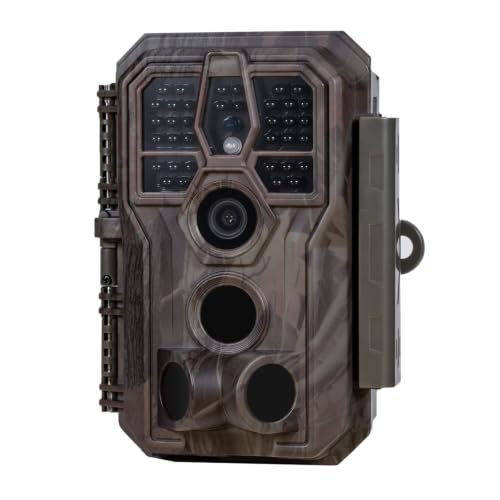
GardePro E5S Non-Cellular Trail Camera, 64MP, 1296P, 0.1s Trigger, No-GlowBest OverallGardePro E5S Non-Cellular Trail Camera, 64MP, 1296P, 0.1s Trigger, No-GlowUp to 64MP1296P HD0.1 secondsNone, SD card storagen/a
WOSPORTS Non-Cellular Trail Camera, 64MP, 4K, 0.2s TriggerBest Value PickWOSPORTS Non-Cellular Trail Camera, 64MP, 4K, 0.2s Trigger64MP4K0.2 secondsn/aLowest tier
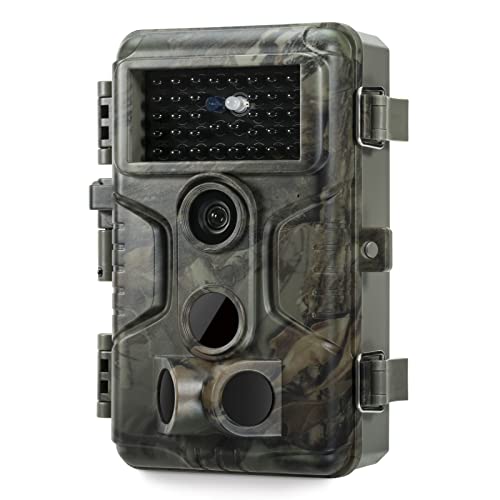
GardePro A3S Non-Cellular Trail Camera, Sony Starvis Sensor, 1296P with SoundBest Low-Light SensorGardePro A3S Non-Cellular Trail Camera, Sony Starvis Sensor, 1296P with Sound64MP1296P HD with sound0.1 secondsn/aLow to mid tier
SPYPOINT Flex-M Twin Cellular Trail Camera, Free Photo Plan, Multi-NetworkBest Cellular ValueSPYPOINT Flex-M Twin Cellular Trail Camera, Free Photo Plan, Multi-Networkn/an/an/aCellular with auto multi-networkMid to upper tier
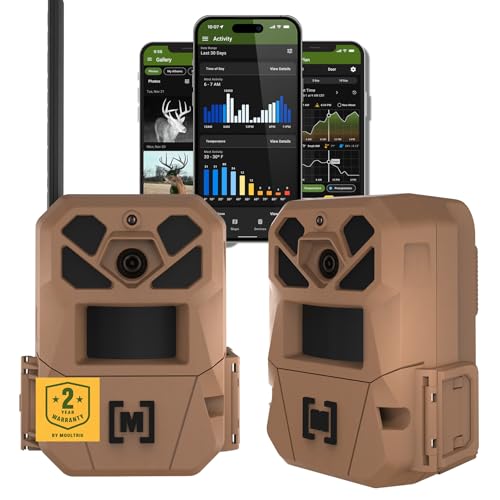
Moultrie Edge 3 Cellular Trail Camera, 2-Pack, 40MP, 0.5s TriggerBest Premium Cellular PairMoultrie Edge 3 Cellular Trail Camera, 2-Pack, 40MP, 0.5s Trigger40MPn/a0.5 secondsCellular scouting from anywhereHighest tier here
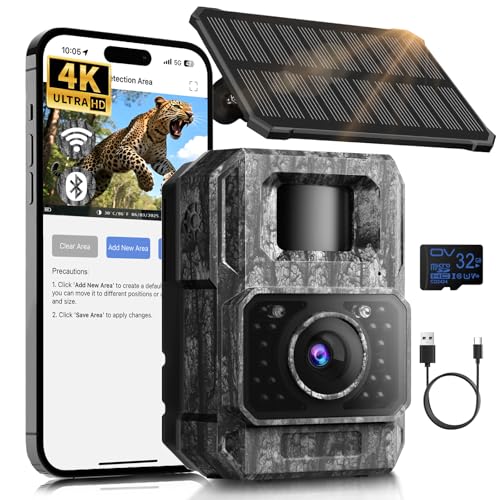
MAXDONE Solar Trail Camera, 4K 64MP, WiFi and Bluetooth, Night VisionBest Solar OptionMAXDONE Solar Trail Camera, 4K 64MP, WiFi and Bluetooth, Night Visionn/an/an/aBluetooth and WiFi to a phone appLow to mid tier

A trail camera sits on a tree or post, detects motion with an infrared sensor and records photos or video of whatever passes. It is a favorite tool for watching backyard wildlife, learning what visits at night and tracking animals on rural land.

This guide compares trail cameras for wildlife watching. We evaluated each on published specifications, trigger speed, flash type, connectivity, power and owner feedback patterns, and we explain how to read megapixel and range claims. Check local rules about cameras on public and neighboring land.

Before you buy

6 Criteria to Look For Before Buying a Trail Camera for Wildlife

  1. 01

    Trigger speed and detection

    Trigger speed is the delay between motion and a photo, and shorter is better for passing animals. The GardePro cameras list 0.1 seconds, the WOSPORTS lists 0.2 and the Moultrie Edge 3 lists 0.5. Detection range and angle matter too, since an animal outside the sensor's field is missed. Claims are best case, so test the camera in your own yard. Place the camera so animals walk across its field of view rather than straight at it, because motion sensors respond better to sideways movement.

  2. 02

    Megapixels and real quality

    Labels such as 64MP and 4K are often interpolated from smaller sensors. Real quality depends on the sensor, lens and night flash. A named sensor, like the Sony Starvis in the GardePro A3S, tells you more than a megapixel number. Look at sample images, not spec labels. Compare two sample nighttime images at the same distance, because that shows what the sensor and flash can really deliver.

  3. 03

    Flash type

    No-glow infrared is invisible to animals and people but has less range, and low-glow has a faint red glow with more range. White flash gives color at night but can spook animals. The GardePro E5S lists a no-glow flash with a 100 foot claim. Choose by whether stealth or range matters more. If your subject is a nervous animal such as a fox or deer, stealth is worth more than a few extra feet of range.

  4. 04

    Cellular or SD card

    Cellular cameras, like the SPYPOINT and Moultrie, send photos to your phone through a data plan, which costs money and needs coverage. SD card cameras store images locally, with no subscription, but you must visit. Choose cellular for remote sites and SD card for places you pass often. Ask which networks the camera supports and compare them with the strongest carrier at your spot before you buy.

  5. 05

    Power and battery life

    Cameras use AA batteries, often eight or twelve, and lithium cells last longer in cold. Solar, as on the MAXDONE, helps if the panel sees sun. Cellular and video use drain power faster. A dead camera at the best moment is the most common frustration. Shut off video mode if battery life is your priority, since clips use far more power than still photos.

  6. 06

    Mounting, security and rules

    Mount at about chest height, angled down, facing north or south to avoid sun glare. Cable locks and security boxes deter theft. Check local laws on cameras and respect neighbors' privacy. Do not point cameras at property you do not own. Hang a small sign or follow the local guidance if you place a camera on shared trails.

Detailed reviews

The 6 best trail cameras for wildlife, explained

01
GardePro E5S Non-Cellular Trail Camera, 64MP, 1296P, 0.1s Trigger, No-Glow
64MP photos1296P video0.1 s trigger100 ft no-glow
Check price on Amazon
Best for: Backyard and woodland wildlife watching without a subscription.

The GardePro E5S is a non-cellular trail camera with 64MP photos, 1296P video, a 0.1 second trigger and a no-glow infrared flash with a stated 100 foot range. Photos are stored on an SD card, and there is no subscription. It is a typical, well-regarded design for backyard and woodland use.

The quick trigger matters for animals that pass quickly, since a slow camera misses the head or the whole animal. Compared with the WOSPORTS, it has a faster stated trigger and a well-known brand. Compared with the cellular cameras, it needs you to visit and pull the card. A no-glow flash is invisible, so it does not spook animals or reveal the camera, at the price of shorter range than a low-glow flash.

Ownership notes: mount it at about chest height, angled slightly down, and clear vegetation in front. Use a quality SD card and format it in the camera. Insert fresh or lithium batteries, since cold drains alkaline cells. Check the camera now and then for condensation and insects in the housing.

What works

  • Stated 0.1 second trigger catches moving animals
  • No-glow flash is invisible to wildlife
  • No subscription, with SD card storage
  • 64MP and 1296P capture detail

Watch out for

  • No remote alerts, since you must visit to check
  • Megapixel figure is likely interpolated
  • No-glow flash has a shorter range than low-glow

Specs

Photo
Up to 64MP
Video
1296P HD
Trigger
0.1 seconds
Flash
No-glow infrared, 100 ft claimed
Connectivity
None, SD card storage
02
WOSPORTS Non-Cellular Trail Camera, 64MP, 4K, 0.2s Trigger
64MP4K video0.2 s triggerNight vision
Check price on Amazon
Best for: First-time users who want a low-cost camera for backyard wildlife.

The WOSPORTS camera is a non-cellular, non-WiFi trail camera with 64MP photos, 4K video, a 0.2 second trigger and infrared night vision. It is the lowest-cost camera in this guide. The listing advertises clear day and night imaging.

At this cost level, the headline resolution figures are marketing, and the real image quality depends on the sensor and lens. Compared with the GardePro E5S, it has a slower stated trigger and less brand history. Compared with the cellular models, it stores images on a card with no remote access. It is a good first trail camera for a backyard.

Ownership notes: test the camera in your yard before leaving it in the field. Use a quality SD card, and format it in the camera. Check the batteries monthly. Because it is a less-known brand, keep the receipt and check the warranty, and consider a cable lock to deter theft.

What works

  • Lowest cost tier
  • 0.2 second trigger claimed
  • 4K video and 64MP claimed
  • No subscription, SD card storage

Watch out for

  • Resolution claims are likely inflated
  • Less brand history and support
  • No remote access to images

Specs

Photo
64MP
Video
4K
Trigger
0.2 seconds
Night
Infrared night vision
Class
Lowest tier
03
GardePro A3S Non-Cellular Trail Camera, Sony Starvis Sensor, 1296P with Sound
Sony Starvis sensor1296P with sound64MP0.1 s trigger
Check price on Amazon
Best for: Night wildlife watchers who want a better low-light sensor and sound.

The GardePro A3S is a non-cellular camera with a Sony Starvis sensor aimed at better low-light performance, 1296P video with sound, 64MP photos and a 0.1 second trigger. A better sensor helps dusk and dawn images, when much wildlife is active. Sound recording adds context to video clips.

The sensor claim is the more meaningful spec than the megapixel count, since a good low-light sensor produces cleaner night images. Compared with the E5S, it emphasizes low light and sound over the no-glow range. Compared with the WOSPORTS, it has a named sensor and a faster trigger. It is a thoughtful choice for night wildlife.

Ownership notes: place it where animals pass at close range, because infrared range claims are best case. Mount it facing north or south to avoid sun glare triggers. Check the SD card and batteries regularly. Keep the lens clean, and remove cobwebs and insects.

What works

  • Sony Starvis sensor aims at better low-light images
  • 1296P video with sound
  • 0.1 second trigger
  • No subscription

Watch out for

  • Mid cost tier for a non-cellular model
  • Range claims are best case
  • No remote access

Specs

Sensor
Sony Starvis for low light
Video
1296P HD with sound
Photo
64MP
Trigger
0.1 seconds
Class
Low to mid tier
04
SPYPOINT Flex-M Twin Cellular Trail Camera, Free Photo Plan, Multi-Network
CellularFree photo planAuto multi-networkNight vision
Check price on Amazon
Best for: People who want phone alerts from a remote spot and a free basic photo plan.

The SPYPOINT Flex-M Twin is a cellular trail camera that connects to available networks automatically, comes with a free photo plan and offers night vision, sold as a twin pack. Cellular means photos are sent to your phone, so you can check without visiting. The free photo plan makes the entry cost lower.

Remote alerts are the main benefit, since you can see what visits without disturbing the area. Compared with the non-cellular cameras, it costs more and depends on signal. Compared with the Moultrie Edge 3, it emphasizes a free plan and multi-network coverage. Plans change, so check current terms for photo limits and upgrades.

Ownership notes: confirm cellular coverage at the camera spot, and mount it where signal is best. Keep batteries fresh, since cellular transmission uses power. Check for firmware updates. A two-pack lets you cover two spots.

What works

  • Cellular transfer sends photos to your phone
  • Free photo plan listed
  • Auto multi-network connection
  • Twin pack covers two locations

Watch out for

  • Mid to upper cost tier
  • Needs cellular signal at the site
  • Plans change and upgrades cost extra

Specs

Connectivity
Cellular with auto multi-network
Plan
Free photo plan listed
Night
Night vision
Format
Twin pack
Class
Mid to upper tier
05
Moultrie Edge 3 Cellular Trail Camera, 2-Pack, 40MP, 0.5s Trigger
Cellular40MP0.5 s trigger2 pack
Check price on Amazon
Best for: Land managers and hunters who need remote alerts across two locations.

The Moultrie Edge 3 is a cellular trail camera sold as a two-pack, with 40MP photos and a 0.5 second trigger, marketed for tracking deer activity and movement patterns. Real-time photos arrive on your phone through a cellular plan. It is the most expensive option here and is built for hunters and land managers.

A 0.5 second trigger is slower than the non-cellular models, which is common for cellular cameras that spend time transmitting. Compared with the SPYPOINT Flex-M Twin, it carries a higher cost and a stronger focus on hunting. Compared with the GardePro, it adds remote access. For simple backyard watching, it may be more than needed.

Ownership notes: choose a plan, and check coverage at your site. Use a mounting height and angle that suit your target, and clear vegetation. Replace batteries on schedule. Cable locks help against theft.

What works

  • Cellular delivery of photos to your phone
  • Two cameras in the pack
  • 40MP photos
  • Built for scouting

Watch out for

  • Highest cost tier in the lineup
  • 0.5 second trigger is slower than non-cellular models
  • Needs a cellular plan and signal

Specs

Connectivity
Cellular scouting from anywhere
Photo
40MP
Trigger
0.5 seconds
Format
2 pack
Class
Highest tier here
06
MAXDONE Solar Trail Camera, 4K 64MP, WiFi and Bluetooth, Night Vision
Solar panel4K 64MPWiFi and BluetoothNight vision
Check price on Amazon
Best for: Backyard users who want phone viewing at the camera and solar charging.

The MAXDONE solar trail camera has a solar panel, 64MP photos, 4K video, night vision and a phone app connection over WiFi and Bluetooth. The listing warns that it is not compatible with home WiFi, which means the connection is local to the camera, so you need to be near it. A solar panel helps keep the battery charged.

Local WiFi lets you view images on your phone without removing the card, which is convenient for a backyard camera. Compared with the cellular models, it cannot send images over distance. Compared with the GardePro cameras, it adds a solar panel and an app. Solar helps most with direct sun, and panels in shade add little.

Ownership notes: place the panel where it sees sun, and check battery levels. Learn how the app connects before mounting. Use a quality SD card. Because it is a less established brand, keep proof of purchase and check the warranty.

What works

  • Solar panel reduces battery changes
  • Phone app connects locally over WiFi and Bluetooth
  • 64MP and 4K claimed
  • Low to mid cost tier

Watch out for

  • Not for use with home WiFi, so no remote viewing
  • Solar needs direct sun
  • Less established brand

Specs

Power
Solar panel
Photo and video
64MP photos and 4K video
Connectivity
Bluetooth and WiFi to a phone app
Note
Not for use with home WiFi, per the listing
Class
Low to mid tier

Spec decoder

What the listing measurements really mean

The numbers brands lead with, translated into what they tell you about fit, comfort and wear at home.

Trigger speed

The time from detecting motion to capturing an image. Faster triggers miss fewer animals.

Watch forThe GardePro lists 0.1 s, the WOSPORTS 0.2 s and the Moultrie Edge 3 lists 0.5 s.

No-glow flash

Infrared illumination that cannot be seen by animals or people, at some cost to range.

Watch forThe GardePro E5S lists a no-glow flash with a 100 ft claim.

Cellular

A camera that sends images over a mobile network. It needs a plan and signal. Some plans limit the number of photos per month.

Watch forThe SPYPOINT Flex-M Twin and Moultrie Edge 3 are cellular.

Starvis sensor

A Sony sensor family designed for low-light performance. It helps dawn and dusk images.

Watch forThe GardePro A3S lists a Sony Starvis sensor.

Megapixels

The size of the image in millions of pixels. Many trail cameras interpolate to higher numbers than the sensor provides. Ask for sample images before you trust any number.

Watch forThe GardePro and WOSPORTS list 64MP.

Methodology

How We Evaluated These Trail Cameras for Wildlife

Trigger and detection

We compared stated trigger speeds from 0.1 to 0.5 seconds and treated them as best case. Our scores are editorial assessments based on published specifications and owner feedback patterns. We also noted detection angle where the listing gave it.

Image claims

We discounted megapixel labels and valued named sensors, such as the Sony Starvis in the GardePro A3S.

Connectivity

We compared cellular, local WiFi and SD card designs and the plans they need.

Power

We looked at battery and solar options and what each demands.

Value and honesty

We judged each camera by relative cost tier and avoided price figures. Plan terms were noted as changeable. Theft and weather resistance were noted where listings gave detail.

Decision guide

How to Choose the Right Trail Cameras for Wildlife

By Use

SituationPickWhy
Backyard wildlife watchingGardePro E5SFast trigger, no subscription.
Night wildlifeGardePro A3SLow-light sensor.
Remote landSPYPOINT Flex-M TwinCellular with free plan.
Scouting two locationsMoultrie Edge 3 2-PackTwo cellular cameras.

By Budget

SituationPickWhy
Lowest spendWOSPORTS 64MPLowest tier.
Low to midMAXDONE Solar or GardePro E5SSolar or fast trigger.
MidGardePro A3SLow-light sensor.
HigherSPYPOINT or Moultrie Edge 3Cellular.

Cellular vs SD Card

Cellular

The SPYPOINT and Moultrie cameras send photos to your phone, but need signal and a plan.

SD card

The GardePro and WOSPORTS cameras store locally, with no subscription, but need a visit to check.

Choose cellular for remote sites. Choose an SD card camera for places you pass often.

By Flash

SituationPickWhy
Stealth neededGardePro E5SNo-glow flash.
Long range at nightGardePro A3SLow-light sensor.
Daytime viewing and chargeMAXDONE SolarSolar panel.
Cold climateAny, with lithium batteriesLithium works better in cold.

For Wildlife Watching Specifically

Look for

A fast trigger, a flash type that suits your goals, power that lasts and connectivity you will actually use. Mount at chest height and test the camera. Keep notes on where each camera sat.

In this comparison

The GardePro E5S leads on balance, the WOSPORTS on value and the SPYPOINT on remote access.

When to Spend More

Spend more if

You need remote alerts or have far-off sites. A cellular camera repays the plan cost.

Save if

You will check the camera often. A WOSPORTS or GardePro is enough.

Ownership

Maintenance schedule

The upkeep that decides whether a piece still looks good in year five.

TaskIntervalWhy it matters
Replace batteriesBefore each seasonWeak batteries cause missed triggers and corrupted files. Use lithium cells in cold. Remove batteries if the camera will sit unused for months.
Format the SD cardEach time you swap cardsFormatting in the camera prevents errors. Use a card size the maker recommends. Keep a spare card so you can swap and review at home.
Clean the lens and sensorEach visitDirt, spiders and condensation cause blurry images. Wipe with a soft cloth. A tiny bag of silica gel in the housing can cut condensation.
Clear vegetationEach visitMoving branches cause false triggers. Trim what sits in front of the sensor. A small pair of shears in your kit makes this quick.
Check seals and fasteningsEach seasonMoisture and insects ruin electronics. Check the door gasket and the strap. Replace a cracked gasket before the wet season.

FAQ

Frequently Asked Questions

How high should I mount the camera?

About chest or waist height, angled slightly down, facing north or south to avoid sun glare. Test the angle by walking in front of the camera and checking what it captured.

Do I need a cellular camera?

Only if you want remote alerts. SD card cameras need no subscription. Many people start with an SD card camera and add a cellular one later.

Why are my photos blank?

Common causes are a slow trigger, a wrong mount angle, false triggers from branches or an unformatted card. Grass swaying in the wind in front of the lens is a very common culprit.

Will the flash scare animals?

No-glow infrared does not. White flash can. Even a no-glow flash can be noticed by some people up close. Test at night to see how bright it looks.

How long do batteries last?

From weeks to months, depending on triggers, flash and temperature. Lithium cells last longer in cold. Fresh batteries in spring are a good habit.

Is it legal to use a trail camera?

Rules vary. Use cameras on your own property or with permission, and do not point them at private areas. Public land often has its own rules, so check before you place a camera there.

Bottom line

The short version

Browse more trail cameras for wildlifeon Amazon →
Brianna Cole, Lead Product Editor

About the author

Brianna Cole

Lead Product Editor, SenseiReview

Brianna Cole leads SenseiReview's buying guides, turning published specifications, documentation and owner feedback patterns into clear verdicts across home, tech, fitness, outdoor and DIY products.

More from Brianna →

Keep reading

Related guides