
Amazon affiliate links - we earn a commission.Affiliate disclosure

Buying guide · 13 min read · Updated 2026-11-26

Best Trellises for Climbing Plants (2026)

Seven trellises, arches and obelisks compared on material, coating, height, stability and assembly, with picks for roses, cucumbers, tomatoes and patio pots.

Brianna Cole, Lead Product EditorBy Brianna ColeLead Product Editor7 picks comparedSpec-sheet verified
Best Trellises for Climbing Plants

At a glance

Our top picks

A trellis gives climbing plants something to grip, so vines grow up instead of sprawling across the ground. That saves bed space, lifts fruit off wet soil and improves airflow around leaves.

Trellises come as arches, obelisks, A frames and panels, and the material changes how long they last outside. This guide compares seven designs by structure, coating and fit for common climbers, from roses to cucumbers.

Before you buy

6 Criteria to Look For Before Buying a Trellise for Climbing Plants

  1. 01

    Structure type for the plant

    Arches suit roses and clematis over a path, obelisks suit roses and beans in beds, A frames and U frames suit cucumbers and squash, and small stake in trellises suit pots. A mismatch wastes money. A wide arch is overkill for a pot, and a short frame cannot hold a tall vine. The LeJoy is an arch, the ROOLLYA an obelisk and the HIHADUUM an A frame.

  2. 02

    Material and rust protection

    Galvanized steel has a zinc layer that protects even where it scratches. Plastic or powder coating works until it chips, and then steel can rust. Wood needs sealing and can rot at ground level. Match the material to your climate. The LeJoy is galvanized, the RUBFAC is coated and the Outvita is wood.

  3. 03

    Height and width

    Height sets how far a vine can climb, and width sets how much a path or bed is covered. Arches should clear about 6.5 feet so a person can walk beneath. Short frames suit compact crops. The RUBFAC is about 94 inches tall, and the Angyangguoji reaches only 30 inches.

  4. 04

    Tubing thickness and stability

    Thicker tubing resists bending when vines are heavy and wet, and wider bases resist tipping in wind. Check thickness figures where listed. A 16 mm tube like the ROOLLYA is stronger than thin PVC coated iron. Light frames need stakes or ground anchors in open sites.

  5. 05

    Opening size and plant type

    Vines with tendrils need thin supports to grasp, and vegetables need openings large enough for fruit to pass through. A grid with openings around 5 by 6 inches suits cucumbers. The HIHADUUM lists openings of 5.3 by 6.1 inches.

  6. 06

    Assembly and anchoring

    Tool free slide together designs are quick, but joints can loosen over a season. Anchor tall arches deeply or set them in concrete. A trellis that falls over in a storm can damage plants. The LeJoy is described as one person assembly.

Detailed reviews

The 7 best trellises for climbing plants, explained

01
LeJoy Garden galvanized steel arch, 7.6 ft tall by 4.6 ft wide
7.6 ft tall4.6 ft wideGalvanized steelOne person setup
Check price on Amazon
Best for: Gardeners who want a durable, low maintenance arch for roses and clematis.

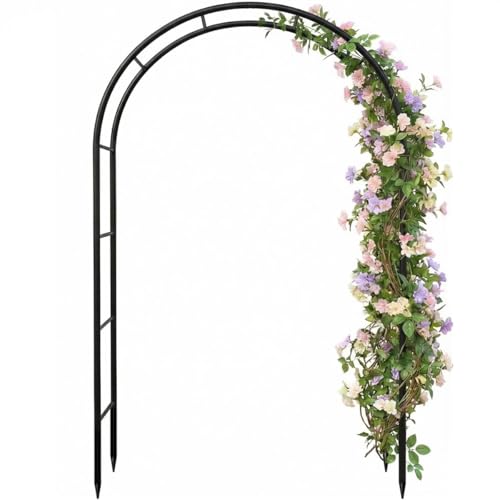
The LeJoy arch is built from galvanized steel, where a zinc layer protects the metal from rust even when the surface scratches. The maker says the tubing is thicker and heavier than earlier versions, which matters once a rose or clematis is covered in wet foliage.

At 7.6 feet tall and 4.6 feet wide, it clears a person comfortably and spans a path or garden gate. Compared with the black coated RUBFAC arch, galvanizing gives better long term rust resistance, though the finish looks plain. Compared with the Outvita wood arbor, it needs no staining or sealing and will not rot at the ground line.

Ownership is about anchoring. Push the legs deep into soil, or set them in concrete or ground stakes in windy spots, because a tall arch with a full vine catches the wind like a sail. Check the joints each spring and tighten any connectors that have shifted.

What works

  • Galvanized steel resists rust even after scratches
  • Thicker tubing carries heavy vine growth
  • Seven point six feet clears a person easily
  • One person can assemble it

Watch out for

  • Plain finish looks utilitarian in some gardens
  • Needs strong anchoring in windy ground

Specs

Height
7.6 feet
Width
4.6 feet
Material
Galvanized steel
Build
Thicker, heavier tubing
Assembly
One person
02
ROOLLYA 6.3 ft thickened steel garden obelisk, 14 inch diameter
6.3 ft tall14 in diameter16 mm tubesMetal
Check price on Amazon
Best for: Roses, clematis and pole beans in a bed or large container.

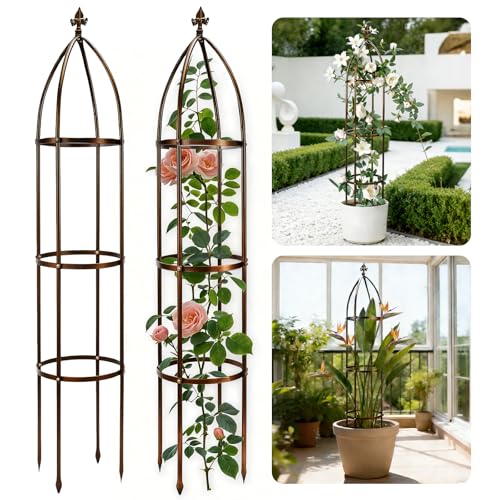
The ROOLLYA is a tower style obelisk with 16 mm steel tubing and a 14 inch base diameter. Its shape suits climbing roses, sweet peas, clematis and pole beans, and it can stand in a bed or a large pot.

The thicker tubing is the main selling point, and 16 mm is substantial for a trellis of this size. Compared with the 2 pack obelisks that use thinner PVC coated iron, it offers a sturdier frame at a higher cost per unit. Compared with an arch, an obelisk works as a focal point and uses less space, but has less height range for a single vine.

Ownership is simple. Sink the legs well into the soil, tie vines in as they grow and check the finish at the ground line each year. A chip in the coating can rust, so touch it up with rust inhibiting paint.

What works

  • Sixteen millimeter tubing is sturdy for the size
  • Fourteen inch base gives a stable footprint
  • Works in a bed or a large pot
  • Tool free assembly saves time

Watch out for

  • Less coverage than an arch for a long vine
  • Coating chips can rust at the ground line

Specs

Height
6.3 feet
Base diameter
14 inches
Tubing
16 mm thick steel
Form
Obelisk tower
Assembly
Tool free, listed as easy
03
RUBFAC 7.8 ft black metal garden arch, 55 by 94 inch
94 in tall55 in wideBlack metalEasy assembly
Check price on Amazon
Best for: Gardeners who want a tall, formal looking arch at a low cost.

The RUBFAC arch stands about 94 inches tall and 55 inches wide, the tallest and one of the widest arches in this lineup. The black coated finish suits formal garden settings, and the listing also pitches it for weddings and events.

It sits at a low cost tier, so a buyer gets a large structure for little. The tradeoff is the coating, which is thinner than galvanizing and may chip at connection points and where the legs enter the soil. Compared with the LeJoy, the RUBFAC is cheaper and taller, but the rust protection is less robust.

Ownership requires attention to the coating. Touch up chips with rust inhibiting paint, anchor the legs firmly and remove heavy vines before a storm. Take it down in winter if you live where snow and ice are heavy.

What works

  • Ninety four inch height clears tall people and vines
  • Black finish suits formal garden settings
  • Low cost tier for a large structure
  • Also works for events and photos

Watch out for

  • Coating is less rust resistant than galvanizing
  • Needs good anchoring when covered in foliage

Specs

Height
About 94 inches
Width
About 55 inches
Finish
Black coated metal
Use
Gardens, events, weddings
Cost tier
Second lowest here
04
MQHUAYU U shaped cucumber trellis for raised beds, metal arch
U shapePlastic coatedRaised bedSteel core
Check price on Amazon
Best for: Cucumbers, small melons and squash grown on raised beds.

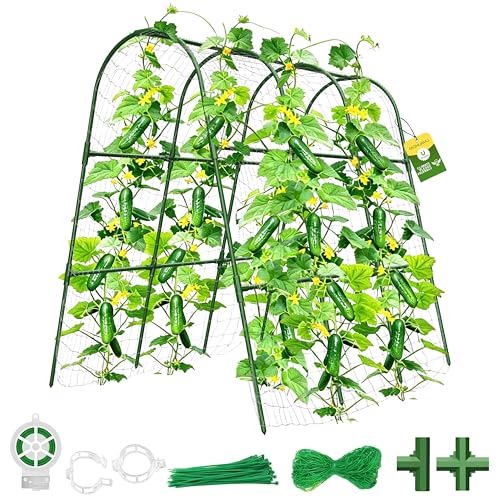
The MQHUAYU is a U shaped frame designed for raised beds, which lets you plant a row of cucumbers on both sides and have the vines meet overhead. The maker says it is more stable than an A frame, and a U shape gives each side a vertical post.

The core is stainless steel with a plastic coating, which protects the metal from rust and from rubbing against stems. The cross shaped connector is supposed to make assembly easier. Compared with the HIHADUUM A frame, the U shape gives more headroom for climbing vegetables and a tunnel for shade tolerant crops underneath. Compared with the heavy arches, it is lighter and designed for vegetables, not for ornamental vines.

Ownership is simple. Push the legs into the bed, tie young vines in until they grip, and check connectors each season. Harvest from the underside, where fruit hangs straight.

What works

  • U shape supports a row on each side
  • Plastic coating protects stems and metal
  • Fruit hangs straight and stays off wet soil
  • Cross connectors help with quick assembly

Watch out for

  • Lighter than steel arches in strong wind
  • Sized for beds, not for tall ornamental vines

Specs

Form
U shaped arch
Core
Stainless steel core
Coating
Plastic coated
Connector
Cross shaped, easy to join
Use
Cucumbers and vegetables, both sides
05
HIHADUUM 2 pack 50 inch A frame trellis, 17 inch wide, adjustable
50 in tall17 in wideA frame2 pack
Check price on Amazon
Best for: Cucumbers, small squash and peas on a budget in two sets.

The HIHADUUM set includes two A frame trellises, each 50 inches tall and 17 inches wide, with a reinforced 1 cm outer frame. The openings are about 5.3 by 6.1 inches according to the listing, large enough for cucumbers and small squash to pass through.

A frame trellises are light, quick to place and easy to move between beds. The adjustable design allows the angle to change for narrower or wider beds. Compared with the MQHUAYU U frame, the A frame is lighter and offers less vertical clearance, but it is also much cheaper per frame. Compared with the Angyangguoji potted trellises, it is far taller and suits vegetables in the ground.

Ownership is mostly about placement. Set the base in firm soil, tie vines in and check that the hinge or joint does not shift. The 50 inch height suits compact climbers, not tall pole beans or large roses.

What works

  • Two trellises in one pack lowers the cost per frame
  • Reinforced tubing resists bending
  • Openings pass small fruit through
  • Adjustable angle fits different bed widths

Watch out for

  • Fifty inch height suits only compact climbers
  • Lightweight frame needs stakes in windy beds

Specs

Size
50 x 17 inches each
Pack
2 trellises
Frame
Reinforced 1 cm outer tubing
Openings
About 5.3 x 6.1 inches
Design
Adjustable A frame
06
Outvita 7 ft dark brown wooden garden arbor arch trellis
7 ft tallFSC woodDark brownSanded
Check price on Amazon
Best for: Gardeners who want a natural wood look and will seal it each year.

The Outvita is a wooden arbor that stands about 7 feet tall, made of FSC certified wood that has been sanded smooth. The dark brown finish blends into a cottage garden and softens as vines grow over it.

Wood costs more than steel here and needs more care outdoors. Untreated or lightly treated wood weathers and can rot at the ground line, so a seasonal coat of exterior sealant extends its life. Compared with the LeJoy, it is warmer in appearance and less durable per season of rain. Compared with the RUBFAC, it is heavier and more stable in wind, but the cost is higher.

Ownership means sealing and checking the base. Set the posts on gravel or stakes to keep them off wet soil, reseal each year and tighten the connectors that hold the panels together.

What works

  • Natural wood suits cottage and rustic gardens
  • FSC certified material and sanded surface
  • Heavier frame is stable in wind
  • Seven foot height fits a path entry

Watch out for

  • Highest cost tier among the arches here
  • Wood needs sealing and can rot at the ground line

Specs

Height
7 feet
Material
FSC certified wood
Finish
Dark brown, fully sanded
Style
Pergola type archway
Cost tier
Highest in this lineup
07
Angyangguoji 4 pack 30 inch adjustable metal trellis for pots
30 in tall4 packAdjustable 15 to 30 inTool free
Check price on Amazon
Best for: Houseplants and small patio containers that need a short support.

The Angyangguoji set gives you four small metal trellises that adjust from 15 to 30 inches in height. They slide together without tools and stake into a pot, so they suit houseplants and balcony containers.

The small size is the limitation. At 30 inches maximum, they work for pothos, jasmine, sweet peas and small clematis, but not for a full sized cucumber or tomato. Compared with the ROOLLYA obelisk, they are light and decorative and suit small pots, while the ROOLLYA suits larger ones. They sit at the lowest cost tier of the lineup, and four trellises cover several pots.

Ownership is simple. Push the legs deep into the potting mix, tie stems in loosely and move the trellis with the pot. Check for bending if the plant becomes heavy, and replace the frame if it twists.

What works

  • Four trellises cover several pots
  • Adjustable from 15 to 30 inches
  • Tool free assembly and easy to move
  • Lowest cost tier of the lineup

Watch out for

  • Thirty inch maximum is too short for tall vines
  • Lightweight frame bends under heavy growth

Specs

Height
Adjustable 15 to 30 inches
Pack
4 trellises
Material
Sturdy metal
Assembly
Tool free slide together
Use
Indoor and outdoor pots

Spec decoder

What the listing measurements really mean

The numbers brands lead with, translated into what they tell you about fit, comfort and wear at home.

Galvanized steel

Steel coated in zinc to prevent rust. The zinc continues to protect where the surface is scratched.

Watch forThe LeJoy uses it, while most black arches use a thinner coating.

Tubing diameter

The thickness of the metal tube, listed in millimeters. Thicker tubes bend less under load.

Watch forThe ROOLLYA lists 16 mm, and the HIHADUUM lists a 1 cm frame.

PVC or plastic coating

A plastic layer over metal. It protects stems and delays rust until the coating chips.

Watch forThe MQHUAYU uses it over a stainless core.

FSC certified

Wood from forests certified for responsible management. It describes sourcing, not weather resistance.

Watch forThe Outvita lists it, but you must still seal the wood.

Opening size

The gap between trellis members. It decides whether fruit can pass through.

Watch forThe HIHADUUM lists 5.3 by 6.1 inches.

Methodology

How We Evaluated These Trellises for Climbing Plants

Spec sheet review

We evaluated height, width, material, tubing size and assembly from each listing. We compared them with the weight of mature vines and wind load. The LeJoy and ROOLLYA anchored the comparison.

Owner feedback patterns

We looked for repeating comments about bent legs, chipped coatings and loose joints. These issues decide whether a trellis lasts a season or years. Bent legs in wind came up most.

Fit for the plant

Roses, cucumbers and potted vines need different supports. We graded each trellis on that fit, from the Angyangguoji for pots to the RUBFAC for tall climbers.

Cost relative to the lineup

We used relative cost tiers and quote no listing prices. The Angyangguoji and RUBFAC sit at the low end, while the Outvita sits at the high end.

Claims we discounted

Phrases like heavy duty and weatherproof appear on most listings. We treat them as marketing unless a material or thickness is stated.

Decision guide

How to Choose the Right Trellises for Climbing Plants

By Plant Type

SituationPickWhy
Roses and clematis over a pathLeJoy galvanized archRust resistant and tall
Climbing roses in a bedROOLLYA obeliskSturdy 16 mm tubing
Cucumbers in raised bedsMQHUAYU U frameRow on each side
Small squash and peasHIHADUUM A frameLight and adjustable
Houseplants and small potsAngyangguoji 4 packShort and adjustable

By Budget

TierPickWhy
LowestAngyangguoji 4 packFour small trellises
LowRUBFAC archTall black arch for little
Low to middleMQHUAYU U frameRaised bed cucumber frame
MiddleLeJoy and ROOLLYAGalvanized arch or thick obelisk
HighestOutvita wooden arborNatural wood look

Arch vs Obelisk

Arch

The LeJoy and RUBFAC span a path and give a long run for a vine. They catch more wind and need deeper anchoring.

Obelisk

The ROOLLYA stands as a tower in a bed or large pot. It uses less space and suits roses and pole beans.

Choose an arch for an entry or path, and an obelisk for a focal point in a bed.

By Climate and Exposure

SituationPickWhy
Wet climateLeJoy galvanizedZinc coating resists rust
Windy siteOutvita wooden arborHeavy frame holds steady
Mild, sheltered gardenRUBFAC archLow cost large arch
BalconyAngyangguojiSmall and light

For Cucumbers Specifically

Look for

A frame at least 4 feet tall with openings large enough for fruit and a plastic or galvanized coating. Tie young vines in until tendrils grip.

In this comparison

The MQHUAYU U frame is the first choice, with the HIHADUUM A frame as a lower cost alternative.

When to Spend More

Spend more if

You plan to grow heavy perennial vines for years. A galvanized LeJoy arch or a sealed wooden arbor lasts longer.

Save if

You grow annual vegetables or a few pots. The HIHADUUM or Angyangguoji is enough.

Ownership

Maintenance schedule

The upkeep that decides whether a piece still looks good in year five.

TaskIntervalWhy it matters
Anchor the legs firmlyAt setupA trellis with a full vine acts like a sail. Deep legs, stakes or concrete keep it upright.
Check connectors and jointsEach springJoints loosen over a season of wind and growth. Tighten or replace shifted pieces.
Touch up chipped coatingEach seasonChips expose steel to moisture. Rust inhibiting paint seals the spot.
Seal wooden arborsEvery yearExterior sealant protects against rot at the ground line. Reapply after winter.
Remove heavy vines before stormsAs neededA wet, leafy vine adds weight and wind load. Thinning growth prevents tipping.

FAQ

Frequently Asked Questions

What trellis is best for cucumbers?

A U frame or A frame at least 4 feet tall with large openings works well. The MQHUAYU suits raised beds and the HIHADUUM is a lower cost option.

Will a trellis rust?

Coated steel can rust where the finish chips, and galvanized steel resists it better. Wood does not rust but can rot unless sealed.

How do I stop an arch from blowing over?

Push the legs deep into the soil or use ground stakes or concrete. Thin out heavy vines before storms.

How tall should an arch be?

At least 6.5 feet so a person can walk beneath. The RUBFAC is about 7.8 feet and the LeJoy 7.6 feet.

Can I use a trellis in a pot?

Yes, small stake in trellises like the Angyangguoji are made for pots. Large trellises need a stable, heavy container.

Do vines need tying to a trellis?

Young vines usually need tying in until tendrils or stems grip. Use soft ties that will not cut into stems.

Bottom line

The short version

Browse more trellises for climbing plantson Amazon →
Brianna Cole, Lead Product Editor

About the author

Brianna Cole

Lead Product Editor, SenseiReview

Brianna Cole leads SenseiReview's buying guides, turning published specifications, documentation and owner feedback patterns into clear verdicts across home, tech, fitness, outdoor and DIY products.

More from Brianna →

Keep reading

Related guides