A raised bed solves several garden problems at once: poor native soil, bad drainage, a bad back and the unwanted attention of weeds and slugs. The choice of material then decides how long the bed lasts, how hot the soil runs in summer, whether anything leaches into the earth where you grow food, and how much work it is to build. A bed that rots in four years is no bargain, however cheap it looked at the checkout.
This guide compares cedar, pine, composite, galvanised steel, stone and treated lumber, then covers bed depth by crop, how to work out soil volume, drainage and liners, heat in metal beds, and lifespan. Where no source documents a figure, such as an exact lifespan, the guide says so, since climate, soil and care change the result a great deal.
Cedar
Cedar is the classic raised bed wood because it contains natural oils that resist rot and insects. It lasts many years in contact with damp soil without any chemical treatment, which makes it a comfortable choice for edible gardens. It is light for a hardwood, easy to cut and assemble, and weathers to a soft silver grey.
The drawbacks are price and thickness. Cedar costs more than pine, and thin boards, such as those under 2.5 cm, can bow under the pressure of wet soil and may not last as long as thick ones. Look for boards of about 4 to 5 cm in thickness for the best results, and for corner posts or bracing on longer beds. Western red cedar and similar species are common, and the quality varies, so check the grade. Cedar lasts longer than most softwoods, but no source documents a firm number of years, because soil moisture and climate vary.
Pine and other softwoods
Untreated pine, fir and spruce are the cheapest wood options, widely available and easy to work. They suit a first bed or a budget garden. Their weakness is rot. In constant contact with damp soil, untreated softwood starts to decay in a few seasons, so expect to replace boards earlier than with cedar.
You can extend its life by lining the inside with a heavy gauge plastic or landscape fabric to separate the wood from damp soil, leaving the base open for drainage, and by choosing thick boards. A thin plastic liner stapled up the sides can trap moisture and speed rot if it is not done carefully, so leave gaps for air at the top. Painting the outside with a non toxic sealant helps, but avoid products that are not safe for food gardens on the inner surfaces.
| Material | Rot resistance | Heat in summer | Upkeep | Main tradeoff |
|---|---|---|---|---|
| Cedar | High | Moderate | Low | Cost, board thickness |
| Pine | Low | Moderate | Replace sooner | Rots in a few seasons |
| Composite | Very high | Moderate | Very low | Cost, can look artificial |
| Galvanised steel | High, coating dependent | Can run hot | Low | Heat, sharp edges |
| Stone or brick | Excellent | Moderate | None | Cost, labour, permanent |
Composite and recycled plastic
Composite boards, made from wood fibre and plastic or from recycled plastic, do not rot, do not splinter and need no treatment. They are a lasting option, and many come in kits with interlocking corners that go together without tools. They suit people who want a bed that will stay as it is for years.
The tradeoffs are cost and appearance. Composites are usually pricier than softwood, and some look obviously synthetic. Quality varies, with thin boards bowing under soil pressure and cheaper plastics becoming brittle in strong sun or in extreme cold. No source documents a standard lifespan, so look for a stated warranty and read owner feedback on warping. If you are growing food, check the product information on the materials, since reputable makers state that their boards are suitable for edible gardens.
Galvanised steel
Galvanised steel beds, often with a corrugated profile, are strong, quick to assemble with bolts and can last for many years. The zinc coating protects the steel from rust, and the beds do not rot or attract insects. They are popular for their modern look and for their ability to hold a bed's shape with minimal framing.
Two concerns come up. The first is heat: in strong sun, a metal wall warms and passes heat to the soil at the edge, which can stress roots and dry the soil at the sides. In hot climates, shade cloth, a west facing wall, or lining the inside with a layer of insulation such as cardboard or a thin foam liner reduces the effect. The second is safety: cut edges can be sharp, so wear gloves during assembly and choose beds with rolled or capped tops. Soil contact with galvanised coatings is generally regarded as acceptable for vegetable growing, but check the product information, and if you are concerned, line the inner surface.
Stone, brick and concrete block
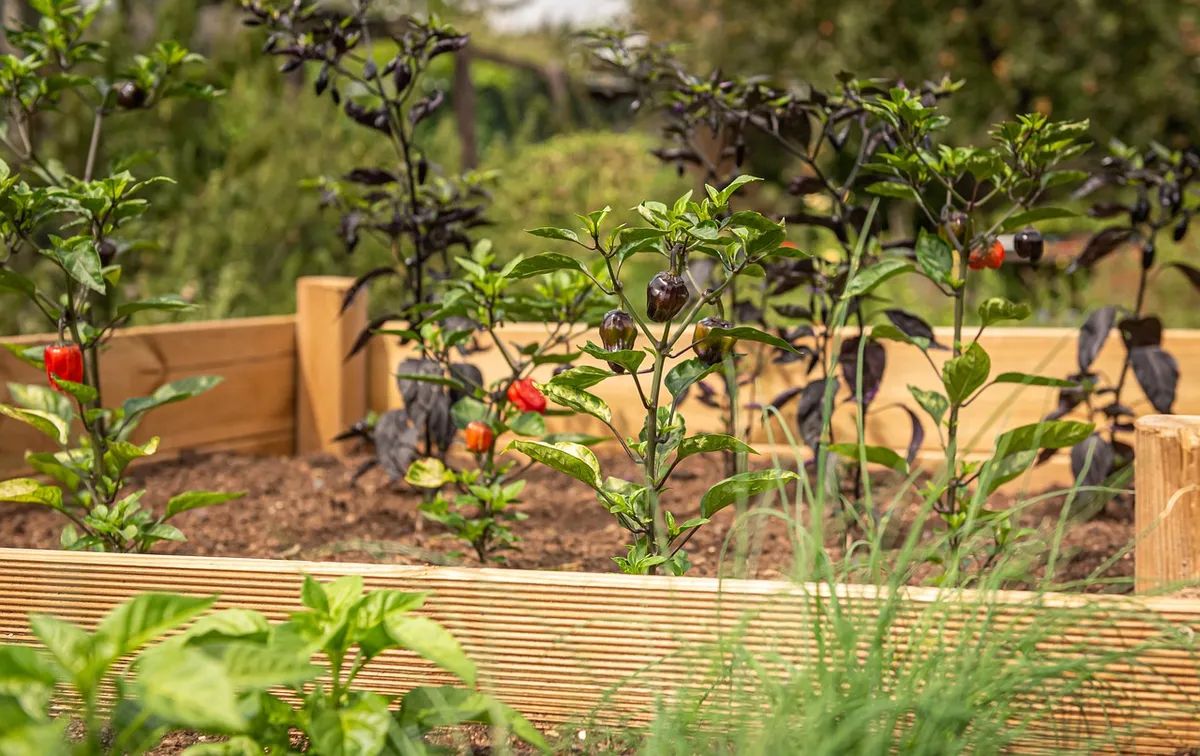
Stone, brick and concrete block make permanent beds that can last for decades and need no maintenance. They suit a long term garden, and they store heat, which can extend the season in cool climates. Walls can double as seating if they are capped at the right height.
The drawbacks are cost, labour and permanence. Building a stone or brick bed takes time and skill, and moving one later is a big job. Mortared walls need a foundation, and dry stacked walls can shift with frost. Concrete blocks are cheap and quick, but fresh concrete can raise soil alkalinity near the walls, which matters for acid loving plants, and old blocks of unknown origin may contain contaminants, so use new blocks. Hollow blocks can be planted with herbs or flowers, which adds growing space.
Treated lumber questions
Pressure treated lumber is softwood infused with preservatives to resist rot. The concern is what is in the preservative and whether it leaches into soil where you grow food. Older treated lumber used chemicals that included arsenic, which has been withdrawn for residential use in many countries, but lumber of unknown age, such as reclaimed fence posts or railway sleepers, may still contain old preservatives.
Modern residential treatments use copper based preservatives, and views differ on how far they leach into soil. No source documents a clear answer that settles the question for every product and every soil, so a cautious approach is to avoid treated lumber for the inner walls of beds where you grow food, or to line the inside with a barrier. If you do use treated wood, check the label for the treatment type and the manufacturer's statement on use in food gardens. Never use old creosote soaked railway sleepers or reclaimed wood of unknown origin for vegetables. Where you are unsure, choose cedar, composite, metal or stone instead.
Depth by crop
Depth decides what you can grow. Shallow rooted crops such as lettuce, radishes, spinach and most herbs do well in 15 to 20 cm of soil. Medium depth crops, including beans, peppers, peas, cucumbers and onions, prefer 20 to 30 cm. Deep rooted crops such as tomatoes, carrots, parsnips and potatoes do best with 30 cm or more.
These are common gardening guidelines and not strict rules, since roots will also grow into the ground beneath if the bed is open at the base. A bed 30 cm deep suits most vegetables. If the bed sits on hard ground or paving, you need the full depth in soil, as roots cannot go further. Taller beds, at 60 to 75 cm, bring the soil up to a comfortable working height, which helps gardeners who find bending hard, though they need far more soil to fill.
Soil volume
Working out how much soil to buy avoids both shortage and waste. Multiply length by width by depth, in metres, to get cubic metres. A bed 2 m long, 1 m wide and 0.3 m deep holds 0.6 cubic metres. Add a little extra, since soil settles by several centimetres after the first watering.
Filling a deep bed entirely with bagged topsoil is costly. A common approach is to layer coarse material such as logs, branches and rough compost at the bottom of a tall bed, with good soil and compost on top, which reduces the volume of soil needed and slowly feeds the bed as it decomposes. Aim for a mixture of topsoil and compost for the growing layer, roughly half and half, and top up with compost each year. Weigh the filled bed in mind: a full bed is very heavy, so place it where you want it before filling.
Drainage and liners
A bed needs drainage so that water does not pool and drown roots. Beds on bare soil drain downward naturally, and removing turf or loosening the ground underneath helps. Beds on paving or concrete need drainage holes or gaps in the base, and a layer of coarse material helps water move away.
Landscape fabric across the base stops weeds and keeps soil from washing out, while letting water through. Avoid solid plastic sheets on the base, which block drainage. For the sides, a liner of heavy plastic protects softwood from damp soil, but leave the base open and avoid trapping water. Hardware cloth, a sturdy wire mesh, laid across the bottom keeps out burrowing animals such as moles and voles, which is worth doing if you have a problem with them.
Lifespan and cost over time
Lifespan depends on climate, soil moisture and the thickness of the material. Cedar and good composite generally last longest among the lightweight options, steel lasts well if the coating is intact, and stone and brick can outlast the gardener. Pine and thin boards are the shortest lived. No source documents a reliable figure for each, so use warranty length as a signal of the maker's confidence.
Count the whole cost, including replacement. A cheap pine bed replaced every few years can cost more than a cedar bed that lasts, and more labour. A bed built from a kit may be easier to take apart and move than one that is nailed, which matters if you may relocate it. Use stainless or coated screws in wood, since ordinary screws rust and weaken joints.
Think about the water supply too. Beds dry out faster than ground soil, especially raised metal ones, so a hose and a good watering routine help. Our guide on garden hose diameter and length helps you plan the watering, and our guide on how to sharpen pruning shears keeps the tools in order. For further guides, visit our Outdoor and Garden section.
Siting, size and layout
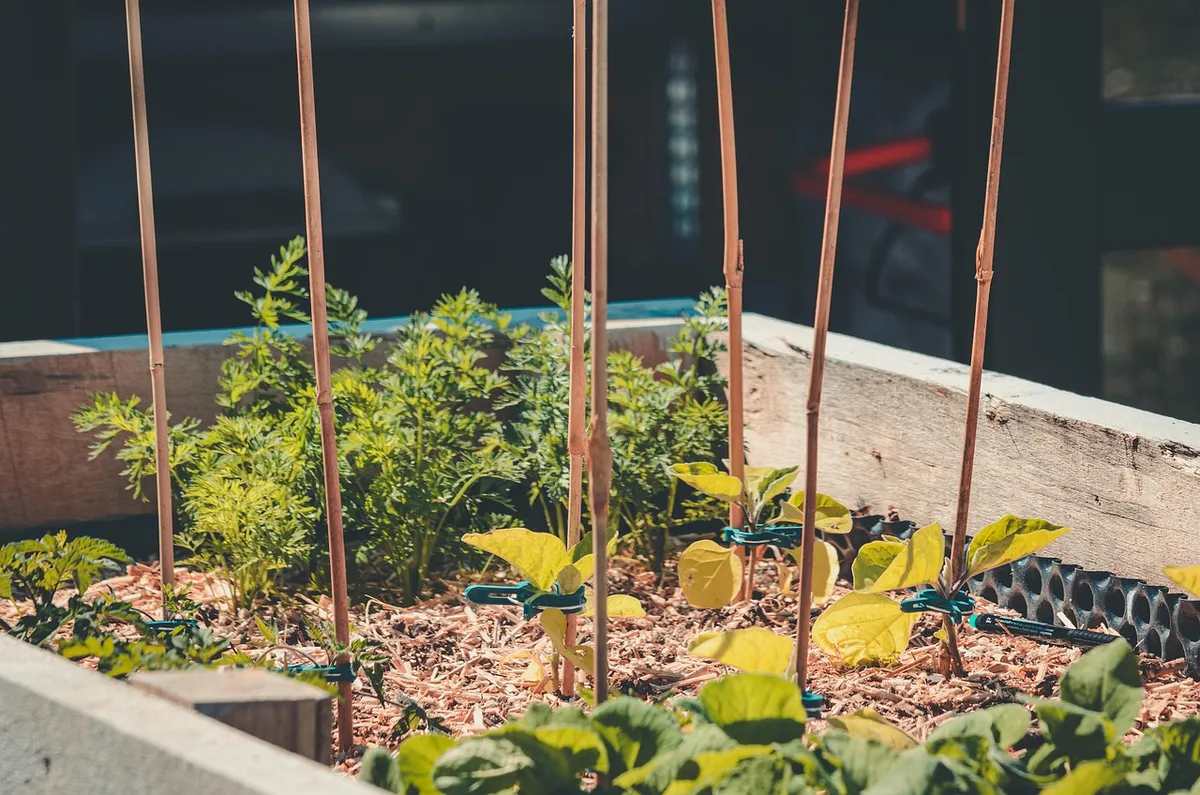
Where you put the bed matters as much as what it is made of. Most vegetables want six to eight hours of direct sun, so choose a spot that is not shaded by a fence, tree or building for most of the day. Watch the area over a sunny day before you build. Place the bed near a water source, since a bed that is a long walk from the tap gets watered less. Keep it clear of tree roots, which will move into the soil and take water and nutrients.
Width is the key dimension. A bed about 1.2 m wide lets you reach the middle from either side without stepping on the soil, which compacts it. If the bed is against a wall or fence and reachable from one side only, keep it to about 60 to 75 cm. Length is flexible, but beds longer than about 3 m need bracing in the middle so the sides do not bow. Leave paths at least 60 cm wide between beds so you can fit a wheelbarrow or kneel comfortably, and cover paths with gravel, wood chips or paving to keep weeds down.
Orientation helps too. Running a bed north to south gives both sides an even share of sun through the day, while an east to west bed shades the north side with taller crops. Put tall plants such as tomatoes or beans on the north side so they do not shade shorter crops. Mark the corners with stakes and check the layout with a hose or string before building, because moving a filled bed is hard work.
Common mistakes and non-obvious failures
The first mistake is building too deep for the soil budget. A bed 60 cm deep needs a large volume of soil, and many first time builders underestimate the cost. The second is using thin boards in a long bed, which bow outward under the weight of wet soil within a season. Use thicker boards, add mid span braces or choose a kit with rated stiffness.
A less obvious failure is soil that sinks and compacts. Fresh soil settles, and a bed filled to the brim in spring may be several centimetres low by midsummer, so top up with compost. Another is poor soil mix: bagged topsoil alone can be heavy and drain poorly, and compost alone can be too light and too rich. A blend of the two is better. A third is forgetting about edges: lawn grass will creep under a bed's wall, so lay a strip of cardboard or fabric under the edge before building to slow it.
Finally, watch for pests. Slugs love the shelter of the base of a raised bed, and a copper tape strip or a gravel barrier at the edge helps in a slug heavy garden. Burrowing animals can enter from below, so hardware cloth under the soil is worth the small extra effort. Sharp edges on metal beds can injure hands and pets, so cap or wrap them. Taking these small steps early saves a lot of frustration later in the season.
If the beds sit on a patio or deck, plan how you will clean the surface around them. Our guide to pressure washer PSI and GPM explains how to wash paving without blasting out the joints beside your beds.
Frequently asked questions
What is the best wood for a raised bed?
Cedar is the usual choice because it resists rot naturally and lasts without chemicals. Pine is cheaper but rots sooner. Choose thick boards in either case.
Is treated lumber safe for vegetable beds?
No source documents a clear answer for every product. Modern residential treatments are widely used, but a cautious approach is to avoid them on inner walls for food crops or add a liner. Never use old railway sleepers or reclaimed wood of unknown origin.
How deep should a raised bed be?
About 20 to 30 cm suits most vegetables, 15 to 20 cm is enough for salad and herbs, and 30 cm or more suits deep rooted crops such as carrots and potatoes.
Do metal raised beds get too hot?
They can in strong sun, warming the soil at the edges. Shade, insulation inside the walls and regular watering reduce the problem. In cooler climates the warmth can be a benefit.
Do I need a liner?
A liner on the sides protects softwood from rot, and fabric on the base blocks weeds while allowing drainage. Avoid solid plastic on the base, which blocks drainage and drowns roots.
The bottom line
For most gardens, a cedar bed 30 cm deep with thick boards is a sound choice, and composite or galvanised steel suit those who want a long life with little upkeep. Pine is a fair budget option if you accept replacement, and stone suits a permanent plan.
Avoid reclaimed wood of unknown origin, provide drainage, work out the soil volume before you buy, and plan watering. Choose the material for your climate and the time you want to spend, not just the price at purchase.