
Amazon affiliate links - we earn a commission.Affiliate disclosure

Buying guide · 12 min read · Updated 2026-11-21

Best Leaf Rakes for Large Yards (2026)

Leaf rakes for large yards compared on head width, tine material, handle length and weight, so you clear more lawn per pass without wearing out your arms.

Brianna Cole, Lead Product EditorBy Brianna ColeLead Product Editor7 picks comparedSpec-sheet verified
Best Leaf Rakes for Large Yards

At a glance

Our top picks

Side by side

Spec comparison

A leaf rake looks simple, but on a large lawn the details decide how long the job takes and how sore your shoulders feel. Head width, tine flexibility and handle weight are what separate a rake that clears a yard in an afternoon from one that tires you out in an hour.

This guide focuses on rakes for big lawns and is honest about the limits. We evaluated each model from published specifications and patterns in owner feedback, with attention to head width, tine material, handle length and year-three durability. A rake is a cheap tool, so we weigh comfort and tine toughness above any extra feature.

Before you buy

6 Criteria to Look For Before Buying a Leaf Rake for Large Yards

  1. 01

    Head width

    A wider head clears more per pass but requires more arm effort. Heads from 22 to 30 inches are common on large-yard rakes. The Bully has a 30 inch head, while the Craftsman has 22 tines. If you have a big lawn, width saves time, but a very wide head tires small users. A good test is to swing the rake for a few minutes in a shop, and if your shoulders already feel it, pick a narrower head.

  2. 02

    Tine material

    Poly tines flex and do not scratch turf, steel tines are stiff and grab wet leaves, and spring-steel tines dig into mulch. The Bully and True Temper poly rakes use poly, while the True Temper steel and Tabor use metal. Choose based on whether your yard is mostly dry leaves or wet, matted debris.

  3. 03

    Handle length and weight

    Long handles let you stand upright, and light handles reduce fatigue. Fiberglass and aluminium are light, while wood is comfortable but heavier and can splinter. The Bully has a 68 inch fiberglass handle, while the True Temper poly has a 48 inch hardwood handle. Taller users usually prefer handles over 60 inches, while shorter users find 48 inches easier to control.

  4. 04

    Adjustability

    Adjustable heads, as on the Tabor, let you rake wide in the open and narrow between shrubs. They add joints that can loosen. If your yard has beds and open lawn, adjustability helps. If it is mostly open, a fixed wide head is simpler.

  5. 05

    Scooping and piling

    Some rakes, like the Ames, scoop piles to reduce bending. They help with bagging but are less precise for light raking. Think about how you move leaves after raking. A tarp can do the same job.

  6. 06

    Rake vs sweeper vs blower

    Rakes are quiet, cheap and need no fuel, but take effort. Sweepers like the VEVOR collect leaves into a hopper on dry flat lawns. Blowers cover large areas but are noisy. For a large yard, many owners combine a blower and a rake. A mulching mower can shred a thin layer of dry leaves into the lawn, which reduces the amount you need to rake.

Detailed reviews

The 7 best leaf rakes for large yards, explained

01
Bully Tools 30 in polypropylene leaf rake, 26 to 32 tines, fiberglass handle
30 in widePoly tines68 in handleFiberglass
Check price on Amazon
Best for: Large lawns where width and a light handle matter.

The Bully Tools rake pairs a 30 inch head of polypropylene tines with a 68 inch fiberglass handle, which is a good combination for large yards. The design approach is a wide head that clears more leaves per pass, while the long handle lets you stand upright. Poly tines flex over uneven ground and do not scratch turf.

Compared with the True Temper poly rake, the Bully has a wider head and a longer handle, so it covers more ground but takes more storage space. Compared with the steel rakes, it is gentler on grass and lighter to swing. It suits big lawns with a mix of dry leaves and light debris.

Ownership is simple. Rinse off wet leaves, hang the rake by the handle and avoid leaving it in direct sun for months. Poly tines can crack in cold or UV, so replace the head if several tines snap. Work in overlapping strips and pull leaves toward you in short strokes, which uses the wide head efficiently without over-reaching.

What works

  • 30 inch head clears a wide strip per pass
  • Light fiberglass handle reduces arm fatigue
  • Poly tines flex and do not scratch the lawn
  • Long 68 inch handle lets you stand upright

Watch out for

  • Wide head takes more storage space
  • Poly tines can crack with age and sun

Specs

Head width
30 in
Tines
26 to 32 polypropylene
Handle
68 in fiberglass
Weight
Lightweight
Use
Large lawns
02
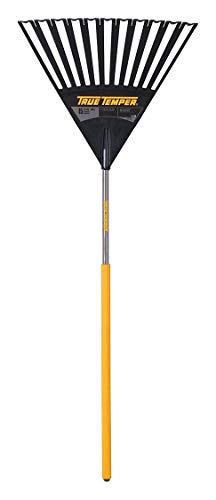
True Temper clog-free poly leaf rake, 48 in hardwood handle, cushion grip
Clog-free tinesPoly head48 in handleCushion grip
Check price on Amazon
Best for: Standard yards and limited storage.

The True Temper clog-free poly rake is a familiar tool with a hardwood handle and a cushion grip. The design approach uses a poly head with tine shapes meant to avoid trapping leaves. A 48 inch handle is easy to store and suits average-height users.

Compared with the Bully, the True Temper has a narrower head and a shorter handle, so it clears less per pass. Compared with the steel True Temper, it is quieter and gentler on turf. It suits homeowners with a normal yard and limited storage space.

Ownership is routine. Rinse the head, hang the rake and sand any rough spots on the handle. If the tines start to crack, replace the head or the rake. Pairing it with a tarp makes cleanup quicker, because you can drag a full pile rather than carrying armfuls to the bin.

What works

  • Clog-free tine shape sheds leaves easily
  • Cushion grip reduces hand fatigue
  • 48 inch handle is easy to store
  • Familiar design at a modest tier

Watch out for

  • Narrower head clears less per pass than wide rakes
  • Hardwood handle is heavier than fiberglass

Specs

Tines
Clog-free poly
Handle
48 in hardwood
Grip
Cushion grip
Head
Poly
Use
Everyday raking
03
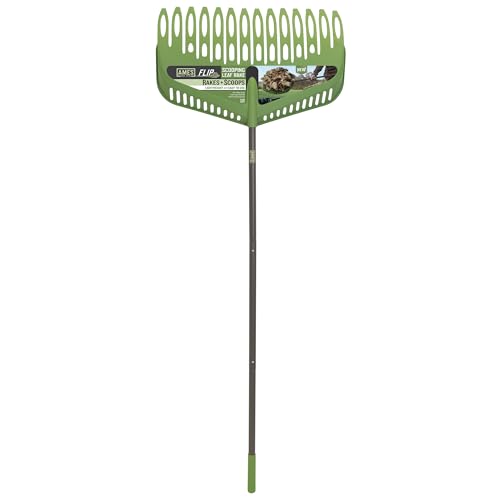
Ames flip scooping leaf rake, extra wide head, heavy duty
Extra wideScoopingFlip designHeavy duty
Check price on Amazon
Best for: Gathering large piles into bags or carts.

The Ames flip scooping rake has an extra-wide head and a design that lets you flip it to scoop leaves into a bag or cart. The design approach reduces bending and hand work when you move piles. For large yards with many piles, a scooping rake saves time at the end of each pass.

Compared with the Bully, the Ames is more of a scoop than a pure rake, so it handles piles well but is less precise for light raking. Compared with the Craftsman, it has a wider head and a more specialised design. It suits people who gather leaves into bags or tarps.

Ownership requires care with the flip mechanism. Rinse off debris, check the pivot and avoid overloading. A heavier load can strain the head and handle. Hold the handle with a loose grip and let the head do the lifting, since the scoop is designed to carry more than you would expect.

What works

  • Extra-wide head moves large piles
  • Scooping action reduces bending
  • Heavy-duty build suits big yards
  • Saves time loading bags

Watch out for

  • Less precise for light raking than a standard rake
  • Pivot and head can strain under heavy loads

Specs

Head
Extra wide
Design
Flip scooping
Use
Gathering piles
Build
Heavy duty
Brand
Ames
04
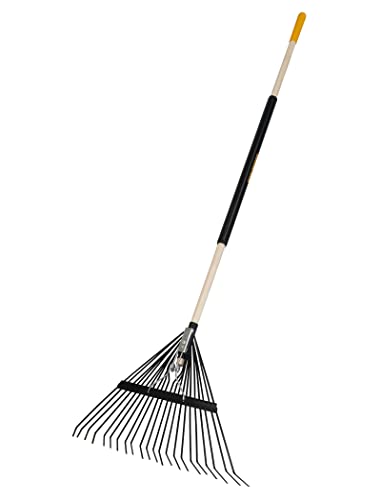
TABOR TOOLS J16A adjustable metal leaf rake, expandable head 8 to 23 in
8 to 23 in headAdjustableMetal tinesCollapsible
Check price on Amazon
Best for: Yards with both open lawn and tight planting beds.

The Tabor Tools J16A has an expandable head from 8 to 23 inches and a telescopic handle, which lets you rake wide in the open and narrow between shrubs. The design approach is a metal tine rake that collapses for storage. For yards with both lawn and tight beds, one tool covers both jobs.

Compared with the Bully, the Tabor is narrower at full width but more versatile. Compared with the True Temper steel rake, it offers adjustability at the cost of extra joints that can loosen. It suits yards with a mix of open lawn and landscaped areas.

Ownership requires checking the locking mechanism. Tighten the head and handle before use, rinse off debris and dry the metal parts to prevent rust. Adjustable rakes wear at the joints over time. Keep the tines apart on hard ground and fold the head before putting it away so the joints do not take a side load.

What works

  • Expandable head adapts from 8 to 23 inches
  • Telescopic handle suits different users
  • Collapsible design stores in a small space
  • Metal tines grab leaves firmly

Watch out for

  • Joints can loosen with heavy use
  • Narrower at full width than wide fixed rakes

Specs

Head width
8 to 23 in
Tines
Metal, adjustable
Handle
Telescopic
Design
Collapsible
Use
Lawns and beds
05
True Temper steel tine leaf rake, hardwood and steel handle
Steel tinesHardwood handleSteel ferruleDurable
Check price on Amazon
Best for: Wet leaves and light thatch removal.

The True Temper steel tine rake is a traditional design with a steel head and a hardwood handle. The design approach prioritises durability and grab, so the tines pull matted leaves and light thatch from the lawn. It is the tool for wet leaves and stubborn debris.

Compared with the poly rakes, the steel rake is stiffer and noisier, and can scratch turf. Compared with the Bully, it is heavier and narrower. It suits yards with wet leaves and a need for thatch removal.

Ownership requires drying the head and checking the handle. Wipe off moisture, oil the steel occasionally and replace the rake if tines bend. Hardwood handles may need sanding. Wear gloves when raking with steel, because the stiffer handle transmits more vibration than a poly head.

What works

  • Steel tines grab matted and wet leaves
  • Durable build lasts many seasons
  • Can pull light thatch from the lawn
  • Familiar design is easy to use

Watch out for

  • Heavier than poly and fiberglass rakes
  • Can scratch turf if pressed hard

Specs

Tines
Steel
Handle
Hardwood with steel
Use
Lawns and dethatching
Build
Durable
Brand
True Temper
06
Craftsman 22-tine wood handle lawn rake
22 tinesWood handleLawn rakeClassic
Check price on Amazon
Best for: Everyday raking with a classic wood handle.

The Craftsman 22-tine rake is a classic fan rake with a wood handle. The design approach is straightforward: a head of 22 tines and a handle that feels familiar. It is a reliable tool for everyday raking.

Compared with the True Temper poly rake, the Craftsman has a more traditional feel and a similar size. Compared with the Bully, it is narrower and heavier. It suits people who like a wood handle and a known brand.

Ownership is about handle care. Keep the wood dry, sand splinters and rinse the head. Store it indoors to extend handle life. Seal the wood with a coat of oil at the start of autumn so it stays comfortable when damp mornings arrive.

What works

  • Classic design feels familiar in the hand
  • Wood handle is comfortable
  • Known brand with a long history
  • 22 tines cover a decent width

Watch out for

  • Wood handle can splinter and weather
  • Narrower and heavier than modern wide rakes

Specs

Tines
22
Handle
Wood
Use
Lawn raking
Brand
Craftsman
Style
Classic fan rake
07
VEVOR 26 in push lawn sweeper, 7 cu ft hopper, leaf and grass collector
26 in sweeper7 cu ft hopperPushCollector
Check price on Amazon
Best for: Big, flat lawns with dry leaf fall.

The VEVOR push sweeper is not a rake, but it is the alternative many large-yard owners choose. The design approach is a 26 inch brush and a 7 cubic foot hopper that collect leaves as you walk. It removes the raking motion and the bagging step.

Compared with a rake, the sweeper works best on dry leaves and flat lawns, and struggles with wet piles. Compared with the Bully, it covers more area per hour but takes more storage space and costs more. It suits big, even lawns with light leaf fall.

Ownership requires care with the brushes and hopper. Empty the hopper, clean the brush and check the wheels. Do not push through thick wet piles, which can jam the mechanism.

What works

  • Collects leaves into a hopper without raking
  • 26 inch width covers ground quickly
  • 7 cubic foot hopper reduces trips
  • No fuel or battery required

Watch out for

  • Struggles with wet leaves and uneven ground
  • Larger and costlier than a rake

Specs

Width
26 in
Hopper
7 cu ft
Type
Push sweeper
Use
Leaves and grass
Power
Manual

Spec decoder

What the listing measurements really mean

The numbers brands lead with, translated into what they tell you about fit, comfort and wear at home.

Head width

The width of the tine head. A wider head covers more lawn per pass.

Watch forThe Bully is 30 inches, while the Tabor expands from 8 to 23 inches.

Poly tines

Plastic tines that flex and do not scratch turf. They can crack with age or cold.

Watch forThe Bully and True Temper poly rakes use them, so replace the head if tines crack.

Steel tines

Metal tines that are stiff and grab wet leaves. They can scratch turf.

Watch forThe True Temper steel rake uses them, so avoid pressing hard on the lawn.

Fiberglass handle

A light handle that does not rot. It can feel stiff in the hand.

Watch forThe Bully uses a 68 inch fiberglass handle, which is good for tall users.

Hopper capacity

The volume a sweeper holds before it must be emptied. Larger hoppers reduce trips.

Watch forThe VEVOR lists 7 cubic feet, but wet leaves fill it faster. The VEVOR lists 7 cubic feet, but wet leaves fill it faster and add weight that makes pushing harder.

Methodology

How We Evaluated These Leaf Rakes for Large Yards

Width and coverage

We compared head widths and what owners say about coverage. The Bully and Ames lead on width, while the Craftsman and True Temper poly are narrower. We matched width to typical lawn sizes. We compared head widths and what owners say about coverage on large lawns, with attention to how often the head catches on uneven ground. The Bully and Ames lead on width, while the Craftsman and True Temper poly are narrower. We matched width to lawn size and to the idea that comfort decides how long you can keep going.

Tines and durability

We looked at tine materials and reports of cracking or bending. Poly tines are gentle but can crack, while steel tines are durable but stiff. Handle material was part of the score.

Weight and comfort

We read feedback on handle weight and grip. The Bully and True Temper poly earn points for comfort. Heavier rakes lose points for fatigue. We read feedback on handle weight and grip across a long raking session. The Bully and True Temper poly earn points for comfort, while heavier hardwood and steel rakes lose points for fatigue. We also weighed whether a handle can be replaced if it breaks.

Versatility

We considered adjustability and scooping. The Tabor and Ames offer special features, while the others are simple. We weighted versatility for mixed yards.

Value in context

We placed each tool in the large-yard range and asked what it gives up. The True Temper poly is the value pick, the Bully is the best balance and the VEVOR is the sweeper alternative. Handle durability was a tiebreaker.

Decision guide

How to Choose the Right Leaf Rakes for Large Yards

By Yard Size

SituationPickWhy
Large open lawnBully 30 inchWide head and light handle
Big flat lawn with dry leavesVEVOR sweeperCollects without raking
Mixed lawn and bedsTabor adjustableExpandable head
Standard yardTrue Temper polyEasy storage and cost

By Budget

SituationPickWhy
Lowest costTrue Temper polySimple tool at a modest tier
Classic optionCraftsman wood handleFamiliar design
Best balanceBully 30 inchWide head and light handle
Spend for a sweeperVEVORHopper collects leaves

Poly vs Steel Tines

Poly

The Bully and True Temper poly rakes flex over uneven ground and do not scratch turf. They can crack with age.

Steel

The True Temper steel and Tabor rakes grab wet leaves and thatch. They are stiffer and can scratch turf.

Choose poly for dry leaves on healthy turf and steel for wet leaves and thatch.

Piles and Bagging

SituationPickWhy
Moving big pilesAmes flip scoopScoop action reduces bending
Bagging leavesAmes or a tarpEasier loading
Collecting while walkingVEVOR sweeperHopper collects as you go
Raking into rowsBullyWide head moves leaves fast

For Large Yards Specifically

Look for

A wide head, a light handle, tines that suit your leaves and a plan for moving piles. Consider a sweeper or blower for large areas.

In this comparison

The Bully is the all-rounder, the Ames is the scoop pick and the VEVOR is the sweeper pick.

When to Spend More

Spend more if

You rake large areas weekly, want a light handle or need a sweeper. The Bully and VEVOR are built for that.

Save if

You rake a small area occasionally. The True Temper poly or Craftsman is enough.

Ownership

Maintenance schedule

The upkeep that decides whether a piece still looks good in year five.

TaskIntervalWhy it matters
Rinse and dry the headAfter each useWet leaves and soil promote rust and mould. A quick rinse and shake keeps the head clean.
Inspect the tinesEach seasonCracked or bent tines reduce coverage. Replace the head when several are damaged. Cracked or bent tines reduce coverage. Replace the head when several are damaged, and keep one spare rake for the season rather than fighting through a half-broken head.
Sand and oil wood handlesYearlyWood dries and splinters. Light sanding and linseed oil extend life.
Store indoorsOff seasonSun and cold weaken plastic and wood. A shed or garage keeps the rake in good shape.
Check the fittingsEach seasonAdjustable heads and scoops can loosen. Tighten bolts and clips before use.

FAQ

Frequently Asked Questions

What is the best rake width for a large yard?

A 24 to 30 inch head clears a lot per pass. Wider heads tire small users, so choose a width you can swing comfortably for an hour. Adjustable heads cover both open lawn and beds. If your lawn has a lot of pine needles or twigs, a stiffer head works better than a wide flexible one.

How much should a leaf rake cost?

Prices move, so check the current listing. Simple poly rakes are cheapest, wide and adjustable models cost more and sweepers sit near the top. Pay more for a light handle.

Poly or steel tines for leaves?

Poly tines are gentle on turf and suit dry leaves. Steel tines grab wet leaves and thatch. Choose by your leaf conditions. Mixed trees leave mixed debris, so keep both a poly rake and a steel rake if your yard has oak and maple together.

Is a leaf sweeper better than a rake?

On flat, dry lawns, yes. A sweeper covers more ground and collects as you go. On wet or uneven ground, a rake works better.

How do I reduce arm fatigue?

Use a light handle, rake with your whole body rather than your arms and take breaks. A wider head helps if you can swing it comfortably. Switching hands every few minutes also spreads the load and avoids a sore wrist.

Can I rake wet leaves?

Yes, but it is harder. Steel tines help, and drier leaves are easier to move. Rake when the lawn is damp rather than soaked. A tarp spread beside you lets you rake directly onto it and drag the pile away.

Bottom line

The short version

Browse more leaf rakes for large yardson Amazon →
Brianna Cole, Lead Product Editor

About the author

Brianna Cole

Lead Product Editor, SenseiReview

Brianna Cole leads SenseiReview's buying guides, turning published specifications, documentation and owner feedback patterns into clear verdicts across home, tech, fitness, outdoor and DIY products.

More from Brianna →

Keep reading

Related guides