
Amazon affiliate links - we earn a commission.Affiliate disclosure

Buying guide · 12 min read · Updated 2026-11-21

Best Rice Cookers Under $50 (2026)

Five rice cookers compared on fuzzy logic control, capacity, inner pot coating, grain settings, keep-warm quality and long-term wear, with picks by household.

Brianna Cole, Lead Product EditorBy Brianna ColeLead Product Editor5 picks comparedSpec-sheet verified
Best Rice Cookers Under $50

At a glance

Our top picks

Side by side

Spec comparison

PieceCapacityControlBest use
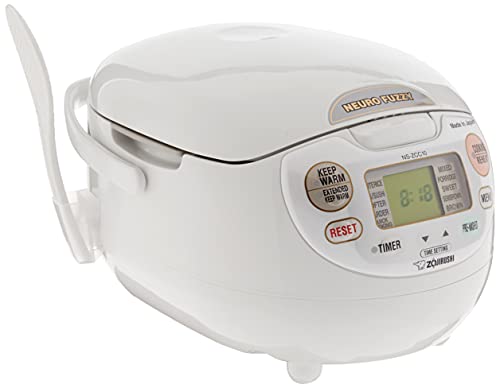
Zojirushi NS-ZCC10 5.5-cup Neuro Fuzzy rice cooker and warmerBest OverallZojirushi NS-ZCC10 5.5-cup Neuro Fuzzy rice cooker and warmer5.5 cups uncookedNeuro Fuzzy microcomputerDaily rice for 2 to 5 people
KitchenAid 8 Cup grain and rice cooker with integrated scaleBest Smart MeasuringKitchenAid 8 Cup grain and rice cooker with integrated scale8 cupsn/aCooks who want hands-off measuring
Cosori 10 Cup fuzzy logic rice cooker with ceramic coating pot, 18-in-1Best Multi-FunctionCosori 10 Cup fuzzy logic rice cooker with ceramic coating pot, 18-in-110 cupsFuzzy logicLarger households that want versatility
AROMA digital rice cooker 4-cup uncooked, 8-cup cooked, 2 qtBest Mid-Tier DigitalAROMA digital rice cooker 4-cup uncooked, 8-cup cooked, 2 qt4 cups uncooked, 8 cups cooked, 2 qtn/aSmall families, basic rice and steaming
BLACK+DECKER RC516 16-cup rice cooker with steaming basketBest Value for Large BatchesBLACK+DECKER RC516 16-cup rice cooker with steaming basket8 cups uncooked, 16 cups cookedOne-touch operationLarge families and batch cooking

A rice cooker measures water and rice, heats until the water is absorbed, then drops to a warm setting so the rice stays ready. The idea is simple, which is why a basic model costs little, but the quality of the result depends on how precisely the cooker controls temperature during the cook and the rest.

Features like fuzzy logic, induction heating and ceramic pots promise better rice, and some deliver. We evaluated five rice cookers from the candidate pool using published specifications, listing details and patterns in owner feedback, then ranked them by fit for real kitchens rather than by feature count.

Before you buy

6 Criteria to Look For Before Buying a Rice Cooker Under $50

  1. 01

    Fuzzy logic vs simple switch

    A basic cooker uses a thermostat that switches to warm when the pot reaches a set temperature. A fuzzy logic or micom cooker, such as the Zojirushi and Cosori, adjusts heat through the cycle and compensates for amount and type of rice. The difference shows with brown rice, sushi rice and small batches. The common mistake is buying a basic cooker and blaming the rice. If you eat rice daily, fuzzy logic pays off in consistent texture. Measure with the cup that came in the box, never a kitchen measuring cup, or the ratio will be off.

  2. 02

    Capacity in real cups

    Rice cooker cups are about 180 milliliters, not a standard measuring cup. Capacity is listed in uncooked cups, with cooked yield roughly double. A 3 cup cooker serves one to two people, 5.5 cups serves two to five and 8 or 10 cups serves larger families. Small batches in a large cooker can come out uneven, so avoid buying far more than you need. If you are unsure, buy the next size up, because cookers cook small batches less evenly than they cook full pots.

  3. 03

    Inner pot coating

    Nonstick pots release rice easily but wear with metal utensils. Ceramic coated pots, like the Cosori's, avoid traditional nonstick but wear too. Thicker pots hold heat more evenly. The mistake is using metal paddles or abrasive pads, which shorten pot life. Check that replacement pots are sold. Keep a plastic or wooden paddle by the cooker and make that a household rule from day one.

  4. 04

    Grain settings

    White rice is the easiest. Brown rice needs a longer soak and cook, and sushi rice benefits from a firmer texture setting. Porridge and quick cook modes are useful extras. If you only eat white rice, a basic cooker is enough, but if you eat several grains, dedicated settings matter. Taste a first batch of each grain you eat so you can find the setting that suits your family.

  5. 05

    Keep warm and timer

    A good keep warm function holds rice at serving temperature for hours without drying it. A delay timer lets you load the cooker ahead of time. Long warm periods can dry rice and develop odors, so use them sparingly. The Zojirushi and Cosori both offer delay timers. Treat the warm function as a short hold and refrigerate leftovers instead of leaving them out overnight.

  6. 06

    Cleaning and parts

    A removable pot and lid make cleaning simple, and a detachable steam vent prevents odor. Check whether the inner lid comes off. Replacement gaskets and pots extend the life of a cooker, so confirm they are available before buying. Look up the replacement pot number for your model before you buy, so you know what a refresh will cost.

Detailed reviews

The 5 best rice cookers under $50, explained

01
Zojirushi NS-ZCC10 5.5-cup Neuro Fuzzy rice cooker and warmer
5.5 cupNeuro FuzzyDelay timerKeep warm
Check price on Amazon
Best for: Daily rice eaters who want consistent texture across white, brown and sushi rice.

The NS-ZCC10 is the benchmark Japanese micom cooker. Its Neuro Fuzzy microcomputer senses the temperature of the pot and adjusts the heating through the cycle, so white, brown, sushi and mixed rice each get their own cooking curve. A delay timer lets you load it at night and wake to hot rice, and the keep warm function holds it for hours.

The tradeoff is cost and size. It costs several times what a basic cooker does, and the 5.5 cup capacity can be small for large families. Compared with the AROMA digital cooker, it gives much more consistent texture, especially with sushi and brown rice. Compared with the Cosori, it uses a nonstick inner pot rather than a ceramic coating and has a longer track record.

Ownership is where Zojirushi earns its reputation. Replacement pots, lids and inner parts are sold, and owner feedback patterns often describe cookers lasting a decade or more. Wash the inner pot with a soft sponge and do not use metal utensils, since the coating is the main wear item. Wipe the steam vent and lid after each use to keep odors from building.

What works

  • Neuro Fuzzy control adjusts heat through the whole cycle
  • Dedicated settings for white, brown, sushi and porridge
  • Delay timer and long keep warm hold rice ready
  • Replacement parts support a long service life

Watch out for

  • Costs several times what a basic cooker does
  • 5.5 cup capacity can be small for large families
  • Nonstick pot needs gentle utensils and sponge only

Specs

Capacity
5.5 cups uncooked
Control
Neuro Fuzzy microcomputer
Menu
White, mixed, sushi, porridge, sweet, brown and quick
Timer
Delay timer and automatic keep warm
Best use
Daily rice for 2 to 5 people
02
KitchenAid 8 Cup grain and rice cooker with integrated scale
8 cupIntegrated scaleGrain sensingMatte finish
Check price on Amazon
Best for: Cooks who often miscalculate water and want the cooker to measure for them.

The KitchenAid has an integrated scale that weighs the grain in the pot and then automatically sets the grain to liquid ratio. That removes the most common rice cooker error: the wrong amount of water. It handles a range of grains in addition to rice, and the matte finish suits an open kitchen.

The tradeoff is that a scale is another part that can fail and a design that relies on sensors rather than the proven cooking curves of a micom cooker. Compared with the Zojirushi, the KitchenAid is easier to measure but has less proven long-term support. Compared with the Cosori, it focuses on grains with the scale rather than a long function list.

Ownership requires gentle handling of the scale base, since spills can damage it. Wipe the base and lid regularly, and clean the pot by hand or as the manual allows. Owner feedback patterns on newer appliance designs say the sensors and electronics are the long-term risk, so check the warranty before buying.

What works

  • Scale weighs grain and sets the liquid ratio automatically
  • Handles rice and other grains in one machine
  • 8 cup capacity suits most households
  • Matte finish looks good on an open counter

Watch out for

  • Scale and sensors add a possible long-term failure point
  • Shorter track record than Zojirushi cookers
  • Costs more than basic digital cookers

Specs

Capacity
8 cups
Scale
Integrated scale senses the grain amount
Function
Automatic grain to liquid ratio
Grains
Rice and a range of other grains
Best use
Cooks who want hands-off measuring
03
Cosori 10 Cup fuzzy logic rice cooker with ceramic coating pot, 18-in-1
10 cupFuzzy logicCeramic coating18 functions
Check price on Amazon
Best for: Larger households that want fuzzy logic and extra functions for one-pot meals.

The Cosori is a ten cup cooker with fuzzy logic, a ceramic coated inner pot and eighteen functions including saute and slow cook. A 24 hour keep warm function and delay timer let you prepare rice ahead. The large capacity and many presets suit a household that eats rice often and likes to use the cooker for other dishes.

The tradeoff is that eighteen functions mean more buttons and more things to learn. The ceramic coating also wears with metal utensils, and long-term durability is less proven than with Zojirushi pots. Compared with the Zojirushi, it holds more and costs less, but is less refined. Compared with the AROMA, it has fuzzy logic and a larger pot.

Ownership needs a gentle approach. Use the included paddle, wash the pot with a soft sponge and avoid abrasive pads. Owner feedback patterns on multi-function cookers say the extra modes are used less than expected and the coating is the usual wear point, so consider whether you need the versatility.

What works

  • Fuzzy logic adjusts heat for better rice texture
  • 10 cup capacity feeds larger households
  • Ceramic coated pot releases rice easily
  • 24 hour keep warm and delay timer add flexibility

Watch out for

  • Eighteen functions add complexity most cooks do not use
  • Ceramic coating wears with metal utensils
  • Less proven long-term than Zojirushi cookers

Specs

Capacity
10 cups
Control
Fuzzy logic
Pot
Ceramic coating inner pot
Functions
18 including saute, slow cook and keep warm
Best use
Larger households that want versatility
04
AROMA digital rice cooker 4-cup uncooked, 8-cup cooked, 2 qt
8 cup cookedDigital controlsSteamer trayGrain cooker
Check price on Amazon
Best for: Small families who want digital controls and a steamer at a moderate price.

The AROMA is the mid-tier digital option, with a 2 quart pot that makes up to 8 cups of cooked rice, programmable digital controls and a steamer tray for vegetables or fish. It also cooks other grains and can handle soups and simple one-pot dishes. The controls are simple and the footprint is compact.

The tradeoff is precision. Without fuzzy logic or induction, the cooker follows a simpler heating curve, and results can vary with brown rice and sushi rice. Compared with the Zojirushi, it costs far less but is less consistent. Compared with the BLACK+DECKER, it has digital programming and a smaller capacity.

Ownership is simple. Rinse rice before cooking, wash the pot and lid after use and wipe the base. Owner feedback patterns on mid-tier digital cookers mention the nonstick coating wearing and the lid seal needing replacement, so avoid metal utensils and inspect the seal.

What works

  • Programmable digital controls are simple to use
  • Steamer tray adds vegetables and fish to the repertoire
  • 8 cup cooked capacity suits two to four people
  • Compact footprint fits small kitchens

Watch out for

  • No fuzzy logic, so brown and sushi rice vary
  • Nonstick coating wears with metal utensils
  • Smaller capacity than the BLACK+DECKER or Cosori

Specs

Capacity
4 cups uncooked, 8 cups cooked, 2 qt
Controls
Programmable digital controls
Steaming
Steamer tray included
Other uses
Grains, soups and multi-cooker tasks
Best use
Small families, basic rice and steaming
05
BLACK+DECKER RC516 16-cup rice cooker with steaming basket
16 cup cooked8 cup uncookedSteaming basketOne-touch
Check price on Amazon
Best for: Large families that want plain rice in big batches at a low cost.

The RC516 is the simple, large cooker in the lineup, with an 8 cup uncooked, 16 cup cooked capacity, a steaming basket and a removable nonstick bowl. A one touch switch starts cooking and it automatically switches to warm when done. It is aimed at large families, gatherings and batch meal prep.

The tradeoff is refinement. It has no fuzzy logic, no delay timer and no special settings for brown or sushi rice, so results depend more on your rice-to-water ratio. Compared with the AROMA, it holds twice as much but is less programmable. Compared with the Zojirushi, it costs much less but is less consistent.

Ownership is easy. Rinse the rice, wash the bowl and wipe the lid. Owner feedback patterns on simple cookers say the nonstick coating wears and the warm function can dry out rice if left for many hours, so avoid leaving rice on warm overnight.

What works

  • 16 cup cooked capacity feeds large families
  • Steaming basket adds vegetables during cooking
  • One touch operation is easy for everyone
  • Low cost for the capacity

Watch out for

  • No fuzzy logic or delay timer
  • Brown and sushi rice need careful water ratios
  • Nonstick coating wears over time

Specs

Capacity
8 cups uncooked, 16 cups cooked
Control
One-touch operation
Steaming
Steaming basket included
Pot
Removable nonstick bowl
Best use
Large families and batch cooking

Spec decoder

What the listing measurements really mean

The numbers brands lead with, translated into what they tell you about fit, comfort and wear at home.

Cup (rice cooker cup)

A rice cooker cup is about 180 milliliters, smaller than a US measuring cup. Cooked rice yields roughly twice the uncooked amount.

Watch forThe AROMA lists 4 cups uncooked and 8 cups cooked on the same machine.

Fuzzy logic

A microcomputer adjusts heating based on temperature readings. It aims for consistent results across rice types and batch sizes.

Watch forThe Zojirushi and Cosori list fuzzy logic or Neuro Fuzzy control.

Keep warm

A mode that holds the rice at serving temperature after cooking. Quality varies, and long holds can dry rice.

Watch forThe Cosori lists 24 hour keep warm, which suits a short hold better than a full day.

Delay timer

A timer that starts cooking later so rice is ready at a set time. It requires soaking time to be factored in.

Watch forThe Zojirushi and Cosori offer a timer, the BLACK+DECKER does not.

Nonstick coating

A coating on the inner pot that prevents rice from sticking. It wears with metal utensils and abrasive cleaning.

Watch forAll five cookers use a coated pot, so use a plastic or wooden paddle.

Methodology

How We Evaluated These Rice Cookers Under $50

Spec sheet and listing review

We compared capacity, control type, pot coating and functions as published by each maker. We checked that cup measures were counted the same way. For example, uncooked and cooked capacities differ by a factor of two.

Control and consistency

We looked at fuzzy logic, scales and basic thermostats to see how each cooker manages heat. These choices explain most differences in texture. They explain the Zojirushi pick.

Grain flexibility

We reviewed settings for brown rice, sushi rice and other grains. Dedicated settings help with variety. The KitchenAid and Zojirushi stand out here.

Ownership and parts

We read owner feedback patterns about coating wear, lid seals and replacement parts. Zojirushi's parts support weighs heavily. This shaped the order of the lineup.

Value for the household

We compared price tier against capacity and control for small and large households. A basic cooker suits plain white rice. This shaped the budget picks.

Decision guide

How to Choose the Right Rice Cookers Under $50

By Household Size

SituationPickWhy
One or two peopleAROMA 4-cup digitalCompact with digital controls
Couple or small familyZojirushi NS-ZCC105.5 cups with consistent texture
Family of four to sixCosori 10 CupLarge capacity with fuzzy logic
Large family or gatheringsBLACK+DECKER 16-Cup16 cups cooked

By Budget

SituationPickWhy
Lowest cost, large batchesBLACK+DECKER 16-CupLower tier with big capacity
Mid tier, digitalAROMA 4-cup digitalProgrammable and steamer
Upper mid, largerCosori 10 CupFuzzy logic and big pot
Higher spend, best riceZojirushi NS-ZCC10Neuro Fuzzy control

Fuzzy Logic vs Basic Cooker

Fuzzy logic

The Zojirushi and Cosori adjust heat through the cycle for consistent results with different rice types.

Basic cooker

The BLACK+DECKER and AROMA use simpler heating. They are cheaper and fine for white rice.

Choose fuzzy logic if you eat brown or sushi rice often, and basic if you cook plain white rice.

By Rice Type

SituationPickWhy
Sushi and short grainZojirushi NS-ZCC10Dedicated sushi setting
Brown riceCosori 10 CupFuzzy logic handles longer cook
Mixed grainsKitchenAid 8 CupGrain-sensing scale
Plain white rice in bulkBLACK+DECKER 16-CupSimple, large capacity

For Small Kitchens Specifically

Look for

A compact footprint, a cord that stores, a lid that opens without hitting cabinets and a pot that fits the sink.

In this comparison

The AROMA 4-cup and Zojirushi are the most compact. The Cosori and BLACK+DECKER need more space.

When to Spend More

Spend more if

You eat rice daily, cook sushi or brown rice and want a cooker that lasts a decade. The Zojirushi NS-ZCC10 is the clearest upgrade.

Save if

You cook white rice a few times a week. The AROMA or BLACK+DECKER covers it.

Ownership

Maintenance schedule

The upkeep that decides whether a piece still looks good in year five.

TaskIntervalWhy it matters
Wash the inner pot with a soft spongeAfter every useStarch residue sticks and hardens. A soft sponge protects the nonstick coating. Rinse the pot before the starch dries, because dried starch is the hardest residue to remove.
Wipe the lid and steam ventAfter every useStarch and water can leave odors and clog the vent. Wiping keeps steam flowing.
Wipe the heating plate and baseWeeklyGrains or water on the plate can burn and affect heat contact. Keep it clean and dry. Check the sensor area for stray grains so the pot sits flat.
Replace worn gaskets and lidsEvery 1 to 3 yearsWorn seals leak steam and affect cooking. Replacement parts are inexpensive for major brands.
Replace the inner pot when the coating wearsEvery 3 to 5 years with regular useA worn coating causes sticking and can flake. Replacement pots restore performance.

FAQ

Frequently Asked Questions

Is a Zojirushi rice cooker worth the cost?

For daily rice eaters, yes. Neuro Fuzzy control gives consistent texture, and the cooker often lasts a decade. For occasional use, a basic cooker is enough. A good cooker that you use every day usually works out cheaper per year than a replacement basic one.

How much water do I use in a rice cooker?

Follow the line markings in the pot or the manual, and rinse rice before cooking. The ratio varies with rice type, so do not assume a cup for cup match. Rinse until the water runs mostly clear, then drain well before you add the cooking water.

Should I rinse the rice first?

Yes, in most cases. Rinsing removes surface starch that can make rice gummy, though some enriched rice should not be rinsed. Start with the manual's grain table, since each grain needs its own water line.

Can I cook other grains and dishes in a rice cooker?

Many models handle quinoa, oats and steamed vegetables. The KitchenAid and Cosori list grain and multi-function modes. Whatever the model, use the shortest hold that suits your meal.

How long can rice stay on keep warm?

Quality models hold rice for hours, but rice can dry and develop odors over time. Use the shortest hold that meets your needs and refrigerate leftovers promptly. The scale and micom models are the ones that handle this best.

Is a ceramic pot better than nonstick?

Ceramic avoids traditional nonstick chemistry but wears with metal utensils. Either coating lasts longer with gentle cleaning and a plastic paddle. A soft sponge and a plastic paddle matter more than the coating type.

Bottom line

The short version

Browse more rice cookers under $50on Amazon →
Brianna Cole, Lead Product Editor

About the author

Brianna Cole

Lead Product Editor, SenseiReview

Brianna Cole leads SenseiReview's buying guides, turning published specifications, documentation and owner feedback patterns into clear verdicts across home, tech, fitness, outdoor and DIY products.

More from Brianna →

Keep reading

Related guides