
Amazon affiliate links - we earn a commission.Affiliate disclosure

Buying guide · 12 min read · Updated 2026-11-21

Best Weed Barrier Fabric (2026)

Seven woven weed barrier fabrics compared on ounce weight, roll size and permeability, with honest notes on where landscape fabric works and where it fails.

Brianna Cole, Lead Product EditorBy Brianna ColeLead Product Editor7 picks comparedSpec-sheet verified
Best Weed Barrier Fabric

At a glance

Our top picks

Side by side

Spec comparison

PieceSizeWeightMaterialPrice position
FEED GARDEN 4ft x 100ft Landscape Fabric Weed Barrier 3.2oz Woven PolypropyleneBest OverallFEED GARDEN 4ft x 100ft Landscape Fabric Weed Barrier 3.2oz Woven Polypropylene4 ft by 100 ft3.2 ozWoven polypropyleneLower-middle of the group
LAVEVE Heavy Duty Weed Barrier Landscape Fabric 4ft x 100ft 3.2oz WovenBest Heavy-Duty 3.2 ozLAVEVE Heavy Duty Weed Barrier Landscape Fabric 4ft x 100ft 3.2oz Woven4 ft by 100 ft3.2 ozWoven polypropyleneMiddle of the group
Groweco Landscape Fabric 6ft x 50ft Weed Barrier 3.2oz Heavy Duty Weed MatBest Mid-Size RollGroweco Landscape Fabric 6ft x 50ft Weed Barrier 3.2oz Heavy Duty Weed Mat6 ft by 50 ft3.2 ozPolypropyleneSecond lowest here
Happybuy 6ft x 300ft Garden Weed Barrier Fabric 2.4oz Woven GeotextileBest Value for Large AreasHappybuy 6ft x 300ft Garden Weed Barrier Fabric 2.4oz Woven Geotextile6 ft by 300 ft2.4 ozWoven polypropylene geotextileMiddle of the group
Happybuy 4ft x 250ft 5oz Weed Barrier Fabric Heavy Duty Woven GeotextileBest 5 oz RollHappybuy 4ft x 250ft 5oz Weed Barrier Fabric Heavy Duty Woven Geotextile4 ft by 250 ft5 ozProfessional-grade polypropyleneUpper-middle of the group
Super Geotextile Heavy Duty 5oz Weed Barrier Fabric 3 x 100ft Dual LayerBest Dual LayerSuper Geotextile Heavy Duty 5oz Weed Barrier Fabric 3 x 100ft Dual Layer3 ft by 100 ft5 ozn/aUpper end of the group
EXTRAEASY 17 Inch x 100ft Landscape Fabric Weed Barrier 3.2oz WovenBest Narrow RollEXTRAEASY 17 Inch x 100ft Landscape Fabric Weed Barrier 3.2oz Woven17 inch by 100 ft3.2 ozThick woven polypropyleneLowest in the group

Weed barrier fabric is a permeable sheet laid over bare soil to block sunlight and slow weeds. It works well under gravel, stone and wood chip paths, and it works less well under planted beds where roots, worms and organic matter need to move through the soil.

This guide compares woven polypropylene fabrics on weight, roll size, guide lines and permeability. We also explain why weeds still appear on top of fabric, how to lay it so it lasts and which jobs call for a heavier sheet.

Before you buy

6 Criteria to Look For Before Buying a Weed Barrier Fabric

  1. 01

    Fabric weight

    Weight in ounces per square yard is the main strength guide. 2.4 oz fabric tears easily and suits light duty, 3.2 oz suits most home beds, and 5 oz suits paths, driveways and slopes. Heavier fabric costs more per square foot and is stiffer to cut. If you only remember one rule, remember that the job decides the weight. A gravel path or driveway should get the heavier sheet, and a flower border can use a lighter one that is easier to cut and fit around plants. Matching weight to job saves money and rework.

  2. 02

    Woven or non-woven

    All the rolls here are woven polypropylene, which passes water well but frays at cut edges. Non-woven felt-like fabric resists weeds more but drains slower. Woven suits most gardeners. Woven fabric is easy to cut but can unravel at the edges, so fold the edge under and staple it, or seal it with a quick pass of a flame from a lighter if the maker allows it. Check what the maker recommends before trying heat.

  3. 03

    Roll size and width

    A 4 foot width suits beds, 6 foot suits big areas and 17 inch suits narrow strips. Longer rolls cost less per square foot but are heavy. Check the actual dimensions on delivery. Measure the area and add about 10 percent for overlaps and waste before choosing a roll. A roll that is slightly too short leaves you with a seam in the middle of a bed.

  4. 04

    Where you use it

    Fabric works best under gravel and stone, where nothing is meant to grow. Under planted beds it blocks soil improvement and weeds root in the mulch on top. Match the product to the job. Soil preparation matters as much as the fabric. Remove roots and perennial weeds, rake the surface level and water the soil lightly, so the fabric sits flat and does not tent over bumps.

  5. 05

    UV and cover

    Polypropylene degrades in sunlight, so fabric needs 2 to 3 inches of mulch or gravel on top. Bare fabric breaks down quickly. Plan to cover it the same day. If you plan to change the bed in future, think about how hard the fabric will be to lift. Mulch grows into it over the years, and ripping it up can disturb a lot of soil.

  6. 06

    Installation features

    Green guide lines, as on the FEED GARDEN and LAVEVE, help with cutting and spacing. Staples every foot or two keep it from lifting. Overlap seams by 6 to 12 inches. Sunlight is the enemy of bare fabric, so plan to cover every edge and seam the same day. A gap of a few inches left exposed will curl and shed fibers within a season.

Detailed reviews

The 7 best weed barrier fabric, explained

01
FEED GARDEN 4ft x 100ft Landscape Fabric Weed Barrier 3.2oz Woven Polypropylene
4 x 100 ft3.2 ozWoven PPGuide lines
Check price on Amazon
Best for: Flower beds, paths and borders where a mid-weight woven fabric is enough.

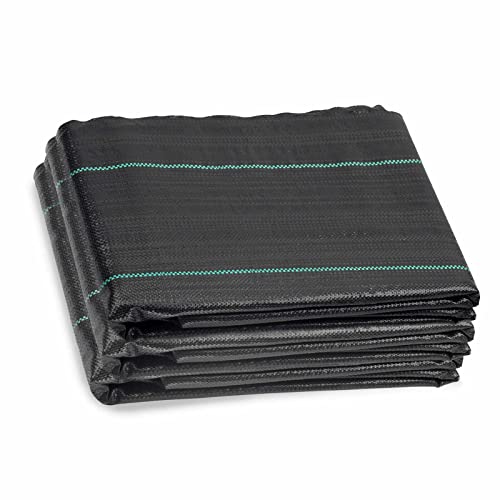
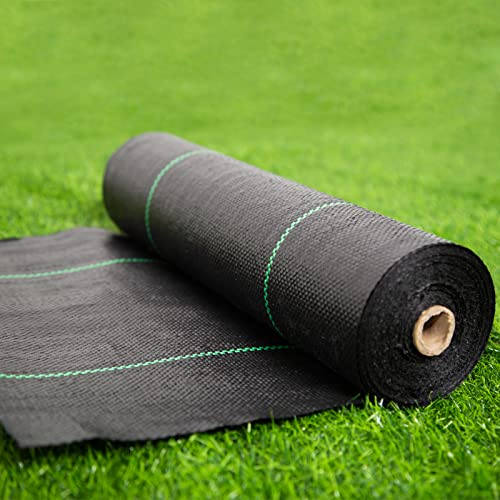
The FEED GARDEN roll is a 4 by 100 foot sheet of woven polypropylene at 3.2 oz, with clear green guide lines to help align plants and cutting. The woven structure allows water and air to pass through, and the fabric can be cut to any shape. A 4 foot width suits flower beds and paths without waste.

The tradeoff is that a 3.2 oz sheet is a mid-weight choice. It is heavier than the 2.4 oz Happybuy but lighter than the 5 oz fabrics for heavy-duty jobs. Woven fabrics fray at cut edges, so fold or staple them. Compared with the LAVEVE, it offers a similar weight and guide lines in a similar size. It suits gardeners covering flower beds, paths and borders.

Lay the fabric on level, weed-free soil, overlap seams by 6 to 12 inches and secure with landscape staples every foot or two. Cover it with 2 to 3 inches of mulch or gravel to shield it from sunlight. Pull weeds that root in the mulch on top before they reach the fabric.

What works

  • 3.2 oz weight balances strength and flexibility
  • Green guide lines help with plant spacing and cutting
  • 4 foot width suits beds and paths
  • Woven structure allows water and air through

Watch out for

  • Cut edges fray unless folded or stapled
  • Mid-weight, so not ideal for driveways

Specs

Size
4 ft by 100 ft
Weight
3.2 oz
Material
Woven polypropylene
Extras
Green planting guide lines
Price position
Lower-middle of the group
02
LAVEVE Heavy Duty Weed Barrier Landscape Fabric 4ft x 100ft 3.2oz Woven
4 x 100 ft3.2 ozWoven PPUV resistant
Check price on Amazon
Best for: Gardeners who want a clear 3.2 oz roll with guide lines at a middle price.

The LAVEVE roll is the same size and weight as the FEED GARDEN, a 4 by 100 foot sheet of 3.2 oz woven polypropylene. The maker describes it as professional grade, with high permeability and UV resistance. Green guide lines help you align plants and make straight cuts.

The tradeoff is that the listing offers few details beyond weight and size, so the differences from similar rolls come down to price and consistency. Compared with the FEED GARDEN, it sits slightly higher in price position for the same stated specifications. It suits gardeners who prefer to buy from a brand with clear branding.

Prepare the soil by removing perennial weeds and roots. Lay the fabric tight and staple it down. Cover it with mulch or gravel, because UV breaks down polypropylene over time.

What works

  • 3.2 oz woven fabric suits most beds
  • Guide lines help spacing and cutting
  • UV resistance claim helps in exposed sites
  • 4 foot width is easy to handle

Watch out for

  • Little detail beyond size and weight
  • Slightly higher price position than similar rolls

Specs

Size
4 ft by 100 ft
Weight
3.2 oz
Material
Woven polypropylene
Features
Permeable, UV resistant, green guide lines
Price position
Middle of the group
03
Groweco Landscape Fabric 6ft x 50ft Weed Barrier 3.2oz Heavy Duty Weed Mat
6 x 50 ft3.2 ozWoven PPGuide strips
Check price on Amazon
Best for: Mid-size beds and paths that benefit from a wide sheet.

Groweco sells a 6 by 50 foot roll of 3.2 oz polypropylene fabric with guide strips for easy cutting and planting. The 6 foot width covers a wide bed in one pass, which reduces seams. It is permeable, letting water and air reach the soil.

The tradeoff is length. A 50 foot roll is short for large projects, and you may pay more per square foot than a 300 foot roll. Compared with the 4 foot rolls, the wide width suits big flat areas but is heavier to handle. It suits mid-size beds and paths.

Unroll on a calm day, since wind can catch a 6 foot sheet. Staple at the edges, overlap seams and cover with mulch. Check the size on delivery, because listings can differ from the actual size.

What works

  • 6 foot width reduces seams
  • Second lowest price position in this comparison
  • 3.2 oz weight suits most beds
  • Guide strips help planting

Watch out for

  • 50 foot length is short for large areas
  • A wide sheet is awkward to handle in wind

Specs

Size
6 ft by 50 ft
Weight
3.2 oz
Material
Polypropylene
Features
Permeable, green planting guide strips
Price position
Second lowest here
04
Happybuy 6ft x 300ft Garden Weed Barrier Fabric 2.4oz Woven Geotextile
6 x 300 ft2.4 ozWoven PPHigh permeability
Check price on Amazon
Best for: Large coverage jobs where cost per square foot matters most.

The Happybuy 6 by 300 foot roll covers a very large area with a 2.4 oz woven polypropylene geotextile. The lighter weight keeps the cost per square foot low, and the fabric lets water and air pass, helping the soil breathe. A big roll suits long borders, orchard rows and large paths.

The tradeoff is strength. At 2.4 oz it is the lightest fabric in the lineup and tears more easily than 3.2 oz or 5 oz rolls, so it is better for light-duty jobs. A 300 foot roll is also heavy to carry. Compared with the Sunocity 3.5 oz, it saves money on a big project but is less durable. It suits large coverage where cost matters more than long life.

Secure it well with staples, since a light fabric lifts in wind. Cover with mulch or gravel quickly to protect it from sunlight. Plan to replace it earlier than the heavier options.

What works

  • 6 by 300 foot roll covers a very large area
  • 2.4 oz weight keeps cost low
  • High permeability for water and air
  • Woven geotextile suits borders and rows

Watch out for

  • Lightest fabric in the lineup and tears more easily
  • Heavy roll is awkward to carry

Specs

Size
6 ft by 300 ft
Weight
2.4 oz
Material
Woven polypropylene geotextile
Permeability
High
Price position
Middle of the group
05
Happybuy 4ft x 250ft 5oz Weed Barrier Fabric Heavy Duty Woven Geotextile
4 x 250 ft5 ozWoven PPErosion control
Check price on Amazon
Best for: Gravel paths, driveways and slopes where a heavy fabric is needed.

The Happybuy 5 oz roll is a 4 by 250 foot sheet of heavy-duty woven geotextile, with a dense texture the maker says cuts light and also helps control erosion. The 5 oz weight is about 50 percent heavier than 3.2 oz fabric and suits paths, driveways and under gravel. It passes rain and air through the weave.

The tradeoff is price and handling. A 5 oz fabric costs more and is stiffer, so it is harder to cut and lay on curved beds. Compared with the Super Geotextile, it is a longer roll in a narrower width. It suits gravel paths, driveways and erosion-prone slopes.

Cut with sharp scissors or a knife. Use staples or pins every foot or two on slopes. Cover with gravel at least 2 inches deep.

What works

  • 5 oz weight is much heavier than standard rolls
  • Dense weave also helps with erosion control
  • 250 foot length covers long runs
  • Passes rain and air through the weave

Watch out for

  • Stiffer and harder to cut than lighter fabric
  • Higher price position per roll

Specs

Size
4 ft by 250 ft
Weight
5 oz
Material
Professional-grade polypropylene
Uses
Weed and soil erosion control
Price position
Upper-middle of the group
06
Super Geotextile Heavy Duty 5oz Weed Barrier Fabric 3 x 100ft Dual Layer
3 x 100 ft5 ozDual layerBeds and paths
Check price on Amazon
Best for: Beds and borders where a heavy dual-layer fabric is worth the cost.

The Super Geotextile is a 5 oz dual-layer sheet with a woven polypropylene layer for strength and a second layer designed to improve weed suppression. It is sold in 3 by 100 foot rolls, a manageable size for flower beds, raised-bed liners and ground cover. The maker claims it is made to last for years.

The tradeoff is cost per square foot. It is among the priciest options and the narrow 3 foot width is slower on big areas. Compared with the Happybuy 5 oz roll, it adds a second layer but covers less area. It suits garden beds and borders where durability matters.

Use it under gravel or mulch only, not exposed to the sun. Overlap seams and staple generously. Remove perennial weeds first.

What works

  • 5 oz dual-layer construction is heavier and denser
  • 3 by 100 foot roll is manageable in beds
  • Suits raised beds and flower borders
  • Strong woven layer resists tearing

Watch out for

  • Upper-end price position
  • Narrow 3 foot width slows large jobs

Specs

Size
3 ft by 100 ft
Weight
5 oz
Construction
Dual layer: woven polypropylene with a second layer
Uses
Flower beds, raised beds, under gravel
Price position
Upper end of the group
07
EXTRAEASY 17 Inch x 100ft Landscape Fabric Weed Barrier 3.2oz Woven
17 in x 100 ft3.2 ozNarrowPaths and walks
Check price on Amazon
Best for: Narrow strips such as garden walks and slim beds.

The EXTRAEASY roll is only 17 inch wide and 100 feet long, made of thick 3.2 oz woven polypropylene. The narrow width suits slim vegetable rows, narrow flower beds, garden walks and gravel paths, with less waste than a wide roll. It is the lowest-priced option in the lineup.

The tradeoff is coverage. A 17 inch width covers little area and needs many passes on a wide bed, which creates seams. Compared with the 4 foot rolls, it is best for narrow strips. It suits path edging and narrow rows.

Unroll in a straight line and staple often. Cover with mulch or gravel. Overlap the ends by several inches.

What works

  • Lowest price position in this comparison
  • 17 inch width suits narrow beds and paths
  • 3.2 oz thickness is mid-weight
  • 100 foot length covers long strips

Watch out for

  • Narrow width needs many seams on wide beds
  • Small total area per roll

Specs

Size
17 inch by 100 ft
Weight
3.2 oz
Material
Thick woven polypropylene
Uses
Narrow beds, garden walks, gravel paths
Price position
Lowest in the group

Spec decoder

What the listing measurements really mean

The numbers brands lead with, translated into what they tell you about fit, comfort and wear at home.

Ounce weight (oz)

Fabric weight per square yard, from 2.4 oz to 5 oz.

Watch forThin fabric tears and fails sooner. Weight is ounces per square yard, not per roll.

Woven polypropylene

A fabric made by weaving polypropylene tape, strong and permeable.

Watch forIt frays at cut edges. Check the stated width against a tape measure on arrival.

Permeability

How easily water and air pass through the fabric.

Watch forClogged fabric can pool water. A clog is a sign of age, not just dirt.

Dual layer

A fabric with two bonded layers for strength and density.

Watch forCosts more per square foot. Dual layer helps with strength, not with permeability.

Guide lines

Printed lines used to align plants and cutting.

Watch forThey help installation but do not affect performance. Guide lines are marks, not a performance feature.

Methodology

How We Evaluated These Weed Barrier Fabric

Specification review

We compared published weights, sizes and materials. We read each listing for guide lines and permeability claims. We set the 2.4 oz Happybuy against the 5 oz rolls. We also compared how each listing describes intended use.

Owner feedback patterns

We looked at recurring themes in owner feedback such as tearing, fraying and weeds pushing through. Single complaints were set aside. We did not use star ratings. We also noted differences in roll widths for the same weight.

Design approach

We considered how each fabric is built, from single woven sheets to a dual-layer design. We also looked at roll sizes. We also looked at how each product addresses UV and cover.

Value and price position

We ordered the rolls by relative price tier and asked what each step up adds. We did not quote prices. We also compared weights before comparing prices.

What we did not do

We did not lay these fabrics or watch them over seasons. Scores are editorial judgments built on published information. Life span claims remain makers' claims. We also avoided placing weight on life span claims.

Decision guide

How to Choose the Right Weed Barrier Fabric

By Use

SituationPickWhy
Flower bedsFEED GARDEN 3.2 ozGuide lines
Gravel pathsHappybuy 5 ozHeavy weave
Narrow stripsEXTRAEASY 17 inchNarrow
Raised bedsSuper Geotextile 5 ozDual layer

By Budget

SituationPickWhy
LowestEXTRAEASYLowest in the group
Low, mid-sizeGroweco 6 x 50Second lowest
Lower-middleFEED GARDEN3.2 oz
UpperSuper GeotextileDual layer

3.2 oz vs 5 oz

3.2 oz

The FEED GARDEN, LAVEVE, Groweco and EXTRAEASY rolls suit most flower beds and borders and cut easily.

5 oz

The Happybuy and Super Geotextile are heavier, suit paths and driveways, and cost more.

Pick 3.2 oz for beds. Pick 5 oz for paths, slopes and heavy use.

By Area Size

SituationPickWhy
Small bedFEED GARDEN 4 x 100Easy to handle
Wide bedGroweco 6 x 50Wide sheet
Large areaHappybuy 6 x 300Big roll
Long pathHappybuy 4 x 250250 feet

For Gravel Paths Specifically

Look for

Heavy fabric with high permeability, a firm base and gravel at least 2 inches deep.

In this comparison

The Happybuy 5 oz and Super Geotextile are the best fit, with the LAVEVE 3.2 oz as a lighter choice.

When to Spend More

Spend more if

You want a heavy dual-layer fabric for beds and paths that last longer.

Save if

You are covering a large area with light use, in which case the Happybuy 2.4 oz is enough.

Ownership

Maintenance schedule

The upkeep that decides whether a piece still looks good in year five.

TaskIntervalWhy it matters
Check mulch depthEvery seasonMulch breaks down and exposes the fabric. Keep at least 2 to 3 inches on top. A leaf blower clears fallen leaves off gravel before they rot into soil.
Pull weeds in the mulchMonthlyWeeds root in the mulch layer, not the fabric. Pull them before they reach the fabric. Keep sharp tools away from the fabric when edging.
Check staplesTwice a yearFrost and wind lift staples. Reset them to prevent edges lifting. Look for new tears after storms and mend them with a patch and staples.
Trim frayed edgesAs neededWoven edges fray and shed strands. Fold or staple them. Top up gravel where it thins on paths.
Replace worn fabricEvery few yearsSun and soil buildup degrade fabric. Replace sections that no longer drain. Take note of the roll size and weight when you reorder.

FAQ

Frequently Asked Questions

Does landscape fabric stop weeds?

It slows weeds that come from soil below, but weeds root in the mulch on top over time. Weeds that appear on top of fabric are usually seedlings in the mulch, and they pull out easily while they are small. Pull them before roots reach the fabric.

Can I use it in a vegetable garden?

It is not recommended long term, since it blocks soil improvement and complicates replanting. If you use the fabric under pavers or gravel, add a layer of compacted base first. The fabric then separates the base from soil and helps it last.

How thick should the mulch be?

At least 2 to 3 inches, to shield the fabric from sunlight and hold it down. Cut X shaped slits for each plant, and fold the flaps back around the stem. Large circular holes let more weeds through and expose the fabric to light.

Which weight should I buy?

3.2 oz suits most beds. Use 5 oz for paths, driveways and slopes. On slopes, use extra staples and consider a heavier fabric, since water and gravity pull the sheet downhill.

How do I secure it?

Use landscape staples every foot or two, and overlap seams by 6 to 12 inches. If you find water pooling under the fabric, check the slope and the soil, because clay soil can pond under a tight sheet and drown roots nearby.

Does the fabric last forever?

No. UV, soil buildup and wear shorten life. Cover it and plan to replace it eventually. Reusing old fabric is rarely worth it. Once it has clogged with soil and roots, it passes less water and tears when lifted.

Bottom line

The short version

Browse more weed barrier fabricon Amazon →
Brianna Cole, Lead Product Editor

About the author

Brianna Cole

Lead Product Editor, SenseiReview

Brianna Cole leads SenseiReview's buying guides, turning published specifications, documentation and owner feedback patterns into clear verdicts across home, tech, fitness, outdoor and DIY products.

More from Brianna →

Keep reading

Related guides