At first glance a cordless drill and an impact driver look like two versions of the same tool: a pistol grip, a battery pack, a trigger and a bit that spins. Many first time buyers ask which one to get and are told, unhelpfully, that they do different things. They do, and the difference is not subtle once you have used both on a long screw into dense timber. One struggles and twists your wrist. The other sinks it with a rattle and almost no effort.
This guide explains what separates the two tools, mechanically and practically, how chucks and bit holders differ, why the torque numbers on the box cannot be compared, what cam-out is and why impact drivers reduce it, what each tool does badly, and the argument for buying them together. It aims to leave you able to choose by the jobs you do, not by the label.
Rotation versus rotation plus impacts
A drill driver applies steady torque. The motor turns a gearbox that turns the chuck, and the force you feel is continuous. Many drills have a clutch, a ring behind the chuck with numbered settings, which slips when the torque reaches the chosen level so that a screw is not driven too far. Many also have a hammer mode for light masonry, but the core job is smooth rotation at adjustable speed.
An impact driver adds a mechanism between the motor and the bit, a small hammer and anvil. When the resistance rises, the hammer spins freely, then strikes the anvil with a sharp tangential blow, many times per second. Each blow adds a burst of rotational force on top of the steady push of the motor. The result is a high peak torque delivered in short pulses, which is how it drives long screws that would stall a drill.
The key is that the impacts are rotational, not forward like a hammer drill. They twist the bit harder without pushing it into the work, and they are also what makes the tool loud, a rapid rattling noise when it works against resistance. Because the force is in pulses, less of the reaction passes back to your hand, so a high torque feels less violent, and that is the main practical benefit.
| Feature | Drill driver | Impact driver |
|---|---|---|
| Action | Steady rotation | Rotation plus rotational impacts |
| Bit holder | Keyless chuck, round or hex bits | Quarter inch hex collet only |
| Clutch | Yes, adjustable torque stop | Usually none, relies on trigger control |
| Best at | Holes, small screws, precise work | Long screws, lag bolts, fasteners in dense wood |
| Weak at | Very long or large fasteners | Clean holes, delicate screws |
| Noise | Moderate | Loud when impacting |
Chucks and bit holders
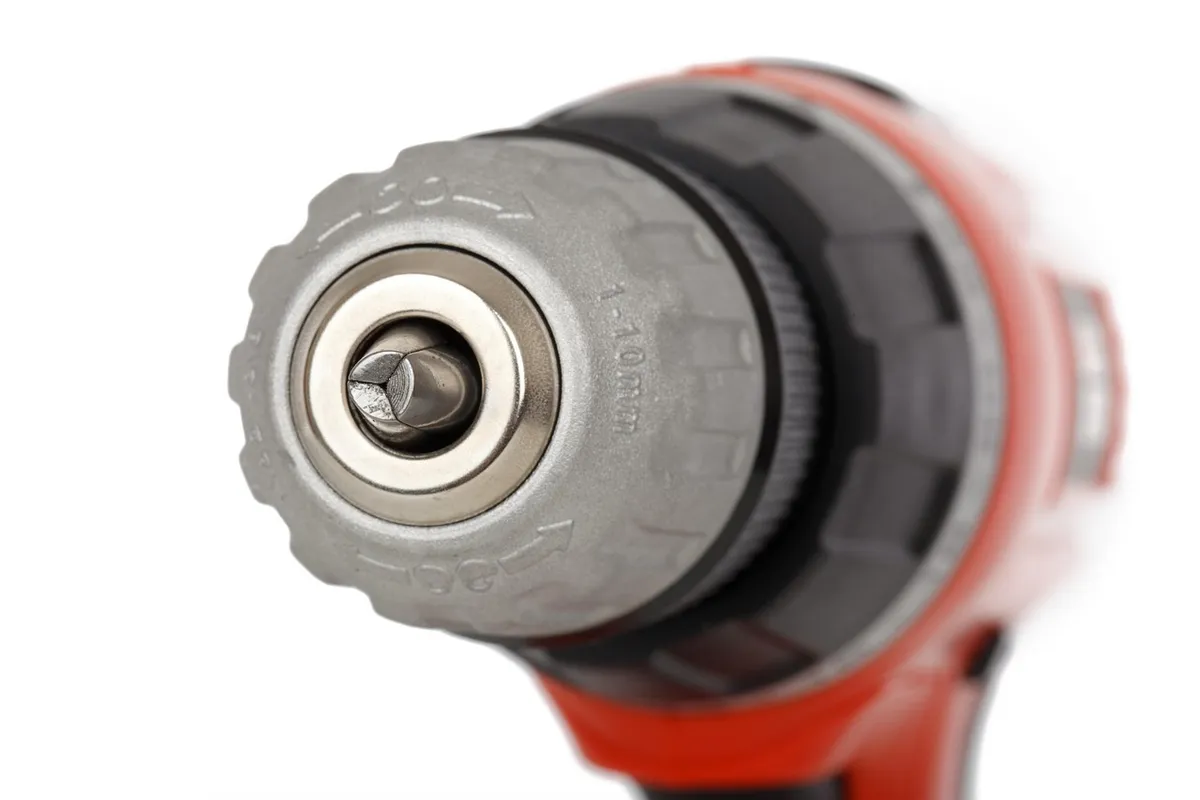
A drill usually has a keyless chuck, a three jaw clamp that closes around the shank of a bit when you twist it by hand. It accepts round shanks and hex shanks up to a maximum size, commonly 10 or 13 millimetres, which is about 3/8 or 1/2 inch. That flexibility is what lets one drill take twist bits, spade bits, hole saws and screwdriver bits alike.
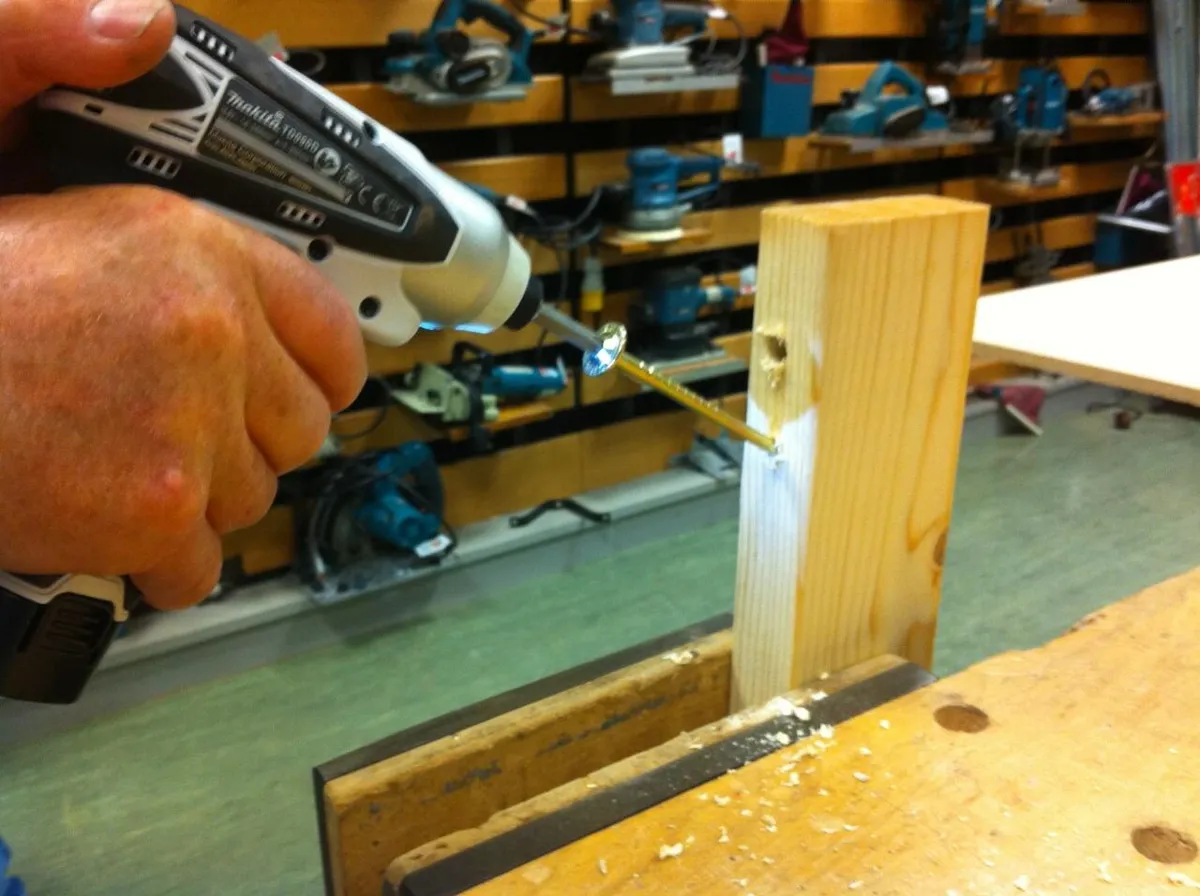
An impact driver has a quarter inch hex socket, often called a collet. You push a bit in and a spring loaded sleeve locks it, which makes bit changes very quick, one handed. The price of that speed is a restriction: only bits with a quarter inch hex shank fit, and ordinary round shank drill bits cannot be used without an adapter. Bits sold as impact rated are made to take the sudden torque pulses without snapping.
Using the wrong bit is a common cause of failure. Standard screwdriver bits are brittle and may shatter under impact. Impact rated bits are tempered to flex slightly and last far longer. Round shank drill bits in an impact driver adapter can slip and wobble and spoil the hole. If you want to drill with an impact driver, choose hex shank bits made for it, as covered in our guide to choosing drill bits.
Why torque figures do not compare
Boxes quote torque in inch pounds or Newton metres, and impact drivers often quote very high numbers, sometimes more than a drill. The numbers are not comparable across brands, or between a drill and an impact driver. A drill's figure is usually the maximum steady torque of the motor and gearbox, while an impact driver's figure may be the peak torque at the instant of an impact, or a calculated value that includes the impact effect.
No source documents one agreed test that all makers follow, so each brand picks its method. A figure from one brand may be measured at a different point, with a different battery, and under different conditions than a competitor's. Two tools with the same number may drive screws differently, and a tool with a lower number may do better in practice because of better gearing or a better battery.
Use torque figures only to compare tools within one brand's range, where the method is the same. For a purchase across brands, look at what the tool does: the size of screws it drives easily, owner feedback on stalling, and whether it is comfortable. A battery with more capacity and a brushless motor, as discussed in brushed versus brushless motors, affects real performance as much as any number.
Cam-out and why impact drivers help
Cam-out is what happens when the bit slips out of the screw head under load, usually grinding the head and damaging the screw. It happens because the turning force pushes the bit up and out of the recess faster than you can push it in. A drill, pushing steady torque, makes you lean on it to keep the bit seated, which is tiring and unreliable on long screws.
An impact driver reduces cam-out in two ways. The impact pulses are brief, so the bit does not have time to climb out, and the pulses also tend to seat the bit in the recess with each blow. You can drive a long screw with a light touch and the bit stays engaged. That is why decking, framing and structural screws are driven with impact drivers, and why they are popular with professionals.
The other side is that impacts can overdrive. With no clutch, an impact driver can sink a screw through soft material or strip a small screw head in a moment, and can snap small screws. Use a gentle trigger, stop as the head meets the surface, and switch to a drill with a clutch for small screws and delicate materials. A good bit with a close fit to the screw head matters more than anything.
What each tool does badly
A drill is poor at driving long or large screws, because steady torque stalls the motor and twists your wrist. A strong drill with a clutch handles small and medium screws, but a long structural screw into hard timber, without a pilot hole, may stop it. The reaction torque can also hurt your wrist if the bit jams, and large hole saws can do the same.
An impact driver is poor at precision. It has no clutch, and the pulses make it hard to drive small screws gently or to drill clean holes in smooth surfaces. Round shank bits do not fit directly, and its chuck cannot grip a large twist bit. It is also loud, and the vibration can crack brittle materials such as tile, plastic or thin trim.
Neither is ideal for masonry. A hammer drill, or for large work a rotary hammer, is the right tool, and both a drill and an impact driver struggle with concrete. A drill with a hammer mode copes with small holes in brick, but an impact driver, whose impacts are rotational, does not hammer forward and should not be used for it.
Matching the tool to the job
- Hanging shelves, assembling furniture, drilling small holes: a drill driver with a clutch.
- Building a deck, a fence or a shed, driving long screws: an impact driver.
- Drilling holes in metal, or large holes: a drill, and a drill with variable speed control.
- Driving lag bolts or removing stubborn fasteners: an impact driver, often with a socket adapter.
- Mixed household jobs: a drill, plus an impact driver once you start longer projects.
Think of the drill as the precise tool and the impact driver as the heavy hitter. Most households find the drill used for most tasks, and the impact driver brought out for particular jobs. People who regularly build with timber find the impact driver becomes the one they reach for first.
If you are working in tight spaces, remember that impact drivers are usually shorter than drills, which helps between joists or inside cabinets. A compact one is easier to handle overhead. If you often drill, a drill with a good chuck and a reliable clutch is the more versatile single tool.
Speed ranges matter more than people expect. Most drills have a two speed gearbox, with a low range for high torque and large bits, and a high range for small bits and quick drilling. Using the high range with a large bit overheats the bit and the tool, and using the low range for small holes is slow and rough. Impact drivers usually have a single range with a few trigger or mode settings, which is simpler but less adaptable.
A subtle failure to watch for is a loose bit in an impact driver collet. If the bit wobbles or falls out, the spring in the collet is worn or the bit shank is not a true quarter inch hex. A loose bit wastes the impacts, rounds the screw head and can fly out at speed. Check the fit when buying bits, and replace a collet that no longer holds firmly.
Finally, keep the tools matched to their batteries. A tool run on an old, worn battery loses torque and may stall, which owners often blame on the tool. Before deciding a drill is too weak, try a fresh, fully charged battery of a larger capacity. The difference can be dramatic, and it is the cheapest upgrade available.
The combo kit argument
Many brands sell a drill and an impact driver together with two batteries and a charger. The kit usually costs less than buying the two tools separately, and you get a spare battery, which means no waiting for a charge in the middle of a job. For anyone who expects to own both, it is nearly always the better value.
The strongest argument is practical. Swapping bits between one tool and another wastes time, and having a drill for pilot holes and an impact driver for the screws makes a job go much faster. A drill holding a countersink bit and an impact driver holding a driving bit means no changing at all, which is what professionals do.
The weak points are the battery sizes and the quality. Kits often include compact batteries that run out quickly under heavy use, so check the capacity, which is explained in battery voltage and amp hours explained. Also check that the brand's platform offers the other tools you may want. Buying into a platform with a wide range matters more than the first two tools.
Safety, technique and when to stop
Wear safety glasses, because bits can break and chips fly. Clamp or hold the workpiece, because an unsecured board can spin with the bit and cause injury. Keep a firm grip with both hands on large drilling jobs, since a jammed bit can twist the tool sharply. Do not wear loose sleeves or jewellery near a spinning chuck.
Check for hidden wires and pipes before drilling or driving long screws into walls. A stud finder helps with locating framing, but wiring detection has limits, as explained in our stud finder guide. If you hit something unexpected, stop and investigate before continuing, and turn off power at the consumer unit if you suspect a cable.
Impact drivers are loud and can reach noise levels that harm hearing with prolonged use, so use hearing protection for long sessions. If your wrist, elbow or hand becomes painful after repeated use, rest and consider a lighter tool or a different technique. Persistent numbness, tingling or pain in the hand or arm is a reason to see a doctor.
Frequently asked questions
Can an impact driver replace a drill?
For driving screws, yes. For drilling, only with hex shank bits, and the results are less clean than a drill's, especially in metal and hard materials. It also lacks a clutch, so it is a poor tool for delicate work. Most people want a drill as well.
Can I drill holes with an impact driver?
Yes with suitable hex shank bits, mostly in wood and for rough holes. Expect less control and a coarser result than with a drill. Avoid using it for precise holes, large hole saws or for metal, where the impacts can wear the bit and chatter.
Do I need an impact driver for a deck?
It is not required but it makes the job much easier. A drill can drive deck screws with pilot holes, but you will tire and strip more screw heads. An impact driver does long screws faster with less effort.
Is a hammer drill the same as an impact driver?
No. A hammer drill pulses forward to break masonry while spinning. An impact driver pulses rotationally to drive fasteners. They are different tools, and neither does the other's job well.
Are higher voltage tools better?
Voltage is one factor in power, together with the motor, gearbox and battery capacity. A higher voltage tool often has more headroom for demanding work, but a well designed lower voltage tool is enough for household jobs. Compare within a brand's range.
Which bits last longest in an impact driver?
Impact rated bits, made of tough steel with a torsion zone, last the longest. Standard bits are brittle and may snap. Use bits that match the screw head exactly, and replace worn bits before they damage screws.
The bottom line
If you can buy only one tool, buy a drill driver with a clutch and a good keyless chuck. It handles holes, small screws, and moderate fasteners, and it is the more versatile tool for a household.
If you build, assemble, or fix regularly, add an impact driver, ideally in a combo kit. The pair covers almost every job, saves bit changes and tires you less on long screws. Choose a platform with a good battery range and decent capacity.
Ignore headline torque numbers and judge by owner feedback and the jobs you do. Keep the right bits, a gentle trigger and sensible protection, and either tool will serve you well. Browse the tools and DIY category for more.