Most people pick a foam roller the way they pick a pillow, by squeezing one in the shop and hoping it feels right. Online that is not possible, and the labels soft, medium and firm carry no shared scale. One brand's medium can feel like another's firm. What you can do is understand what density changes, what surface texture adds, how the foam material determines whether the roller still works in a year, and how to choose a length for the way you actually use it.
This guide also states plainly what the evidence supports. Foam rolling is popular, and the claims around it run well ahead of the research. Nothing here diagnoses or treats a condition, and anyone with an injury, persistent pain or a medical condition should ask a physiotherapist or doctor before rolling on a problem area.
What density means in practice
Density is how much foam material is packed into a given volume, and it governs how much the roller compresses under load. A low density roller squashes easily, spreads your weight over a wider area of contact, and feels forgiving. A high density roller barely deforms, concentrates pressure on a narrow strip of tissue, and feels sharp. When you lie on a roller, your body weight is the force, so the same person feels a firm roller more intensely than a soft one, and a lighter person may find a medium roller feels firmer than a heavier person does.
There is no standard industry scale for these labels, and no source documents a measure that lets you compare a soft roller from one brand against a soft roller from another. Manufacturers may publish density figures in kilograms per cubic metre, but many do not, and the feel also depends on the foam type and on whether the roller is hollow. Treat the label as a rough guide within a single brand's range and read owner feedback for how firm a specific model actually feels.
The key point is that firmer is not better. Many people assume a harder roller does more, and then spend their sessions tensing against the pain, which defeats the point of relaxing the muscle. If you hold your breath, clench your jaw or tense your shoulders while rolling, the roller is too firm for you today.
Soft, medium and firm: who each suits
Soft rollers suit beginners, people who are sore after exercise, older users, and anyone rolling over bony or sensitive areas. They are also the best choice for gentle use before bed or on rest days. The cost is that they flatten sooner and may feel too mild once you are used to rolling.
Medium rollers suit most people most of the time. They give enough resistance to feel effective on larger muscles like the thighs and the back, while staying tolerable on calves and glutes. If you are not sure, a medium roller is the sensible first purchase, because it covers the widest range of body sizes and sensitivities.
Firm rollers suit experienced users with high tolerance, people who are heavier and find lighter rollers collapse under them, and those who want to target a specific area. They suit larger muscles better than small ones and are a poor choice for the lower back or the front of the shoulder, where pressing hard on a narrow line is uncomfortable and unhelpful. A firm roller is also more likely to bruise if you are not careful.
| Density | Feel | Best for | Drawback |
|---|---|---|---|
| Soft | Cushioned, wide contact | Beginners, sore days, sensitive areas | Flattens sooner, may feel too mild |
| Medium | Balanced pressure | Most users, general use | Not extreme at either end |
| Firm | Narrow, intense pressure | Experienced users, heavier users | Painful, can bruise, easy to tense against |
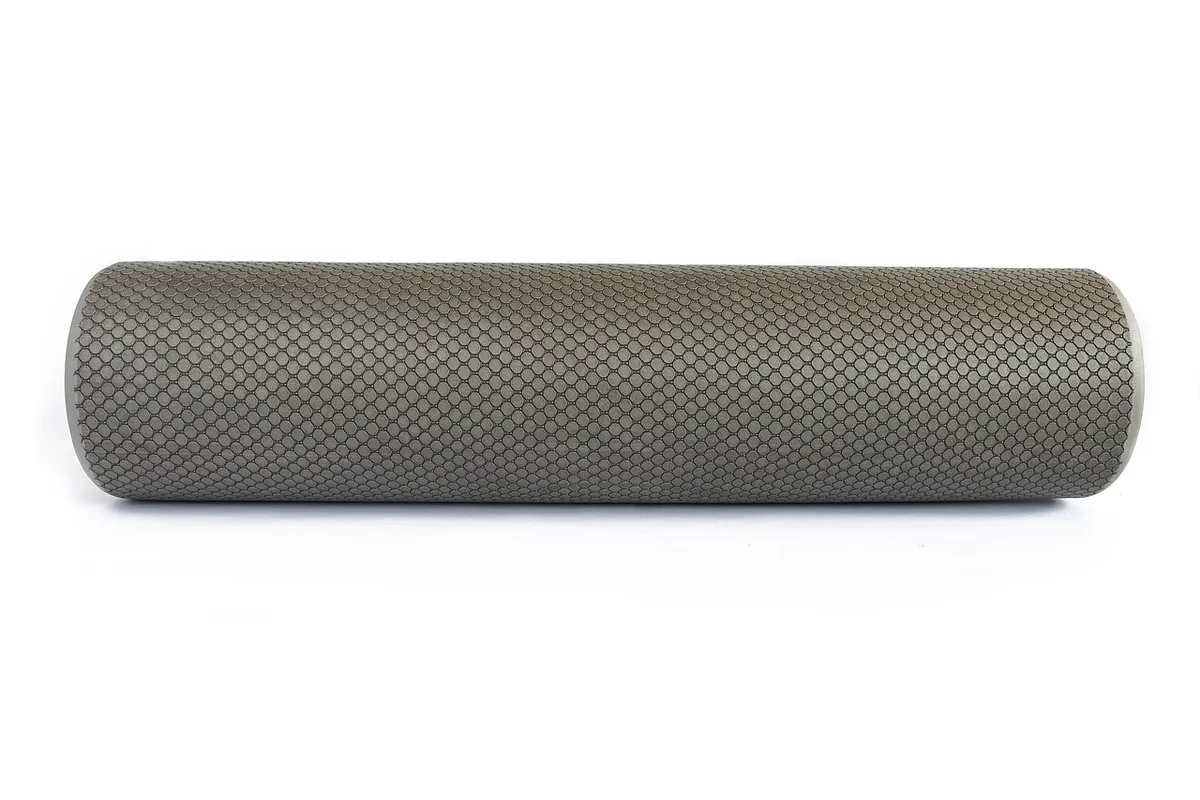
Smooth, textured and grid surfaces
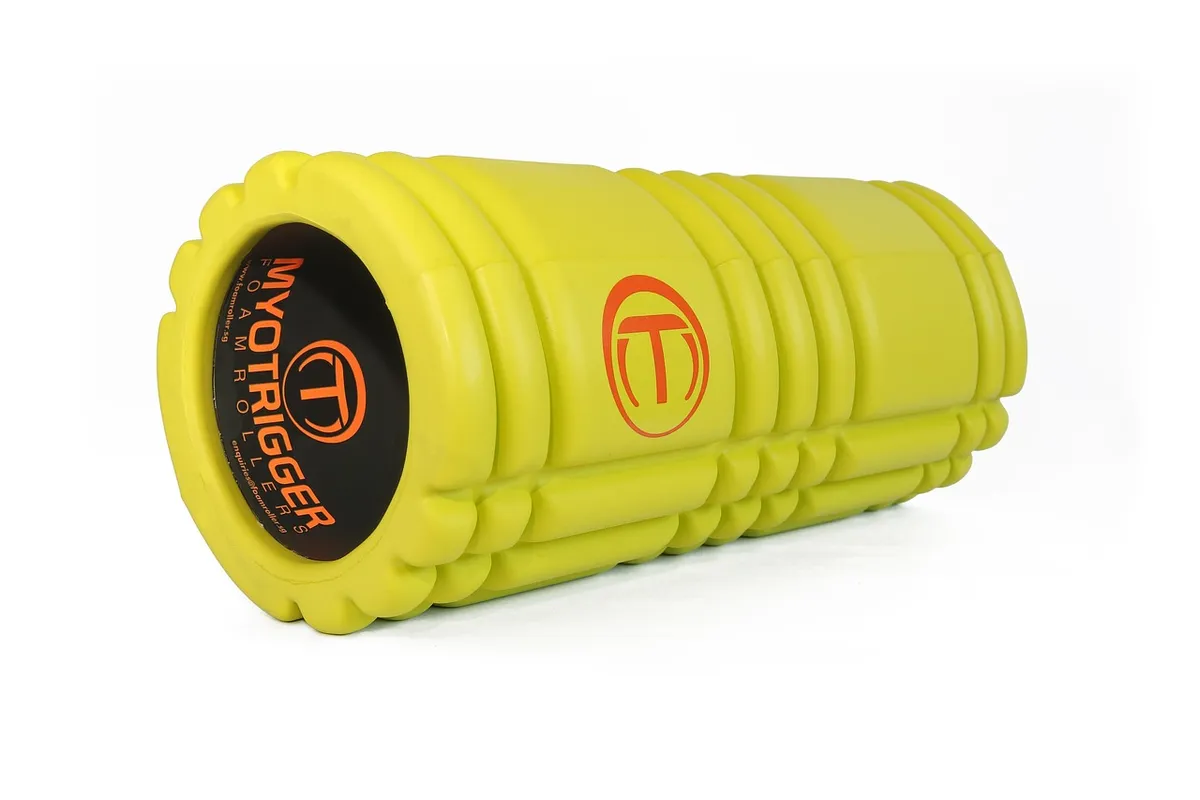
A smooth roller spreads pressure evenly and is the gentlest option. It is the right starting surface and the easiest to clean. Textured rollers have ridges, bumps or knobs, which concentrate pressure at points and mimic the feel of a thumb or a massage ball. Grid designs combine raised sections and channels, and are the most common textured style.
Texture changes how intense a roller feels more than density does. A soft textured roller can feel firmer than a medium smooth one, because the contact area is smaller. This is why people sometimes buy a firm textured roller and then abandon it: the combination is far more intense than they expected. If you want to try texture, choose it on a medium or soft base.
It is worth saying that the evidence does not show that textured rollers work better than smooth ones. Preference decides. Textured surfaces also trap sweat and dirt in the grooves, so they need more careful cleaning, and the knobs can wear or crumble on cheaper foam. If you share a roller with others, smooth is easier to wipe down.
Foam materials and how long they last
The foam type decides how the roller ages. Expanded polypropylene, EPP, is a dense, springy, closed cell material that returns to shape after repeated loading. It is the usual choice for premium rollers and the one that holds its firmness longest. Ethylene vinyl acetate, EVA, is a softer, more flexible foam used on many mid range rollers, with good comfort and reasonable durability, though it can compress over time under heavy use. Polyethylene, PE, is a cheap foam often used for the basic white or blue tubes. It is light and inexpensive but compresses and develops dents sooner, so a roller that felt firm in January can feel soft by summer.
Some rollers have a hollow core made of rigid plastic or PVC, covered with a layer of foam. These keep their shape under body weight and are very durable, but the outer foam can wear thin, and the firmness comes from the core rather than from the foam. Check whether a roller is solid foam or has a core, because it changes both the feel and the way it ages.
For most people, EPP or a good EVA gives the best value over several years. A cheap PE roller is fine as a trial purchase but may need replacing sooner. If your roller develops flat spots, cracks or crumbling, replace it, since an uneven surface presses unevenly. Note that no source documents a standard lifespan for any foam type, because it depends on weight, frequency and storage. Keeping a roller out of direct sun and away from heaters prevents the surface from degrading, and storing it flat rather than leaning on a stack of weights avoids dents.
Length and diameter
Standard rollers are about 30 cm to 45 cm long and 15 cm in diameter. A 30 cm roller is easy to store and carry but is narrow for rolling the back, where you want it to span both sides of the spine. A 90 cm roller supports the whole length of the spine for stretching and balance work, but it is awkward to travel with and takes more space.
Small rollers around 5 cm to 8 cm in diameter are for targeted work on calves, forearms and the feet, and they sit between a roller and a massage ball. Half rollers, with a flat side, give stable support for balance exercises rather than for rolling. Choose a length for your main use: 45 cm suits most thigh and back work, longer for spinal use, and shorter for travel. If you travel often, a collapsible or compact roller is worth the compromise, although the feel is firmer and less forgiving than a full size one.
Pair the roller with a mat that does not slide on the floor and gives comfort for knees and elbows. Our guide on how to choose a yoga mat covers thickness and grip, and that applies here as well.
Vibrating rollers
Vibrating foam rollers add a motor that makes the roller buzz at several speeds. They cost more, require charging, and are bulkier and heavier than plain rollers. Some people find the vibration pleasant, and it can make a roller feel gentler at the same pressure. Others find it unnecessary.
The evidence for vibration is thin. Small studies have looked at vibration rolling, and results point to modest effects at best, which are not clearly larger than from a standard roller. No source documents a firm advantage that would justify the extra cost for most users. If you enjoy the sensation, it is a reasonable preference, and the battery life and noise level are the things to check. For a similar idea in handheld form, with specifications you can compare, see our guide to massage gun specs.
What the evidence does and does not support
Research on foam rolling is a mix of small studies with varied methods. The better supported findings are modest. Rolling for a short time before exercise has been associated with a small, short lived increase in range of motion without a clear loss of strength or power. Rolling after exercise has been associated with somewhat lower perceived muscle soreness in some studies. Both effects tend to be small and temporary.
What is not supported is the idea that a roller breaks up knots, adhesions or scar tissue, or that it flushes toxins or permanently lengthens muscle. These claims appear in marketing, and no source documents tissue changes of that kind from rolling on a home roller. It is more accurate to describe rolling as a way of temporarily changing how a muscle feels and how far it will stretch, probably through the nervous system rather than the tissue itself.
If you enjoy rolling and it helps you feel looser, there is no good reason to stop. Just keep expectations realistic, and do not treat it as a substitute for warm ups, sleep, strength work or medical care. Avoid rolling directly over joints, the lower back's bony spine, the neck, or any area that is swollen, bruised or acutely painful. Sustained sharp pain, numbness or tingling means stop and consult a professional. People with conditions such as clotting disorders, osteoporosis, or those taking blood thinners should ask their doctor first.
Using a roller sensibly
Roll slowly, about a few centimetres per second, and pause on tender spots for a short time while breathing out. Spend roughly 30 to 90 seconds per muscle group, which is a common practice rather than a documented optimum. Support part of your body weight with your hands or the opposite leg if the pressure is too much. Stay off the roller if each pass makes you wince.
Roll the muscle bellies of the thighs, calves and glutes, and avoid driving the roller into the knee or the hollow behind it. Keep your core engaged and the spine neutral on the upper back, and do not let the lower back sag. These habits matter more than density when it comes to comfort. For a wider range of recovery and training equipment, browse our Health and Fitness section.
Buying checks and common mistakes
Check the diameter and the wall of a hollow roller. A thin outer foam layer over a rigid core feels firm from the first day, but a thick layer lets the roller compress under you and feels gentler. Look at whether the seams are glued or moulded, because glued seams on cheap rollers can split. A roller that arrives with a visible dent or an uneven surface will not improve with use, so inspect it promptly.
The most common mistake is rolling too long on one spot. More time does not mean more benefit, and prolonged pressure on a bruised or irritated area can leave it sore for days. Another is rolling the lower back by arching over the roller, which compresses the spine. If you want to work that region, roll the upper back and the muscles around the hips instead, and ask a professional about persistent back discomfort.
People also forget cleaning. A roller absorbs sweat and skin oils, so wipe it with mild soap and water, let it dry fully, and avoid harsh solvents that can degrade foam. For a roller that lives on a bedroom floor, a cloth cover or simply a wipe after each session keeps it fresh. If several people share a roller, a smooth surface is the practical choice.
If you are weighing recovery tools against strength gear, the resistance band guide covers a cheaper, lighter way to add mobility and strength work to the same routine.
One more situation worth planning for is rolling in a shared or small space. A roller is bulky for its weight, so decide where it will live before buying. A roller that is kept in sight gets used, while one stored in a cupboard behind other items rarely does. Hanging a small roller on a hook or standing it in a corner keeps it within reach, and a roller with a carry strap is easier to take to the gym or a park. People who exercise at a fixed time often find that leaving the roller and mat together next to the place they train turns rolling into a habit rather than a chore.
Frequently asked questions
Should a beginner buy a soft or a firm roller?
A soft or medium roller is the better start. Firm rollers are intense and easy to tense against, which defeats the purpose. You can always move to a firmer roller later if the first one feels too mild.
How long does a foam roller last?
It depends on foam type, weight and frequency. Dense EPP rollers hold their shape longest, EVA is middle, and basic polyethylene tubes flatten soonest. No source documents a standard lifespan, so replace one when it develops dents, cracks or flat spots.
Does a textured roller work better?
Not according to the evidence. Texture changes how intense the roller feels, mostly by shrinking the contact area. It is a matter of preference, and it is best tried on a soft or medium base.
Is foam rolling safe if I have an injury?
Ask a doctor or physiotherapist first. Rolling over an injured area can make it worse, and some conditions call for avoiding pressure altogether. Stop and seek advice if you feel sharp pain, numbness or swelling.
Is a vibrating roller worth the extra money?
For most people, probably not. The evidence for added benefit is thin, though some people like the feel. If you want to try one, check battery life, noise and charging before you buy.
The bottom line
Buy a medium density roller of EPP or good EVA foam, around 45 cm long, with a smooth surface, unless you already know you want something else. Treat density labels as a rough guide, because no standard scale exists, and remember that firmer does not mean better.
Use it to change how your muscles feel before or after training, expect modest and temporary effects, and skip it over injuries, joints and painful areas. If you have a medical condition or an injury, ask a professional first. Replace the roller when it flattens or crumbles, and keep it away from heat and sun.